If you come home and the door has been forced, one order matters more than any makeshift fix: do not go in if the intruder might still be inside, call the police on 110, and touch nothing until the evidence is secured. Only after that do we talk about securing the door. In that order, not any other.
I have been in security technology for 19 years. Drilling is always the last resort for me, and after a break-in the most important work is not the one with the cordless screwdriver, but a cool head in the first twenty minutes. Two things matter. Getting through the first night. And not destroying what the insurer will want to see.
The first minutes, before you touch anything
This often goes wrong. Whoever immediately screws, cleans and throws the broken lock in the bin in the excitement destroys exactly the proof the police and contents insurer need. I see it every week. People mean well, they want order, and that is precisely what costs them money afterwards.
So, step by step:
- Stop. Door is open, you hear nothing? Still do not go in. A disturbed burglar inside your own flat is the most dangerous situation of all.
- Call 110, not the locksmith first. The police decide when the flat is cleared.
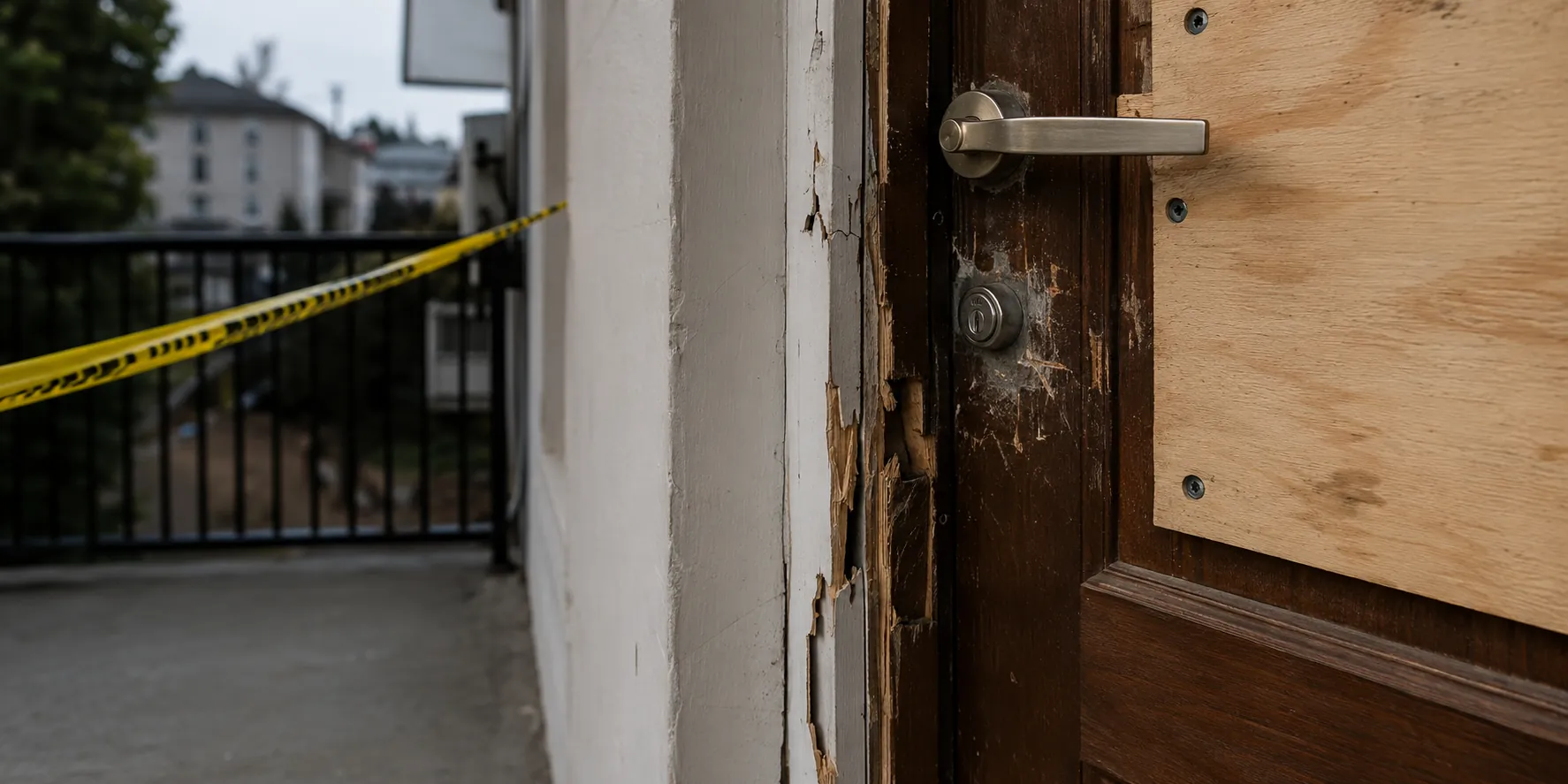
- Photograph the forced door, the frame, the damaged lock, the pry marks, before you change anything. With your phone, just everything.
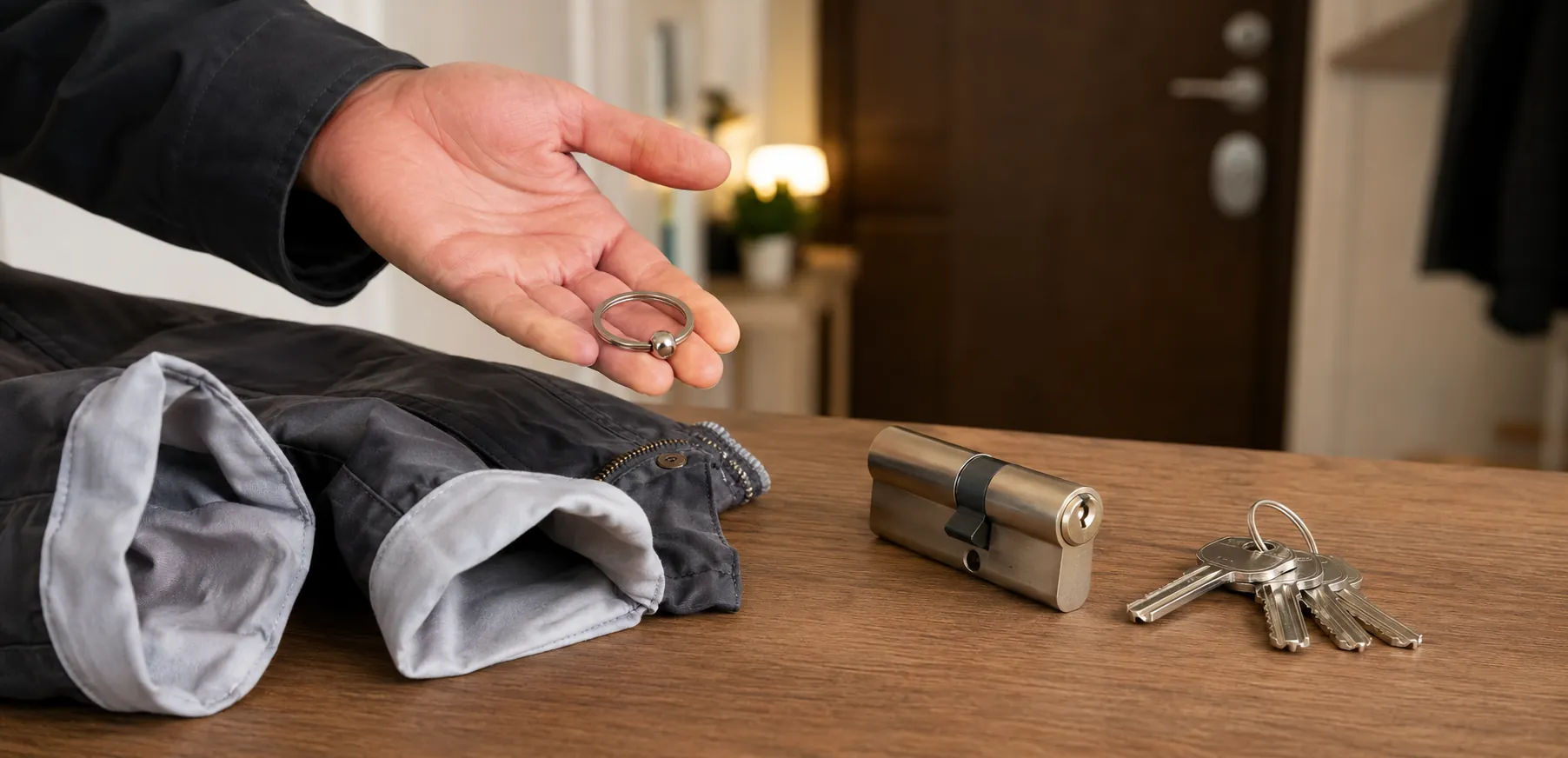
- Keep the old lock, the pulled-out cylinder and any snapped parts. Throw nothing away, not even bent screws.
- Note the time and what is missing. The contents insurer wants all of this without gaps.
The police crime statistics from the BKA have shown the same trend for years: a substantial share of home break-ins stalls at the attempt when the door is properly secured and the offender cannot get in within the usual time. This is not theory. It is the reason both pay off, provisional now and proper afterwards.
Why the order decides over money
An example I explain often. The contents insurer pays the break-in damage, but it wants proof. No photo, no old lock, no police file? Then it gets sticky. With photos and the kept parts it usually runs smoothly. It costs you five minutes at the scene and can decide over hundreds of euros.
Securing the door provisionally overnight
If the cylinder or the frame is wrecked and the clean replacement only comes tomorrow, you need a safe stopgap for the night. On the phone I always go through three questions:
- Can it still be locked? Sometimes only the strike plate is bent and the bolt still catches. Then lock from inside and wedge it additionally with a door bar or a heavy piece of furniture. A chest of drawers in front of the door is no shame, tonight it is a tool.
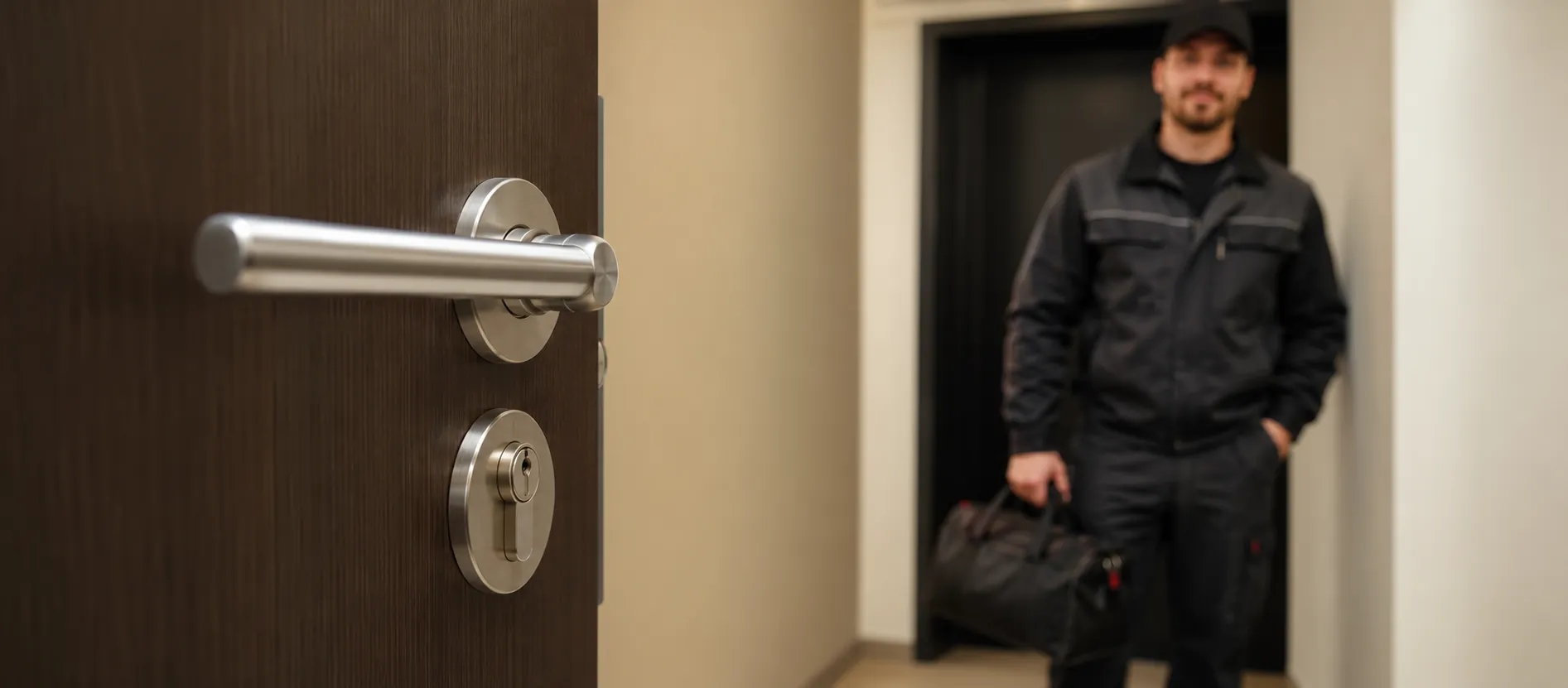
- Is the cylinder destroyed but the frame intact? A technician often sets an interim cylinder the same evening, so you can lock up safely for one night. The proper security cylinder is then ordered in peace.
- Is the flat standing open because the frame is splintered? Then no lock helps any more. Here every hour counts. This is a case for the emergency service, not for a night on the couch with the door ajar.
What I expressly do not recommend: securing the door with tape, a chair under the handle or a hardware-store padlock and then lulling yourself into safety. That stops no serious offender. It does not even stop an opportunist who has heard that someone got in here tonight already. Burglars come back, sometimes in the same week, because they know the door is open and has to be replaced.
Hands off these quick fixes
- Spray foam or construction foam in the frame. It seals nothing, it only makes the later repair more expensive.
- A new cheap cylinder for 12 euros from the hardware store, fitted yourself in the dark. If it jams, you lock yourself out on top of everything.
- Just pulling the door shut and hoping. A door with a torn-out strike plate only falls shut, it does not bolt.
A case from Hoechst
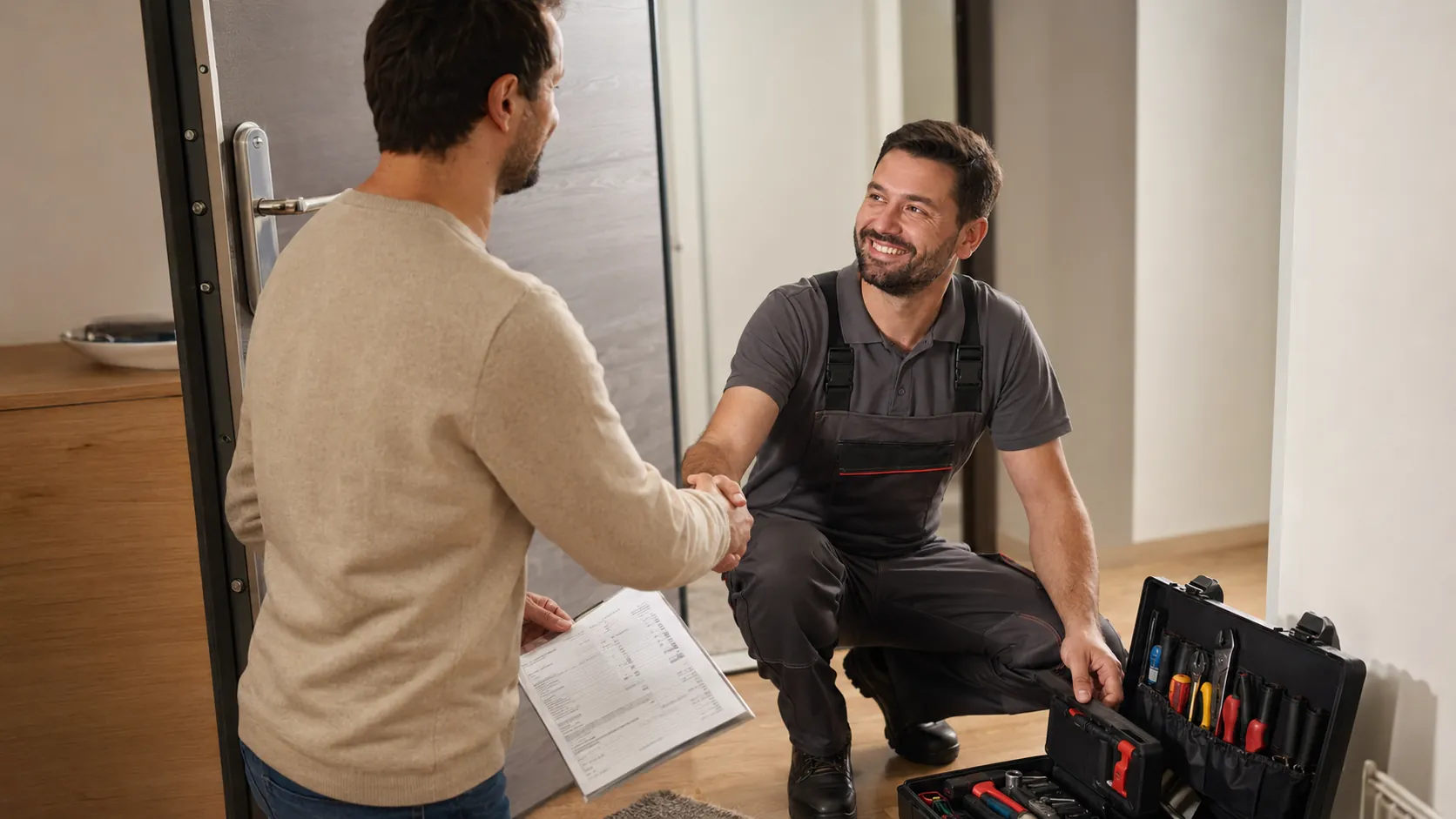
Last winter I was called to Hoechst in the morning. Broken into overnight, the frame torn out at the strike plate, the wood splintered over a good twenty centimetres. The resident had done everything right. Police first, photographed everything, threw nothing away, even put the snapped bolt screw in a bag.
In the morning we reinforced the splintered area, fitted a security strike plate over the full height and installed a new security cylinder to DIN EN 1303 with drill protection. Around 280 euros in the end for material and labour, on a normal weekday, without an emergency surcharge. Because she had kept the parts and documented everything, the contents insurer covered the damage without quibble. No dispute, no follow-up question.
Locked out and in a hurry?
Price quoted up front, vetted partner business, ~22 minutes on site.
A case from Nordend, how it should not go
Two weeks later, Nordend, a completely different picture. A man comes home in the evening, door pried open, he is understandably furious and tidies up immediately. Lock out, in the bin, splinters swept away, new hardware-store cylinder in. When the insurer wanted photos of the original state, there were none. No old lock left, no visible pry marks. The damage was settled in the end, but with arguments and a deduction, because the fitted cheap cylinder did not meet the security class required in the policy. He could have spared himself that. Document first, then act.
Which protection actually holds afterwards
After the replacement you should think about more than just the cylinder. The cylinder is only one link in the chain, and a chain breaks at the weakest link. What goes on the door as standard for me in Frankfurt after a break-in:
- Security strike plate, screwed over the full frame height, not the thin plate off the shelf. This is often the cheapest and most effective item.
- Security cylinder with drill and pull protection from ABUS, BKS, Winkhaus or EVVA, tested quality to DIN EN 1303. Hands off the no-name cylinder that costs three euros online.
- Protective fitting to DIN 18257, at least ES1, covering the cylinder so no tool can get a grip.
- Hinge-side protection, because many forget that the hinge side is often the weak point.
Whoever does it right thinks in classes. A door upgraded to RC2 under DIN EN 1627 holds up an opportunist with simple tools for the time he does not have. RC3 is the more honest choice for ground floor and easily reachable flats. More on what actually holds and what just looks expensive is under burglary protection.
What it roughly costs
So you have a ballpark, rough figures from my Frankfurt practice in 2026:
| Measure | Realistic price |
|---|---|
| Interim cylinder for the night | 60 to 120 euros |
| Good security cylinder fitted | 90 to 180 euros |
| Security strike plate mounted | 80 to 160 euros |
| Protective fitting ES1 mounted | 70 to 140 euros |
| Full RC2 door upgrade | 400 to 900 euros |
Emergency service at night, on the weekend or on a holiday costs more, that belongs to the truth. How a full lock replacement works and what it costs in detail you can see on the pricing page. Whoever is wondering in the evening whether it can wait until tomorrow should rather call contact and ask. That is free and saves a sleepless night.
Briefly answered, the most common questions
May I enter the flat before the police? No, if there is a suspicion that the offender is still inside. Otherwise only as far as necessary and without tidying up.
Does the insurer pay for the provisional securing? As a rule yes, the emergency closure counts as damage mitigation. Keep the invoice.
Can I change the cylinder myself? During the day, with the right measurement and a tested cylinder, yes. After a break-in and in the dark I advise against it, because the frame has often taken more than you see at first glance.
Does it have to be the expensive RC3 door right away? No. First safely through the night, then decide in peace. Panic is a poor adviser and an expensive one too.
In short: police and evidence first, then bolt the door safely for the night, then upgrade cleanly. No makeshift fix replaces a proper replacement. But a smart first night decides whether the shock turns into a second one.