In short: burglary rates are not the same in every Berlin district, but the real weak point is almost always the old apartment door in a Gruenderzeit building, not the number in a statistic. If you live in one of these old buildings, your apartment door is what decides whether an opportunist is inside in half a minute or walks off frustrated. That is what this is about: what the Berlin district figures can honestly tell you, and what you should really upgrade on a typical old front door.
I am Sophie, I have advised on burglary protection for fourteen years, and one thing up front: most residential break-ins I see in Berlin are not high-tech jobs. A screwdriver, a hard heave in the right spot, and a hundred-year-old door gives way. No duplicate key, no lockpick, nothing elegant. Raw leverage against soft, old wood. That is the reality, and it is also the good news, because you can defend well against exactly this method.
What the district figures really say, and what they do not
Berlin has decent data sources, and you should read them without letting them drive you mad. The Berlin police publish a crime atlas that breaks residential burglary down by district. Nationally the police crime statistics put it all in context. If you want to read the trends properly, you will find them at the BKA and the concrete protection advice at the police crime prevention service.
What can be said seriously: in the densely built inner-city districts with lots of old housing, where flat sits next to flat and there are many escape routes, more cases tend to turn up than in tidy single-family areas on the edge of town. No surprise there. Many doors in a small space, plenty of anonymity in the stairwell, good transport links. And the clear-up rate for residential burglary is low nationwide, which is bitter but honest. A solved case does not give you back the peace of that afternoon.
What I want to stress: do not let a district ranking lull you into a false sense of safety. In Charlottenburg, on a quiet side street, I have seen doors forced open just as much as in busier corners. The offender does not pick the district. He picks the weakest door in the building. So your number is not the district's, it is your own door's.
Why Berlin old-building doors open so easily
Now the core. The Berlin Gruenderzeit building is beautiful, high ceilings, stucco, double doors, and in security terms it is often a disaster. That comes down to three things that almost always occur together.
First the lock. In many unrenovated flats in Moabit or in Wedding there is still an old warded lock or a simple mortise lock with a single bolt. One locking point. That means the door holds at exactly one spot, and if you set a crowbar there, it levers open like a tin can.
Second the frame. The frame in an old building is wood, often dry, sometimes painted over for a hundred years. The strike plate is a thin piece of metal with two short screws. When the bolt presses against that plate, it is not the lock that splinters but the wood beside it.
Third the hinges. Old doors hang on simple surface-mounted hinges. On the hinge side, a door like this can be pried open just as easily as on the lock side, if nothing holds against it there. Many people forget this completely and upgrade only the lock side.
My position after fourteen years: you do not have to rip out a beautiful old door. You have to seriously reinforce it at three or four points, and then it withstands more than some new hardware-store door.
The weak spots on your door, in order
Let us walk your door together, the way I do during an on-site consultation.
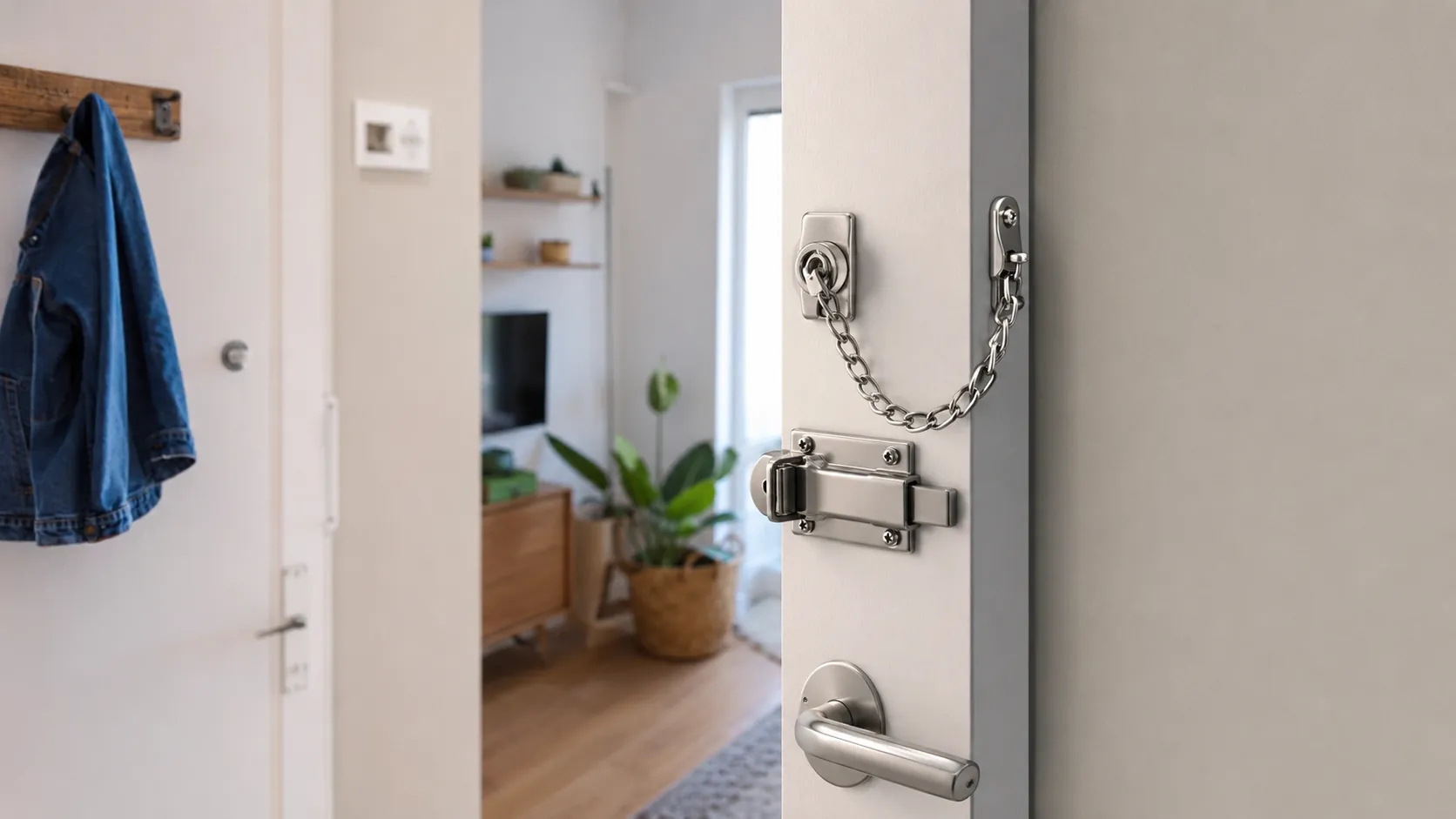
- The cylinder. Does it stick out more than three millimetres past the fitting? Then it can be gripped with pliers and snapped off or pulled. A flush cylinder with pull protection is a must.
- The lock itself. One locking point or several? An additional lock or a bolt creates a second and third holding point.
- The strike plate. A short standard plate with two screws is worthless. A long security strike plate, screwed deep into the wall, spreads the force.
- The hinge side. Without hinge-side protection, half the door is unprotected.
- The door leaf. A thin panelled leaf flexes. Sometimes a reinforcement layer makes sense.
What I actually recommend, sorted by effect
I have no time for expensive tech nobody uses. Let us start with what gives the most per euro.
The cross bolt, often called a bar lock, is my favourite for old buildings. It is screwed right across the whole door and locks into the wall on both sides, lock side and hinge side at once. That takes the ground out from under the classic prying method. Depending on the model and fitting it costs roughly 250 to 500 euros. For many Berlin old-building flats it is the single most sensible measure of all.
After that the cylinder. Out with the old, protruding cylinder, in with a tested model with drill protection, pull protection and an emergency function, so it can be unlocked from inside even when a key is in the outside. A good security cylinder runs 60 to 150 euros, and the swap is quick.
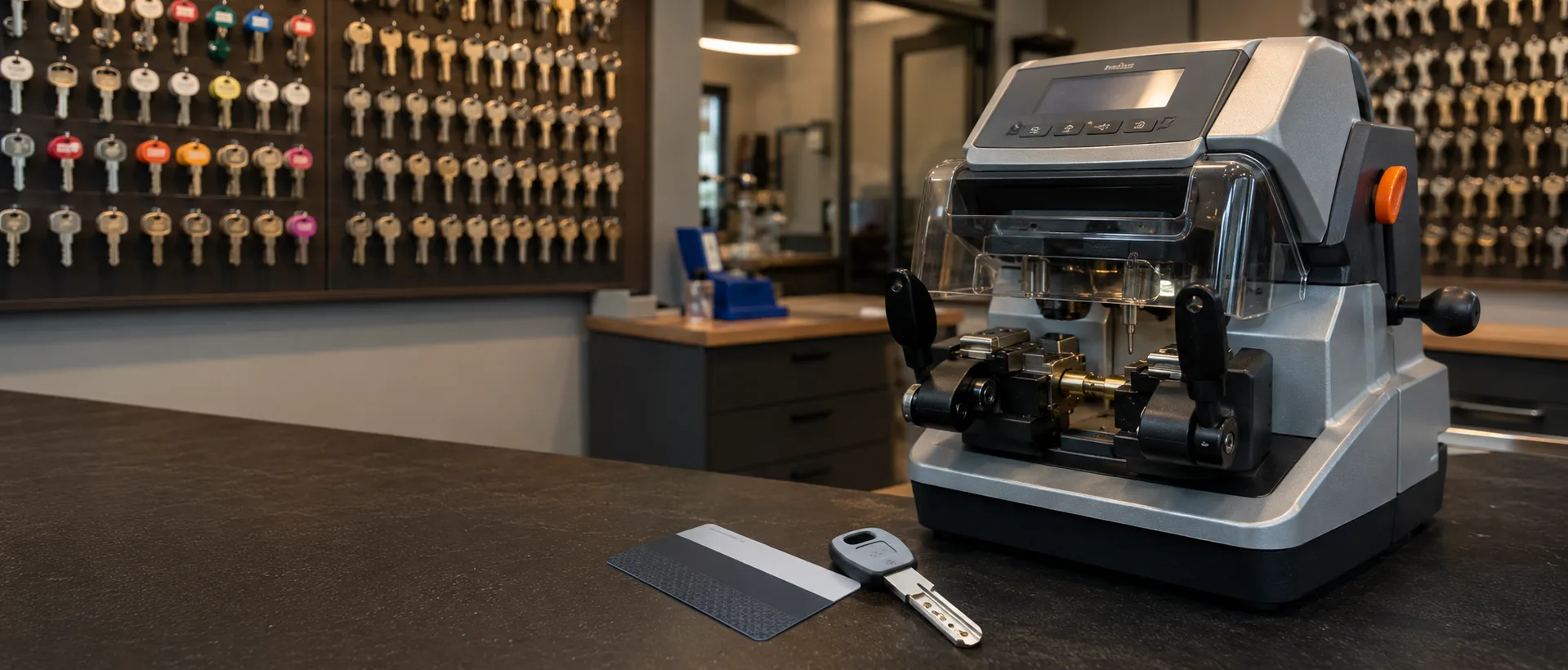
If the lock itself is weak, the path leads to a lock replacement with a multi-point lock, provided the door can take it. With several flats in a building that belong together, or commercial units on the ground floor, it is worth looking at a locking system, so one key cleanly operates several doors and lost keys do not undermine the whole setup.
Underrated but important: the hinge-side protection. A few bolts that engage the frame when the door is closed. Cheap, often under 60 euros, and it closes exactly the gap almost everyone forgets.
What all this realistically costs
So you have a bearing, here are the ranges from practice. No guarantees, Berlin tradesmen prices swing, but roughly we are in the right area.
| Measure | Realistic price |
|---|---|
| Security cylinder with pull protection, incl. fitting | 90 to 200 euros |
| Hinge-side protection | 40 to 120 euros |
| Retrofit security strike plate | 60 to 150 euros |
| Cross bolt / bar lock, incl. fitting | 250 to 500 euros |
| Additional lock with swing bar | 120 to 260 euros |
My advice on order: if the budget is tight, the cylinder and hinge side first, then the cross bolt. Doing it all at once saves the second callout trip.
Locked out and in a hurry?
Price quoted up front, vetted partner business, ~22 minutes on site.
Last week in Prenzlauer Berg
A story that shows what matters. Last week I was with a couple in Prenzlauer Berg, near Kastanienallee, classic Gruenderzeit building, third floor. The flat next door had been broken into two weeks earlier, in daylight, in under a minute. The two of them were nervous and really wanted a whole alarm system.
I talked them out of it. Their door was solid enough, but it had a protruding cheap cylinder and a strike plate with two short screws. We swapped the cylinder for a model with pull protection, fitted a long security strike plate and secured the hinge side. No alarm system, no cable mess. Under 350 euros. The decisive point is not electronics, it is that the door withstands the leverage until the offender gives up. And it does that now.
And once in Kreuzberg, how it should not go
Counter-example from Kreuzberg. There a tenant had ordered a very cheap additional bolt online and fitted it himself, with the short screws supplied, straight into old dry wood. Looked good. On the first hard pull the whole fixing tore out of the frame. The most expensive fitting is useless if it sits in crumbly wood. Security comes from the anchoring, not the brochure. If you are unsure whether your frame will hold, have it looked at before you drill.
Tenants in old buildings: what you may do and what the landlord pays
Briefly, because many ask. As a tenant you may protect your flat, but you may not alter the substance without agreement. A cross bolt that puts many holes in the door and frame should be discussed with the landlord first, ideally in writing. Reversible solutions are easier to push through. After a break-in that has already happened, the situation often looks different. This is general information and not legal advice, so when in doubt ask your landlord or a tenants' association.
Common questions
Does an alarm system do more than mechanical protection? No, not first. Mechanics keep the offender outside, an alarm only reports that he is already inside. Secure the door first, then think about electronics.
Is a good cylinder enough on its own? It matters, but on its own it is too little. What gets forced is usually not the cylinder but the door beside it. Cylinder plus strike plate plus hinge side is the minimum.
Is retrofitting on the ground floor especially worth it? Ground floor and first floor are preferred targets, as are easily reached flats via flat roofs and balconies. Yes, start there.
What does an on-site consultation cost? Often the first assessment is cheap or credited if you place the order. You will find an overview of all services in the services overview, and open questions we clear up in advance on the FAQ page.
My bottom line
Do not stare at the district ranking. Look at your own door, honestly, from bottom to top. In most Berlin old buildings three measures are enough to turn an invitation into a fortress: a cylinder with pull protection, a long strike plate and the hinge side. If you have the budget, add a cross bolt on top. This is not rocket science, it is solid craft. If something has already happened to you or you are standing at night in front of a damaged door, we are reachable on emergency at the weekend too. And if you just want to know where your door stands, book a consultation through the Berlin locksmith page. Better to upgrade once properly than call the police twice.