Good news first: you can make a rented flat in Frankfurt much safer without touching the structure, and the single most effective measure costs under 150 euros. It is swapping the lock cylinder for a tested model. That is reversible, falls under normal use of the lock, and when you move out you simply take the good cylinder with you.
I have written damage reports for insurers for sixteen years. So I do not just see what manufacturers promise, but what actually held after a break-in and what did not. And let me say this up front: tenants spend money in the wrong place. Expensive tech first, cheap mechanics left untouched. That is exactly the wrong way round.
Why the cylinder is almost always your lever
In many of Frankfurt's older buildings, especially in Nordend and Bockenheim, you still find the cheap standard cylinders from twenty years ago. They have no anti-drill protection, no anti-pull protection, often not even a decent cam. A practised offender pulls a cylinder like that out of the door in under a minute with a simple screw and a pair of pliers. It is called cylinder pulling. I have seen it in my reports so often that I recognise it in my sleep: shiny metal on the cylinder head, the door otherwise untouched.
A tested cylinder with anti-drill and anti-pull protection, such as ABUS Bravus, BKS or EVVA, costs around 70 to 130 euros for a flat door. Look for the DIN EN 1303 standard and choose the highest attack-resistance class the model offers. Many people can do the swap themselves, it is one screw on the face of the lock and the cylinder slides out. How that works in detail is in our guide on changing a cylinder yourself.
The key point for tenants: the cylinder is a wear part. Swapping it does not alter the rented property. You drill nothing, you screw nothing to the wall. Keep the old cylinder and put it back when you move out. That keeps the landlord completely out of it.
The important line: cylinder yes, lock no
This is where the paths split, and I often see tenants get it confused. The cylinder is uncritical. The actual mortise lock, the lock plate, the substance of the door leaf, that belongs to the landlord. If you start milling or drilling there without agreement, there is a dispute, and rightly so.
Rule of thumb: anything you can fully reverse without a trace when you leave, you may usually do without asking. Anything that leaves holes or permanently alters the door, agree it with the landlord first. Best in writing, a short email is enough.
What else works without building
There is a whole set of measures that screw on rather than build in. Sorted by effect, not by price:
- Surface-mounted additional lock or cross-bolt lock, fitted on the inside. This is the most effective addition after the cylinder, because it bolts the door on the hinge-free side as well. Costs 60 to 160 euros depending on the model, plus fitting. It leaves screw holes, so ask first. In my experience landlords approve it readily, often in writing, because it protects their value.
- Lockable window handles with a lock, about 20 to 40 euros per window. They only replace the handle, no hole, no dispute. Important above all on the ground floor and on patio doors.
- Surface-mounted window bolts or mushroom-cap retrofit fittings for the window, which stop levering attacks. Here you do screw something in, so again, agree it briefly.
- A timer for lights and radio when you are away. Sounds old-fashioned. But it works. Most burglars avoid flats that look lived in. Costs five to fifteen euros and needs no permission at all.
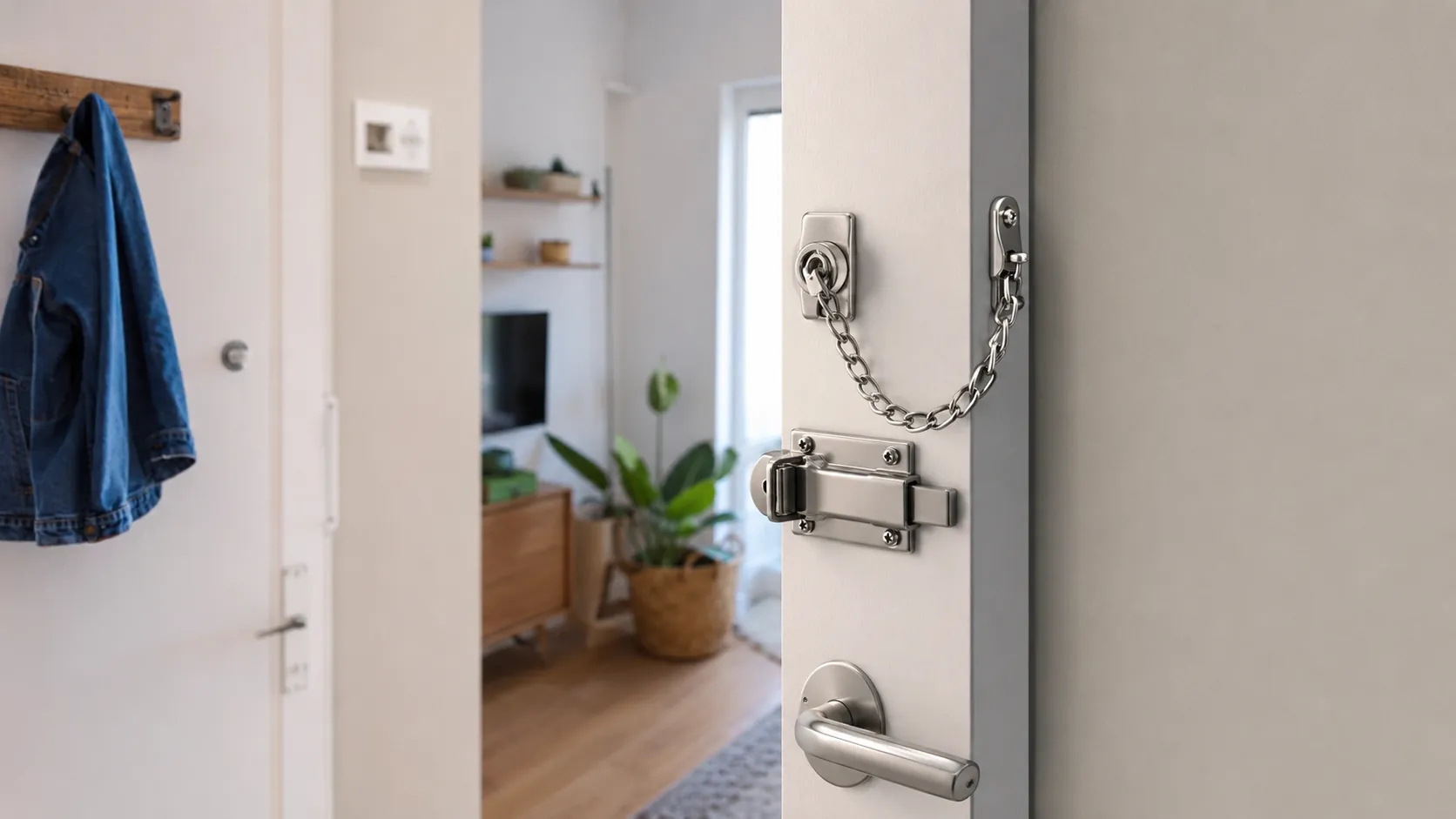
- A door viewer or wide-angle viewer, if there is not one already, plus a simple door chain. Not burglary protection in the strict sense, but protection against the doorstep con that works alarmingly often on older tenants in Frankfurt.
What really pays off per euro of effect
When I give tenants an order to work in, it looks like this:
| Measure | Cost approx. | Ask landlord? | Effect |
|---|---|---|---|
| Tested cylinder | 70 to 130 EUR | no | very high |
| Cross-bolt lock inside | 60 to 160 EUR | yes | high |
| Lockable window handles | 20 to 40 EUR per window | no | medium |
| Retrofit window bolts | 30 to 80 EUR per window | yes | medium to high |
| Timer | 5 to 15 EUR | no | medium, cheap |
You can see it: the two strongest items are the cylinder and the cross-bolt. Everything else is fine-tuning. Start at the top, work your way down.
A story from Gallus, one from Bornheim
Last autumn I was at a couple's place in Gallus, ground floor, freshly moved in and rattled after a break-in in the same building. We swapped the old standard cylinder for an ABUS with anti-pull protection, fitted two lockable window handles and wired up a timer. Total under 300 euros, all reversible, no dispute with the landlord. They have slept easier ever since, and in the end that is the point.
Different story last week in Bornheim. There a tenant had already put two thousand euros into a wireless alarm system with an app and cameras, but on the flat door still sat the cheap cylinder from 1998. The alarm would have filmed and reported the break-in, it would not have prevented it. For 110 euros we swapped the cylinder and talked through a cross-bolt. That was the money that should have gone in first from the start.
Locked out and in a hurry?
Price quoted up front, vetted partner business, ~22 minutes on site.
Where I explicitly rein you in
Skip the expensive cameras and wireless alarm systems as long as the mechanics are not right. A camera films the break-in, it does not prevent it. The Police Crime Statistics have shown the same trend for years: a substantial share of break-ins stay stuck at the attempt stage, namely on good mechanics. That matches what I see in my reports. Whoever secures the door and the reachable windows mechanically first has most of the protection for a fraction of the money.
Hands off the no-name cylinders for nine euros from the hardware-store bargain bin too. They have no tested attack protection and the locking feel is often gone after a year. With burglary protection cheap is almost always expensive. Which burglary protection suits your specific door we are happy to assess on site, without talking you into anything. If the cylinder sticks or the key catches, it is worth a look at the guide before the swap, otherwise you may swap past the symptom.
What does it cost with a pro, what can you do yourself?
Swapping the cylinder yourself saves the call-out and labour, realistically 60 to 120 euros. If you are unsure or the door is fussy, have it done; a clean cylinder swap by a specialist comes in fairly at around 130 to 200 euros including the part. What services may cost and how to spot dodgy providers you will find transparently on the pricing page. And if you do lock yourself out before the new security is in place: the emergency service opens a slammed door without damage, nothing needs drilling.
Talking to the landlord pays off
Bigger measures like a burglary-resistant door to DIN EN 1627 in class RC2 you should raise rather than tinker with in secret. Often the landlord even covers part or the whole door, because a secure door protects their value and helps against consequential damage. I have seen this several times in Frankfurt, especially on longer tenancies in Westend and Sachsenhausen, where landlords want to look after their substance.
Put it in writing, that protects both sides. Who ends up paying which item, wear versus improvement versus self-inflicted key loss, is clearly regulated in tenancy law and otherwise causes a nasty surprise when you move out. We have broken down the key cases in our piece on who pays for the lock change. A neutral view of your rights as a tenant is also available from the tenants' association.
Briefly answered
May I as a tenant simply swap the cylinder? Yes. The cylinder is a wear part, swapping it does not alter the rented property. Keep the original and put it back when you move out.
Do I need permission for window handles or a timer? No. Both are reversible without a trace. Only when you screw into the door or frame do you ask first.
Is an alarm system worth it for a rented flat? Only after the door and reachable windows are mechanically sound. Before that it is expensive cosmetics.
Bottom line: the biggest security gains in a rented flat cost little, are reversible and need no building application. Start with the cylinder, then the cross-bolt, then the windows. The rest you can save yourself.