
The most important insight first, because it surprises almost everyone: in Bonn, break-ins do not mostly happen at night, but at dusk and during afternoon absences. And the most common entry point is not the flat door, but the tilted window and the patio door. So if you want to protect your home, start where it actually happens, not where you know it from films.
I have advised on burglary protection for years and have been in almost every Bonn district, from the old-building streets to the row-house rows on the edge of town. I invent no figures here. Anyone looking for reliable statistics finds them in the police crime statistics of the BKA. What I add is the pattern behind the numbers and what it means for your particular door.
What the regional picture shows, without playing with figures
Nationwide, two things hold true for residential burglary, and they hold for greater Bonn too. First: a considerable share stays stuck at the attempt stage. Good mechanical security is the main reason offenders give up. Second: the clearance rate is low. So do not rely on the offender being caught afterwards. Preventing beats solving.
For Bonn a few local peculiarities come on top. The city mixes densely built Gruenderzeit quarters with classic row-house and semi-detached areas. Both housing forms attract different approaches. In the old-building areas it is the flat door and the cellar window. In the row-house areas it is the patio door, the garden-side windows, and sometimes the link via garage or side entrance. To protect it, you have to know which of the two worlds you live in.
Old flat: the classic weak points
In the Gruenderzeit areas the picture has been stable for years. The attack points are:
- The flat door with an old, unprotected cylinder or even a warded lock.
- The cellar window, often only hooked in, without any securing.
- The building entrance that stands open through followers when many parties come and go.
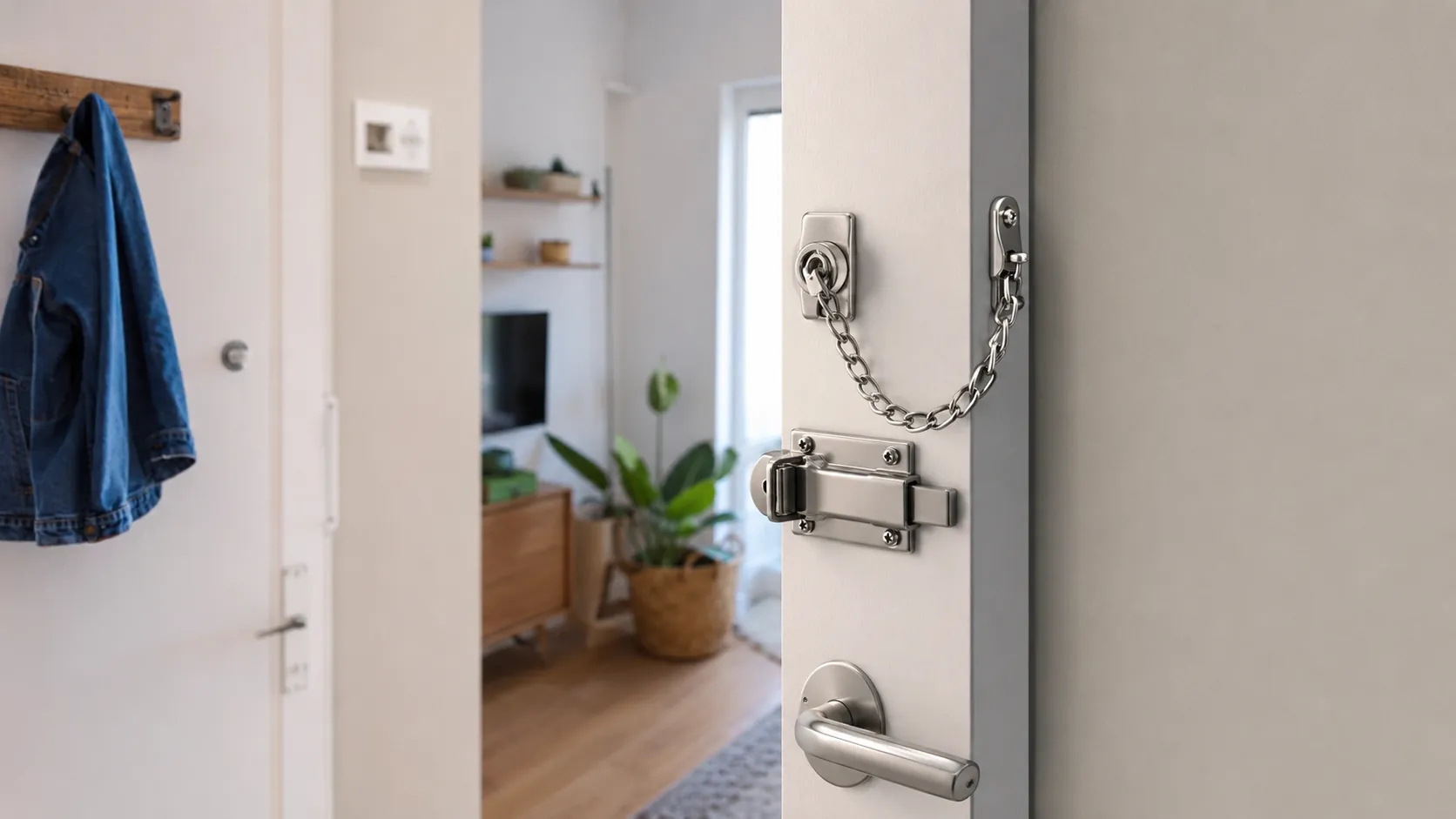
The most effective first step is almost always the cylinder. A modern profile cylinder with anti-pull and anti-drill, fitted flush, costs 60 to 150 euros as a part and takes the easiest method away from the opportunist. Right after that come the frame and the fitting. Anything that makes levering harder is well-invested money. Complete burglary protection for an old door is rarely a single product, but the sum of cylinder, security fitting and add-on lock.
A quick aside: the cellar window
This gets forgotten constantly. A lockable window handle, a grating lock or a window bar lock turns a silent entry into loud work that no one risks. Costs little, does a lot.
Row house: everything shifts to the back
The row house is a completely different site than the old flat. At the front, towards the street, everything is usually tidy. The problem is the back. On the garden side sits the patio door, often a simple tilt-and-turn design with mushroom-head bolts at best, with plain roller bolts at worst. And the garden is screened from view, which is pleasant for you and just as pleasant for the offender.
The priorities at the row house look like this:
- Retrofit the patio door and floor-to-ceiling windows with lockable handles and, where possible, mushroom-head locking. That is the main entry.
- Anti-lever protection on the garden-side window sashes, because they are unobserved.
- Do not forget the crossing via garage, side entrance or cellar door. A well-secured front door is useless if the internal garage door has a hardware-store lock.
- On move-in or a lost key, plan the lock replacement so no unknown keys stay in circulation.
My clear position: at a row house, money that flows into the front door while the patio door stays open is half thrown away. The chain breaks at the back.
Last month in Bad Godesberg
A case that shows this well. Last month I was at a couple's place in Bad Godesberg, a well-kept row house with a lovely garden. At the front a solid, fairly new front door, faultless. At the back a patio door from a good twenty years ago, simple roller bolts, a lockable handle that no one ever locked.
There had been a levering attempt, luckily unsuccessful, because the neighbour heard something and turned a light on. The marks on the frame were unmistakable. We retrofitted the patio door with mushroom-head bolts and security strike plates, plus the two floor-to-ceiling windows beside it. Cost in the low four figures for the whole garden side. We did not touch the front door at all, it was fine. That is exactly how it should go: money where the gap is.
Locked out and in a hurry?
Price quoted up front, vetted partner business, ~22 minutes on site.
And last week in Beuel
Different pattern, different housing form. Last week an old flat in Beuel, ground floor. Here it was the kitchen window to the courtyard, tilted, while the resident was briefly out shopping. A tilted window is, for a practised offender, an open window in seconds, practically an invitation sign. We fitted lockable handles and gave her the key point: tilted is open. Whoever leaves the flat closes fully, not on tilt. That costs nothing and prevents more than most people believe.
When do break-ins happen, and what that means for you
The dark season is the main season, because early nightfall makes absence visible. A house with no light in the early evening signals: no one home. So securing is not only mechanics, but also simple presence simulation. Timers for lamps, a radio, no overflowing letterbox. That is cheap and it works.
The weeks around holiday times and the early darkness in autumn are especially sensitive. Not because offenders read calendars, but because many homes then stand visibly empty. Anyone travelling should never announce their absence in advance on social media. Sounds banal, but it is a real factor.
Prices: what to expect
Guide figures for the Bonn market, no guarantees. Window and door work depends heavily on the existing build.
| Measure | Realistic range |
|---|---|
| Lockable window handle, fitted | 30 to 80 euros per window |
| Mushroom-head retrofit per sash | 80 to 200 euros |
| Anti-lever patio door retrofit | 200 to 600 euros |
| Security cylinder incl. fitting | 120 to 260 euros |
| Add-on flat-door lock, fitted | 150 to 350 euros |
A sensible base securing of a row house on the garden side often lands in the low to mid four figures, an old flat door well below that. Both are well-spent money, considering what a ransacked home costs in property value and, more honestly, in sense of security.
How to approach it, in order
Instead of wanting everything at once, here is the order I recommend:
- An honest look from outside: where would I get in? Usually the answer is quick.
- Close the one obvious weak point first. In the old flat the cylinder, at the row house the patio door.
- Follow up the windows on the unobserved side.
- Adjust behaviour: never rely on tilt, simulate presence.
- Only after that think about electronics like alarm or camera.
Anyone living in Bonn who does not know where to start finds the overview on the page for Bonn. For the row-house areas, above all Bad Godesberg, Duisdorf and Beuel are typical, but the principles apply citywide, including in mixed areas like Endenich. You can also get independent, product-neutral first advice from the police via k-einbruch.de and from the consumer advice centre.
Frequent questions
Is burglary protection even worth it if offenders are rarely caught? Precisely because of that. Because solving is hard, prevention is the only reliable lever. And prevention works: a large share of attempts fails on good mechanics, because the offender gives up after a few minutes.
I rent a row house. What may I retrofit? Lockable handles and many surface-mounted locks are unproblematic and often removable. Interventions in window profiles or doors you discuss with the owner. This is general information, not legal advice. Often the landlord will even support such measures if you ask.
Camera or alarm, which first? Neither, as long as the mechanics are not in place. Electronics report or document, they stop no one. First the patio door and the cylinder, then the technology on top.
I locked myself out, is that a security problem? Not immediately, but it often shows that only one key exists. Use a door opening as the occasion to get a clean spare key and, if needed, a new cylinder. Non-destructive opening is almost always possible.
Where do I find more guides? We collect further pieces on security and emergencies in the guide. In an acute case you reach us around the clock via emergency, and open questions are cleared up on the FAQ page.
Burglary protection in Bonn is no wizardry and no fortune. It is the right order: first understand where the gap sits for your housing form, then work solidly exactly there. Old flats and row houses need different things, but both reward whoever starts in the right place.