In short: there is no district in Hannover where you can feel blindly safe, but there are clear patterns. Burglars go where it is quick, quiet and unobserved. That hits the detached house on the edge of town just as much as the ground-floor flat in an inner-city building. If you keep only one sentence from this piece: what decides success or failure is almost always the mechanics on the door and window, not the expensive alarm.
I am Sophie, and for fourteen years I have advised private households and small businesses on burglary protection, out and about in Hannover from the city centre all the way to Kirchrode. I will tell you now what I see in which district, which figures hold up and which do not, and where your money truly belongs. If you want to act straight after the advice, you will find the right service under burglary protection. An overview of what we offer locally is on the locksmith in Hannover page.
What the statistics show, and what they do not
Let us start honestly. I am not going to throw invented percentages at you, because that is exactly what too many guides do. What is certain: residential burglary is, according to the police crime statistics, one of the offences with a low clearance rate nationwide, and a substantial share of attempts get stuck at the try. That is the genuinely good news. The cases that fail almost always fail on stubborn mechanics, not on chance.
Anyone looking for solid figures specifically for Hannover should check the crime statistics of the police directorate and the federal picture from the BKA. The city itself publishes safety and prevention advice via hannover.de. Rely on these sources rather than the gut feeling from the stairwell conversation, because on crime that feeling is almost always wrong, in both directions.
One point up front, because it constantly gets muddled: few reported cases in a district does not mean it is safe. It often just means there are fewer worthwhile or accessible targets there. Conversely, a district with many attempts is not dangerous but frequently simply well secured, which is why it stays at attempts.
The picture, district by district
Mitte: ground floor, courtyard, cellar
In Mitte a lot revolves around the ground-floor flat and around what lies at the back. The stately street entrance is rarely the problem. The problem is the rear courtyard, the poorly lit side door, the cellar window that has never seen a grille since the war. In the commercial buildings around the arcades there is also the fact that strangers come and go all day, and nobody stands out. If you live here, take the flat door seriously and do not rely on the building entrance lock alone.
Kirchrode and Bemerode: the houses on the Kronsberg
Out in Kirchrode and up on the Kronsberg in Bemerode the world looks different. Here stand detached houses with gardens, patio doors, floor-to-ceiling windows and a hedge that provides privacy for the residents, but equally for whoever is at work on the back of the house. The patio door is the number one point of entry in these areas. An unsecured plastic window or a simple patio door is levered open by a practised offender in under a minute, without any noise. If you live on the edge of town, your money is best spent on the windows and the patio door, not on the front door alone.
Herrenhausen and Vahrenwald: the mixed bag
Herrenhausen and Vahrenwald are the in-between case. Sometimes an apartment block, sometimes a terraced house, sometimes the old building next to the post-war block. Here everything depends on the individual property. The apartment blocks often have a front door that twenty people prop open in the morning, and then your protection stands on your flat door alone. That is frequently the weakest link, because many people save on the flat door and splash out on the building entrance lock.
Where burglars in Hannover actually get in
Forget the cliche of the master cracker who outwits the security lock. That is the absolute exception. In practice things get levered, at the weakest spot:
- The patio or balcony door, because it lies flat and nobody sees it.
- The tilted window, which is practically an open invitation. A tilted window counts as open.
- The cellar window or cellar door, especially in the inner-city buildings of Mitte.
- The side entrance door that has had the same weak mortise lock for thirty years.
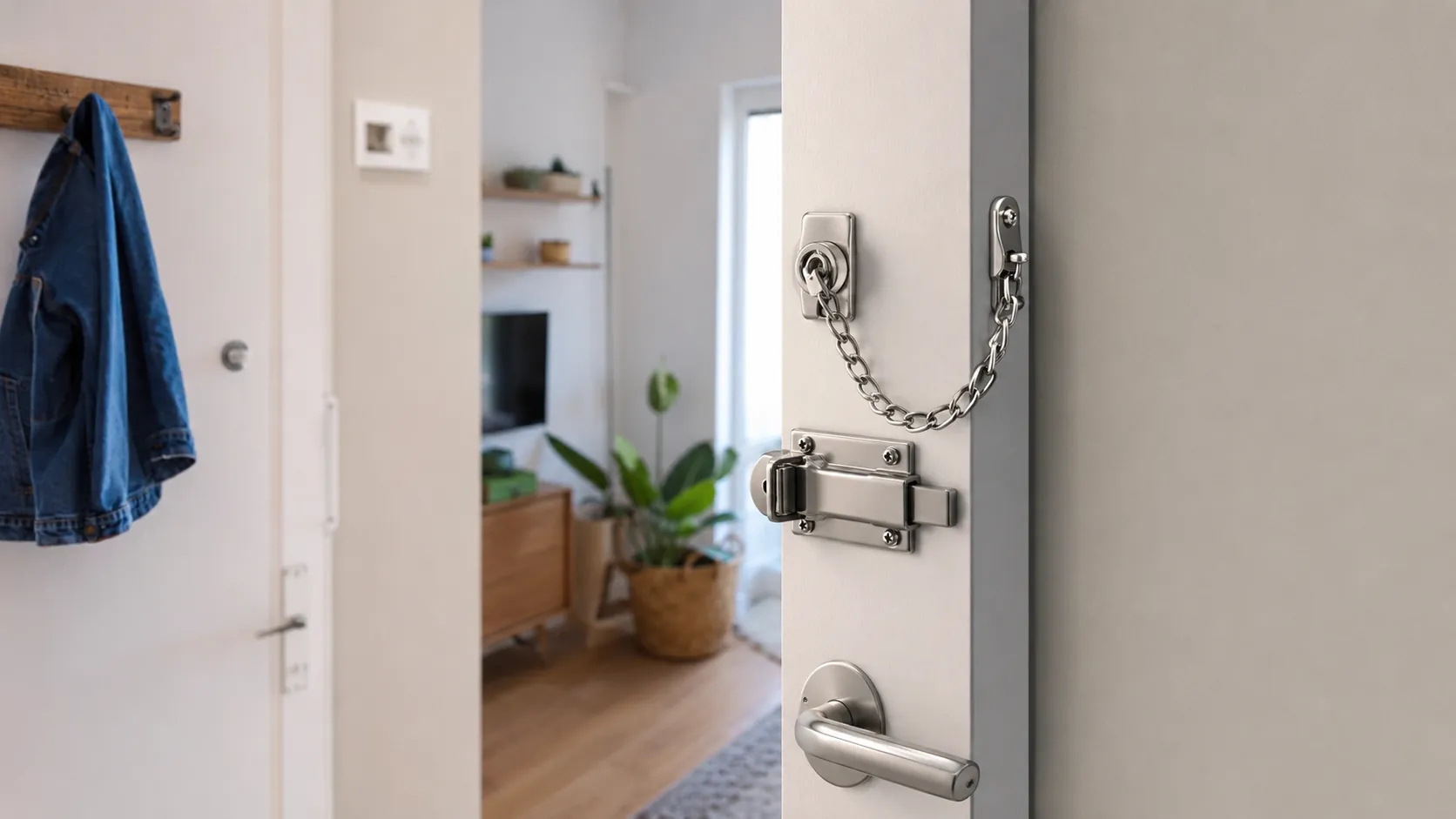
The flat or front door is usually only tackled when it is visibly weak. A visibly upgraded cylinder with pull protection and an extra lock deter before the first lever is even set. Deterrence is half the battle.
What protects, and what burns money
Now to the practical side. I go by the standard DIN EN 1627, which sorts doors and windows into resistance classes, from RC1 to RC6. For the ordinary home in Hannover, RC2 is the sensible target. Anything above is usually overpriced for private households, anything below barely worth mentioning.
What matters on the door: a cylinder with drill and pull protection to DIN 18252, a lock that engages cleanly in the frame, and where needed a surface-mounted extra lock or a cross bar. Where the old lock is worn out, a full lock replacement beats patchwork. For multi-party buildings, where everyone should get into the building but only into their own flat with the same key, a clean locking system is worth its weight in gold.
Here are the ballpark figures you should expect in Hannover. These are market ranges, not guarantees, because every door is different:
| Measure | Realistic price |
|---|---|
| Security cylinder with drill and pull protection, fitted | 90 to 200 euros |
| Surface-mounted extra lock, fitted | 150 to 300 euros |
| Cross-bar lock for double-leaf doors, fitted | 300 to 600 euros |
| Hinge-side security per door | 30 to 80 euros |
| Mushroom-cam locking retrofit per window | 80 to 150 euros |
What burns money: the four-figure wireless alarm from the online shop that nobody ever arms, and the dummy camera that any offender spots as a dummy from two metres. Buy the mechanics first. Electronics are the extra, not the essential.
Locked out and in a hurry?
Price quoted up front, vetted partner business, ~22 minutes on site.
The other week in Bemerode
A case from three weeks ago, because it is so typical. A family in Bemerode, lovely house on the slope, patio door facing south to the garden. The people were away for the weekend, shutters down, everything supposedly tight. The offender came through the neighbouring garden, levered the patio door open in under a minute, was in and out again before anyone noticed.
When I came round for the advice afterwards, the maths was quickly done. Retrofitting the patio door with mushroom-cam locking and a surface-mounted extra lock would have cost a few hundred euros beforehand. The damage in the end, with a levered frame, stolen jewellery and the uneasy feeling that lingers for months, was many times that. I do not say this to scare you, but because the order is almost always the same: first it happens, then people upgrade. Turn that around.
Your neighbourhood is your best camera
One point I raise in every consultation, and it costs nothing: attentive neighbours beat any technology. In the inner city of Mitte, where people live anonymously, that is harder than in Kirchrode, where everyone knows each other. But it can be built up. Whoever goes away tells the neighbour, has the letterbox emptied and asks them to take a close look at strangers around the house. A call at the right moment has prevented more burglaries than many an alarm.
And no, you do not have to become paranoid. Whoever knows which districts and which doors are affected can act in a targeted way rather than fear everything in a blur. That is exactly what this district picture is for.
After a burglary: the first night
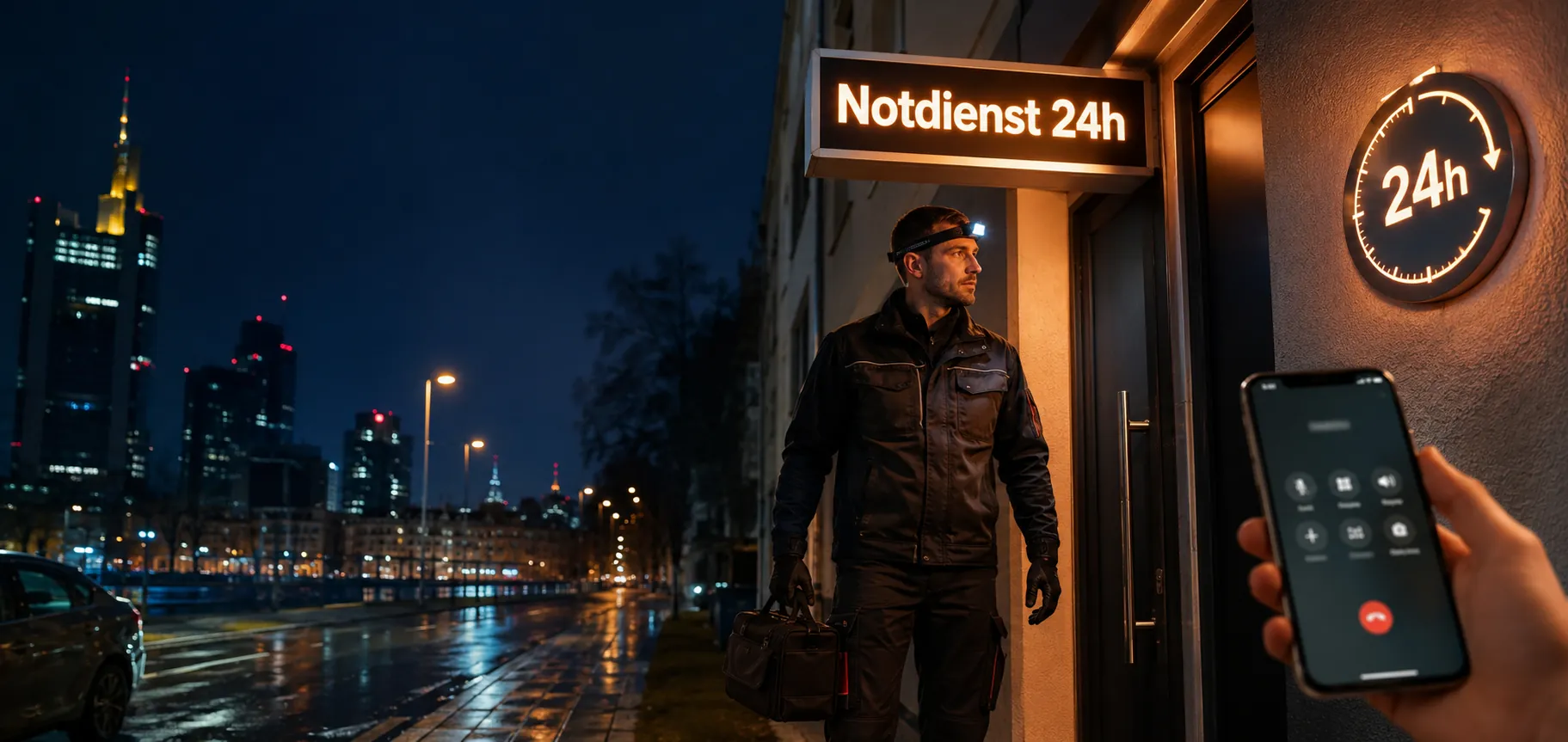
If it does happen, the first thing that counts is that the home can be locked again. A levered door cannot be properly secured overnight, and nobody sleeps with that feeling. We come out on emergency callout in the evening and at the weekend too, secure the door temporarily or swap the lock straight away, so you spend the night behind a locked door. The next day we talk calmly about the permanent upgrade.
Remember the police report and photos for the insurer before you tidy up. And do not let yourself be pushed, in the first rush, into signing for the most expensive solution. Good burglary protection needs a clear head, not a night-time deal.
Frequent questions
Which district of Hannover has the most burglaries? Only the police statistics give a serious ranking, and it fluctuates from year to year. More important than the district is the building type: detached houses with a garden and a screened-off rear are fundamentally more exposed than the flat on the third floor.
Is an alarm worth it? As a supplement yes, as a replacement for mechanics no. First lever-resistant windows and doors, then electronics. An alarm reports, but it stops nobody.
Will insurance pay after a burglary? Contents insurance usually covers a proven break-in. In cases of gross negligence, such as a tilted window, it may reduce the payout. This is general information and not legal advice, so read your policy or ask your insurer if in doubt.
As a tenant, do I have to ask before upgrading? Surface-mounted extra locks can usually be fitted with little residue, while larger interventions on the door and frame should be agreed with the landlord. Often they even chip in when it upgrades the property.
My bottom line
Burglary protection in Hannover is no wizardry and not a matter of the district alone. It is a matter of the weakest spot on your house, and after this piece you know it pretty precisely: the patio door in Kirchrode and Bemerode, the cellar window in Mitte, the neglected flat door everywhere. Start with the mechanics, stay at RC2, and get an honest assessment before you buy. You can see all the services we offer in the services overview, we answer frequent questions in one place in the FAQ, and which areas we cover is listed under service areas. Call before something happens. That is always the cheaper way.