Let me answer the question I get asked most, right up front: there is no single right burglary protection for Essen. What actually makes your home safer is decided above all by its age and how it was built. A garden-city house on the Margarethenhoehe needs something different from a fifties apartment block in Altenessen or a Gruenderzeit flat in Ruettenscheid. I have advised on burglary protection in this city for years, and every week I see money spent on the wrong thing.
That is why I sort this not by product, but by house. Find the section that matches your home, and by the end you will know where your euro does the most good.
Why the build year decides almost everything
Burglars are lazy, and that is the good news. The vast majority do not get in through high-tech, but through the weakest window or the poorest door they can open in two or three minutes. The Federal Criminal Police Office has pointed out for years that a large share of break-ins stall at the attempt stage when the mechanics hold. That is where good protection works. Not at the camera, not at the app. At what keeps the door and the window in their frame.
And that differs completely from era to era. A window from 1908 sits differently in the masonry than one from 1957 or 1992. The fittings differ, the timber differs, the door frame differs. Give an old building the same standard solution as a new build, and you either overpay or protect the wrong spot.
The garden city: Margarethenhoehe and heritage rules
Let us start with the special case, because it is the loveliest and the trickiest. The Margarethenhoehe is a garden city, much of it listed or under a preservation statute. In practice that means you cannot simply swap the look of the windows and front doors. White plastic windows with thick mushroom-cam locking are often simply not allowed here.
The answer is upgrading rather than replacing. Onto the existing timber windows go bolt-on window locks and lockable handles, on the inside, invisible from the street. For the old front door there are add-on locks and a good security cylinder with pull protection, without the historic door leaf suffering. I did several of these houses last year, and the heritage office played along because the upgrade was reversible and invisible from outside. That is the trick: reversible and discreet.
A word on the cost bracket so you are not caught out. A solid lockable window lock is often 20 to 40 euros a piece for the part, with fitting on top. Budget generously for a whole ground floor, but it is a fraction of what new heritage-grade windows would cost.
Gruenderzeit and old buildings: Ruettenscheid, Werden, Frohnhausen
Now the classic I see most in Werden, in parts of Frohnhausen and of course in Ruettenscheid: the Gruenderzeit and turn-of-the-century houses. High ceilings, lovely old flat doors, often a box lock from a time when nobody thought about anti-drill protection.
The weak point is almost always the same. The flat door looks solid, but the cylinder is a hardware-store model with no drill or pull protection, and the door closes on a single latch. Burglars lever a door like that open in seconds with a screwdriver at the frame. Here, swapping in a cylinder to DIN EN 1303 with a security card brings a noticeable gain at once, combined with a protective escutcheon that hides the cylinder.
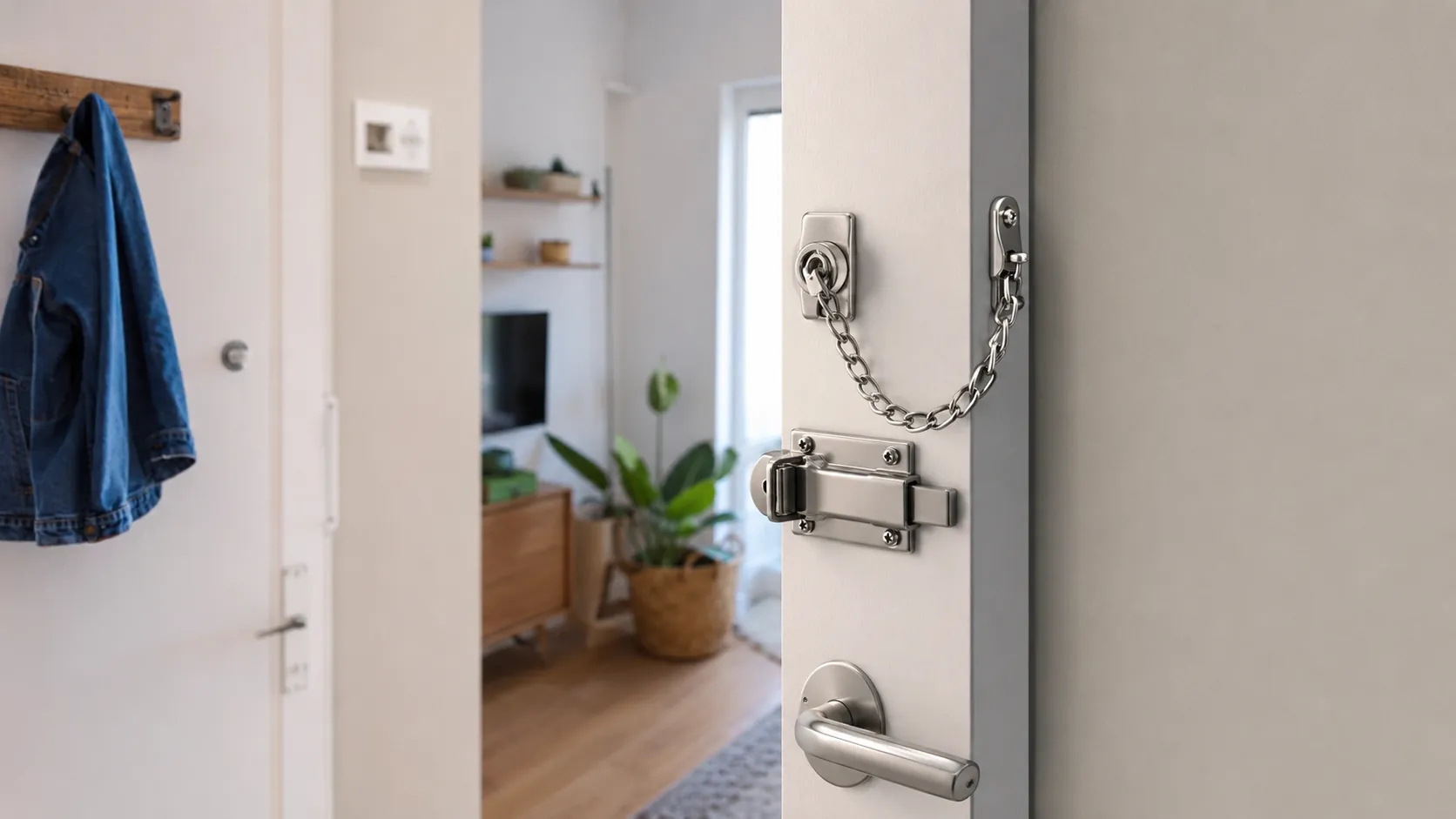
If the door already sticks or the lock is worn, it is worth doing the lock replacement with multi-point locking straight away. On tall old doors a cross-bar lock is often the single most effective measure, because it holds the door in the frame across its full width. It looks like little, but it is exactly what a levering attempt fails against.
The typical old-building mistake
Many people spend a lot on a heavy door and skimp on the frame. That is back to front. The best door is useless if the old frame gives way. So I always look first at how the frame sits in the masonry, before I talk about the lock.
Postwar blocks: Altenessen, Katernberg and the fifties
A very different picture in the north of Essen. In Altenessen and Katernberg there is a lot of postwar and colliery-estate building, plus apartment blocks from the fifties and sixties. The doors and windows there are rarely of historic value, which makes things easier: you may replace what is weak.
The big weak point in multi-storey housing is the flat's own front door and, on the ground floor, the cellar windows and the patio door. Cellar windows tend to be forgotten. Yet they are often simple tilt sashes you can lever out from outside at your leisure. A mushroom-cam fitting and a window grille where it suits cost little and protect a lot.
For the flat door in a postwar block the path is clear: a good cylinder with pull protection, a protective escutcheon, and if the budget allows, a retrofit multi-point lock. Because there are many rented flats here, the rule is: talk to the landlord before you drill. Who pays for what is a topic of its own, which I sorted out with a colleague in another piece in the guide.
Villas and detached houses: Bredeney and Kettwig
Up at the top, in the south, the world looks different again. In Bredeney and in Kettwig there are many detached houses with gardens, some generous villas. The advantage: more distance to the neighbour. The drawback: that very distance, plus lots of greenery and often a rear that cannot be seen from the street. That is the side people get in on.
Detached houses have many points of attack: patio doors, floor-to-ceiling windows, side entrances, the garage door with a passage into the house. One measure is not enough here, this needs a concept. I always start with the rear, because the statistics are clear: people get in where they cannot be seen. Floor-to-ceiling windows and patio doors get lockable handles and mushroom-cam locking all round, the side entrance door is treated like a front door, not like a cellar door.
Anyone with several entrances and outbuildings should think about a locking system, so you do not end up with ten different keys on the ring and the one for the garden shed back under the mat. That key under the mat, by the way, is the first thing anyone looks for.
Locked out and in a hurry?
Price quoted up front, vetted partner business, ~22 minutes on site.
What really protects, in the right order
My position after many years, and here I am blunt: buy mechanics first, electronics only after. A camera films the break-in, it does not prevent it. A proper mushroom-cam locking with lockable handles and a cylinder with pull protection prevent it. In this order:
- Secure ground-floor windows and patio doors mechanically. That is the most common entry point, full stop.
- Front and flat door: security cylinder with pull protection plus protective escutcheon, multi-point locking if needed.
- Do not forget cellar windows and side entrances. Those are the quiet weak points.
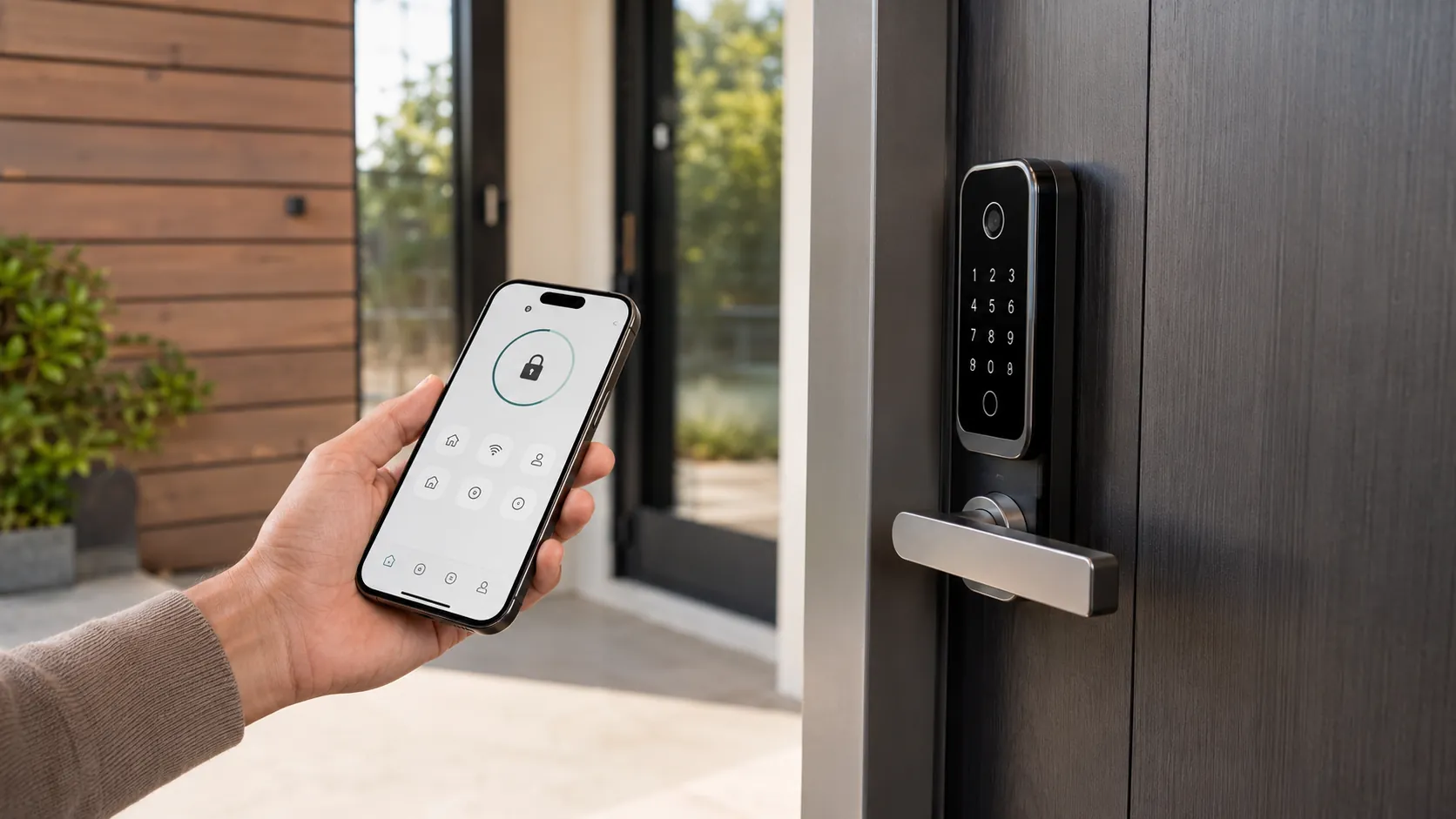
- Only after that, lighting with a motion sensor and, if you like, a camera or alarm.
When upgrading, look for tested products to DIN EN 1627 in a resistance class that suits the house. For most homes in Essen, RC 2 is the sensible size. RC 3 is a topic for the exposed villa in Bredeney, for the flat in Frohnhausen it is usually overkill. If you want to read up independently, the police offer good, brand-neutral explanations under the keyword K-Einbruch.
And what does it really cost?
Because people always ask, here are rough market ranges for Essen, without guarantee, because every house differs:
| Measure | Realistic range |
|---|---|
| Lockable window handle, per window | 20 to 45 euros for the part |
| Mushroom-cam retrofit fitting, per window fitted | 90 to 180 euros |
| Security cylinder to DIN EN 1303 | 60 to 150 euros |
| Protective escutcheon for the front door | 60 to 200 euros |
| Cross-bar lock, fitted | 250 to 500 euros |
| Retrofit multi-point lock | from about 500 euros |
These are reference points, not quotes. The price depends on the number of windows, the state of the frame and whether we work on the existing fabric or may replace freely. Incidentally, the KfW subsidises burglary protection under certain conditions as a grant, this changes now and then, so a quick check before you commission is worth it.
Last week in Werden
A case from last week, because it is so typical. A family in Werden, a lovely old building, had treated themselves to an expensive video doorbell with an app and were very proud of it. The flat door next to it still had the original cylinder from probably 1975, with no pull protection at all. I pulled that cylinder in under a minute with a simple tool, not to show off, but to make the point. In that moment they understood what matters. We swapped the cylinder and the escutcheon, upgraded the ground-floor windows, and the video doorbell got to stay as a nice extra. That way round it makes sense.
Common questions
Is burglary protection worth it if I have never been broken into? Especially then. Most prevention happens before the first time. And many attempts fail against solid mechanics alone, which keeps things cheap.
Can I retrofit this myself? Simple window handles yes, if you are handy. For cylinders, escutcheons and anything sitting in the frame I would advise against it. Drill it wrong and the protection does exactly nothing.
RC 2 or RC 3? For the great majority of Essen homes, RC 2. RC 3 only for an exposed position, detached, with an unseen rear. Anything above that is usually wasted money for a normal home.
What about insurance? Some contents insurers reward documented burglary protection. Ask beforehand, have the measures recorded. And should something happen anyway, we are reachable through the emergency service at the weekend too.
My bottom line
Start with your house, not with the catalogue. Margarethenhoehe means discreet upgrades, an old building in Ruettenscheid means cylinder and frame, a postwar block in the north means cellar windows and flat door, a villa in Bredeney means the rear first. Mechanics before electronics, tested to standard, and better solid in the right place than a bit everywhere. If you are unsure which level suits your home, look at the FAQ or call. An honest on-site assessment for all of Essen is still the best basis, and the Federal Criminal Police Office confirms at bka.de that good mechanics are the most effective lever.