If you live in Stuttgart and want to know where break-ins happen and what actually protects you, I have an uncomfortable answer: the district matters less than most people think. Burglars break in wherever the door gives way in thirty seconds. Whether that is in Mitte, in the eastern part of the city or in a villa street up in Degerloch depends above all on the lock, the fitting and how reachable the entry is, not on the postcode. If you take away one thing from this text, let it be this: invest in the mechanics before you invest in gadgets.
I am Sophie Krüger and I have advised households and small businesses in the region on burglary protection for years. I do not sit in an office polishing statistics, I stand at the doors after it has happened and see where the crowbar went in. That is exactly the point here: what the situation in Stuttgart's districts really shows and what of that helps you decide.
First the numbers question, answered honestly
You want a percentage. I will not give you one I bent into shape. According to the police crime statistics, residential burglary is nationally one of the offences with a low clearance rate, and a large share of attempts fail because a well secured door simply holds too long. That is the solid statement. Anyone who quotes you an exact burglary figure for your street usually invented it. If you want to read the trend for Baden-Württemberg seriously, look at the publications of the BKA and the prevention pages of the police at K-Einbruch. That is context, not scaremongering.
What I can add from practice: the offenders work fast, often at dusk, and they avoid houses where they lose time. Time is their biggest fear. Every minute a door or window holds longer really lowers your risk.
What sets the districts apart is the way they were built
Here it gets concrete, and here Stuttgart's geography helps. The districts differ less in risk than in the type of weak point.
In Stuttgart-Mitte commercial locations dominate, offices above shop rows and densely built residential streets. The typical weak point here is the flat door in a multi-party building, often still with a simple cylinder from twenty years ago, and the cellar entrances you can reach comfortably from the inner courtyard. Anonymity helps the offender: in a large building a stranger in the stairwell barely stands out.
It is quite different in the western part and the south. This is old-building Stuttgart, tall period houses, beautiful old front doors with box locks, large windows on the raised ground floor. These old doors are charming and mechanically often a disaster. A box lock from 1905 looks solid but rarely withstands a modern prying attempt, because the frame flexes and the bolt has little engagement. On the raised ground floor a ladder from the backyard is enough for the offender.
The eastern part and Bad Cannstatt are mixed: old buildings next to post-war buildings next to new builds. Here I see the whole range, and here an honest stocktake pays off the most, because from outside you can barely tell what kind of lock sits behind the door.
What really protects, in the order I would tackle it
Forget the order advertising gives you. Not the camera first. The mechanics first.
The cylinder is the cheapest big lever
The lock cylinder is the part that gets underestimated most often. An old cylinder can be snapped or pulled, and then the best door is worthless. A good cylinder with anti-drill, anti-pull and an emergency function costs, as a part, roughly 60 to 150 euros depending on length and brand. The swap itself is unspectacular, often done in a quarter of an hour. If you do one thing this week, do that. More on which cylinder suits which door is on our page about cylinder replacement.
The fitting and the strike plate decide when someone pries
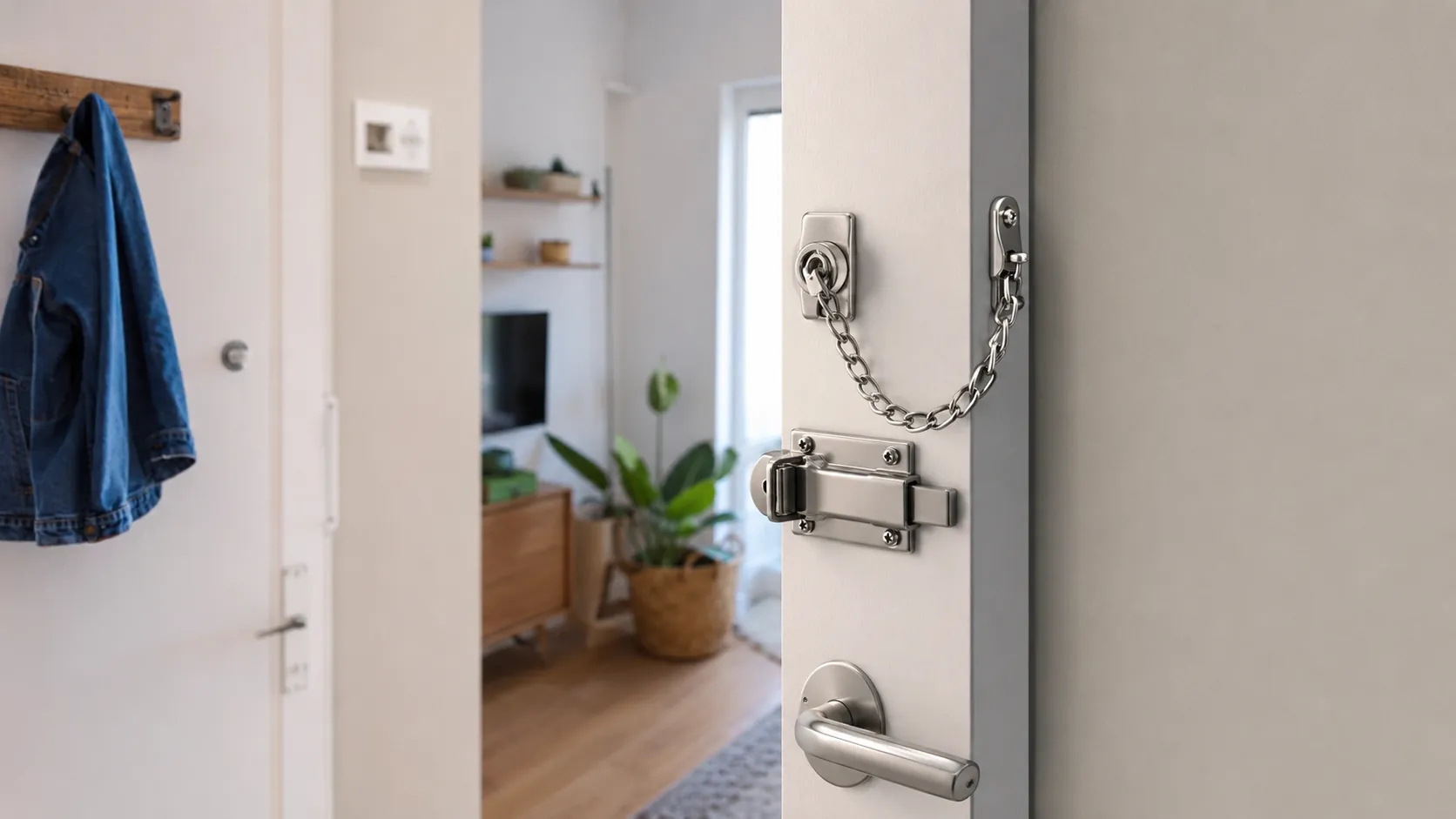
The second lever is the fitting. A security fitting with a cylinder cover to DIN standard, a protective plate, a strike plate that is fixed into the masonry and not just into the door frame. In burglary protection these are the inconspicuous parts that make the difference. I have seen doors where an expensive lock sat and the strike plate hung on two short little screws in soft wood. That is like putting an armoured lock on a cardboard wall.
The door as a whole, and when replacement is worth it
Sometimes the door itself is the problem. A leaf that warps, a frame that flexes, a lock that no longer closes cleanly. Then a lock replacement or a new, tested door straight away is the more honest solution than patching again and again. With tested doors, look for resistance class RC 2, that is the sensible standard for the private sphere.
What many forget: if you have just moved in or lost a key, a fast door opening and the subsequent cylinder swap belong to the security concept too. A key that is out there somewhere is an open gate.
A case from the west, last month
Last month I was in a period flat in the western part of Stuttgart, raised ground floor, a beautiful old double door to the courtyard. The break-in had happened through the kitchen window that opened onto a low extension. The residents had invested in an alarm system, an expensive one at that. Only the window was a simple turn-and-tilt window without mushroom-head pins, pried open in four seconds. The system dutifully raised the alarm, by which time the offender was long inside and out again.
That is the thinking error I see most often: people buy what they can see and hear, the technology, and save on what they cannot see, the mechanics. A few mushroom-head fittings on the windows would have done more here than all the electronics. The order was wrong.
Locked out and in a hurry?
Price quoted up front, vetted partner business, ~22 minutes on site.
And a case from Bad Cannstatt, for contrast
In Bad Cannstatt I advised a family where nothing had happened but who wanted to do it right before anything did. We spent two hours doing the round together, door by door, window by window. Result: a new cylinder with anti-pull, two retrofitted lockable window handles on the ground floor, a proper strike plate on the terrace door. Cost in the low three figures, not a quarter's salary. That is exactly how it should be. Prevention is rarely expensive, it is just invisible, and that is why people put it off.
Prices so you have an idea
I give you market ranges, not guarantees, the prices depend on the door, the condition and the region.
| Measure | Realistic range |
|---|---|
| Security cylinder as a part | 60 to 150 euros |
| Swapping the cylinder, labour | often in the callout price |
| Retrofitting a security fitting | 80 to 200 euros |
| Lockable window handle, per piece | 20 to 60 euros |
| Retrofitting mushroom-head fittings, per window | 80 to 150 euros |
| New door in resistance class RC 2 | from around 1500 euros |
If you want only one figure to remember: the cylinder swap is almost always the best ratio of cost to effect. Start there.
Common questions from my consultations
Is one district in Stuttgart really more dangerous than another? For deciding what you do, that is the wrong question. The right question is how fast your specific door gives way. I have seen wretched doors in quiet residential streets and superbly secured ones in busy locations. Secure your door, not your postcode.
Does an alarm system do anything at all? Yes, but as a supplement, not a replacement. First the mechanics that hold the offender up, then the technology that alerts and deters. In the wrong order you pay a lot for little.
Does insurance pay if there was a break-in? Contents insurance generally covers burglary theft, but it looks at the circumstances. This is general information and not legal advice, read your policy and, if in doubt, ask your insurer. The consumer advice centre also gives neutral guidance.
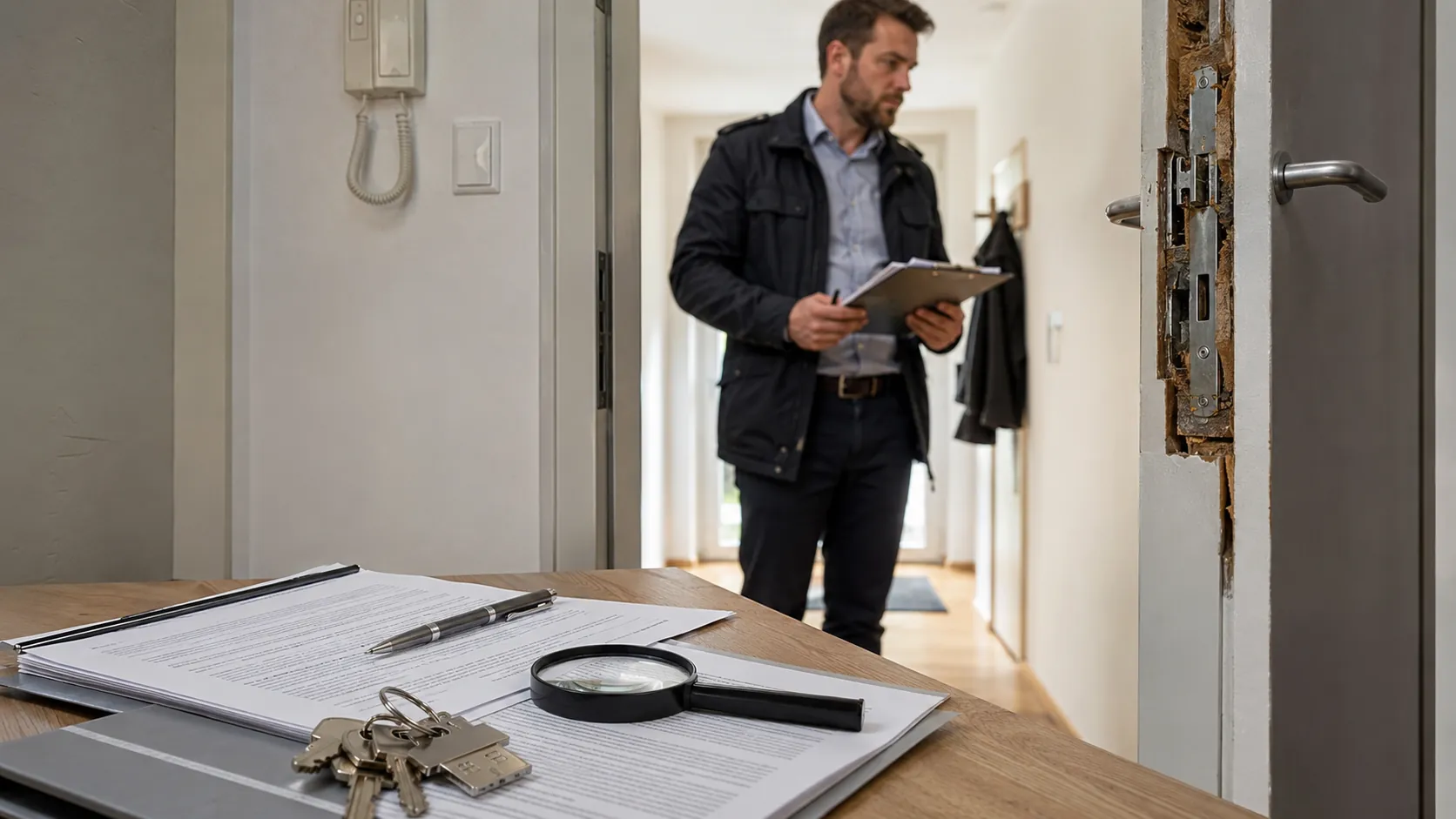
What do I do immediately after a break-in? Touch nothing, call the police, document it. And then make the door safe again, often with an immediate cylinder swap. If it happens at night, we are reachable via the emergency service.
Where do I find further guides and services? An overview of all offers is under services, and we answer further questions collected on the FAQ page. If you want to know how we work in your district, the page about the locksmith in Stuttgart helps.
My bottom line
The district is a conversation at the coffee table, the mechanics are the decision that counts. Start with the cylinder, check the fitting and the strike plate, secure the reachable windows. It costs less than most fear and works more than most believe. If you are unsure where your specific door stands, make an honest stocktake, in doubt with someone who knows the weak points. Better an hour invested today than a week of frustration after the break-in.