If you let a flat through Airbnb and rely on self check-in, the key safe is your weakest link. Plain talk: most cheap 12 to 18 euro boxes from an online marketplace get cracked by a casual thief in under two minutes. With a screwdriver, a pair of pliers, or by simply trying the codes. A decent box costs 60 to 130 euros, and yes, it is worth it. Often the best answer is no box at all, but an electronic lock with a changing code. Why, I will get to that in a moment.
I fit both, boxes and smart locks, and I earn on both. Even so, I tell hosts regularly: that 15-euro box, hands off. It buys you a feeling of security, not one bit of real security.
Why the cheap box is a joke
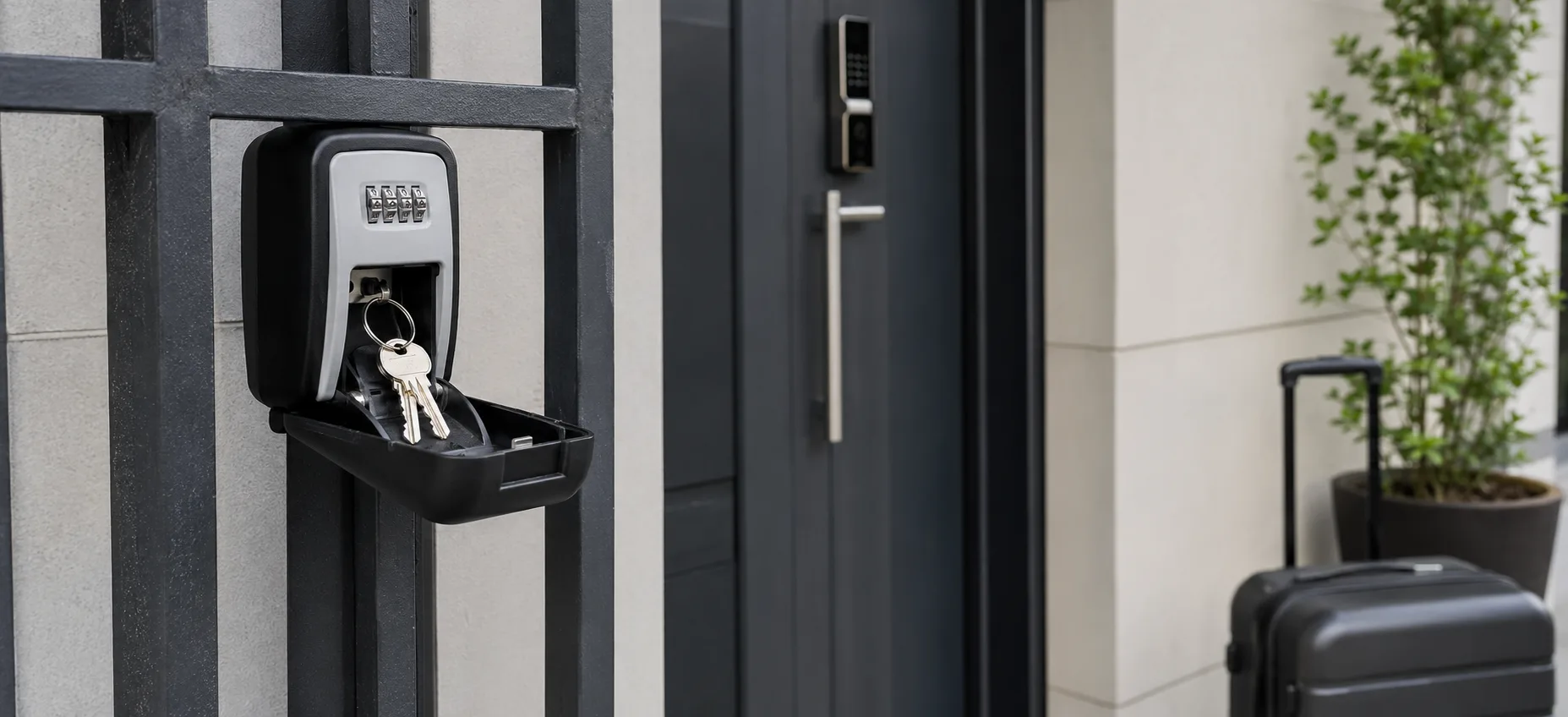
The problem is not just the box itself, but what it gives away. A key safe on the fence or downpipe tells every passer-by: nobody lives here permanently, a key is stashed here. In high-footfall districts like the Bahnhofsviertel, the Gallus, or around the Konstablerwache in the Ostend, that is an open invitation. Pros know exactly what these boxes look like. And they know that behind them sits, most of the time, only a simple cylinder lock or a soft-metal dial.
Three weak spots come up again and again.
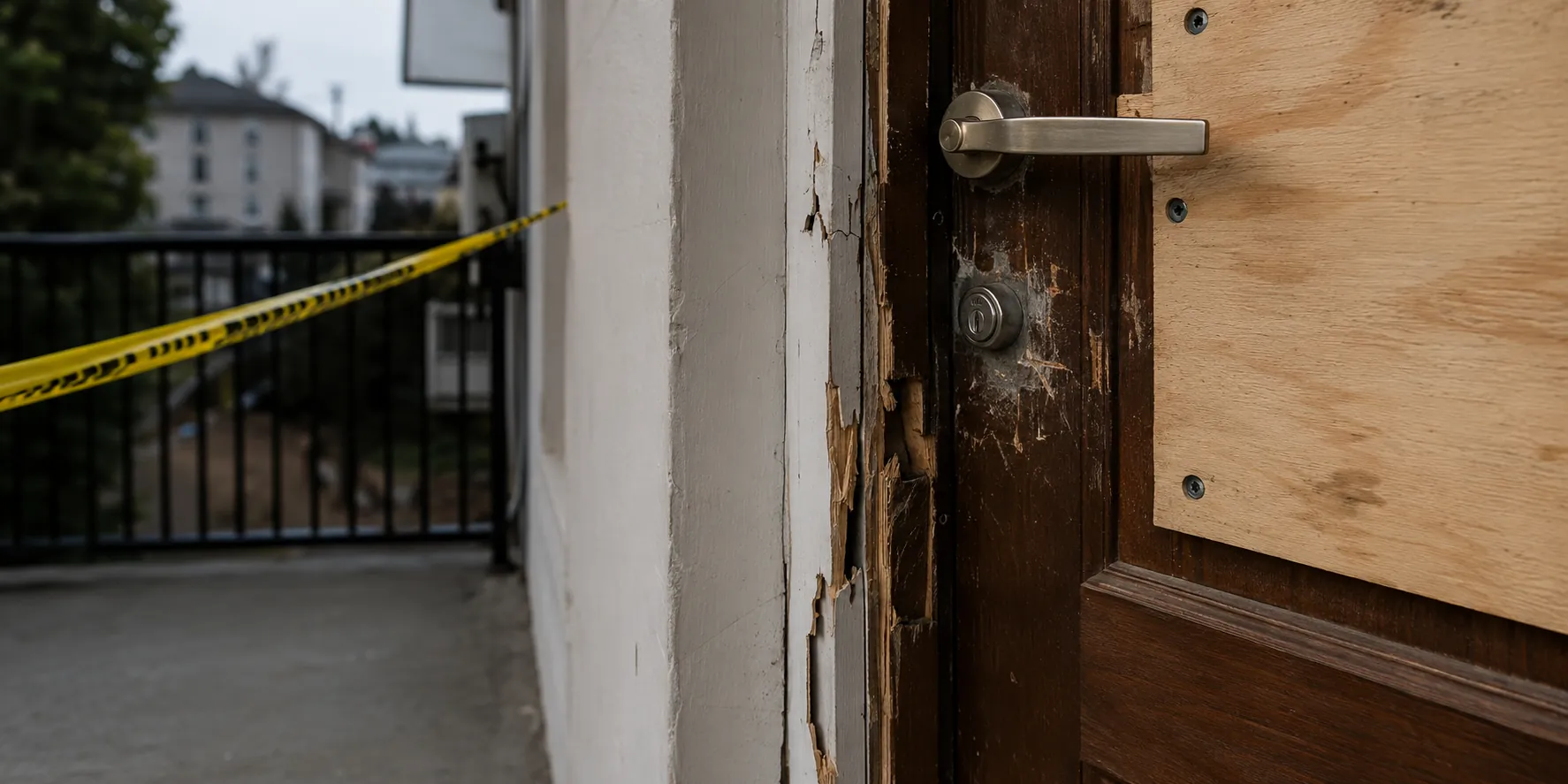
- The housing made of thin pressed sheet. A pair of water-pump pliers, a short twist, the thing bursts open. I tested that myself on a discount-store box, eleven seconds.
- The shackle. Many people just hang the box on the door handle or the railing. Shackle snipped, box taken away, opened at leisure at home.
- The code. Four-digit dials can often be cracked by feel, because the worn wheel grips differently. And many hosts never change the code.
A box that is worth anything has a solid housing in zinc die-cast or hardened steel, a thick shackle or a fixed wall mount, and at least a four-digit, better five or six-digit lock. Burg-Waechter and ABUS have models I fit with a clear conscience. The ABUS KeyGarage 787, for example, firmly screwed to the wall, sits at around 70 to 90 euros. That is the lower limit for serious.
What I look for when buying, concretely
- Solid housing, no sheet metal. Lift the box, cheap ones are suspiciously light.
- Wall model over shackle model where possible. Four screws into the masonry, not into the timber cladding.
- At least a four-digit code, more digits are better. Every digit multiplies the combinations.
- Code changeable after every guest, without tools, in under a minute.
- No cheap cylinder lock as the closure, but an encapsulated dial mechanism.
Models rated as break-in-resistant cost 60 to 130 euros. Below that it is rarely serious. Anyone running several units knows the game: you buy five 15-euro boxes, supposedly save money, and stand there looking foolish at the first break-in, because the contents insurer asks how the offender got in. Without forced-entry marks it gets tricky. More on that in the guide on home contents insurance and locks.
Where the box may go and where not
The mounting is half the battle. A perfect box in the wrong place is still a problem.
Never hang the box in plain sight on the front door. Not on the stair railing, not on the downpipe next to the entrance. Ideal is a spot the guest finds by instruction, but which does not catch the eye. A side wall, a niche, the inside of a garden gate. And always firmly screwed, never just hung.
Second point almost everyone forgets: the house rules in a multi-unit building. In many Frankfurt period buildings, especially in the Nordend and in Bockenheim, the facade belongs to the owners association. Screwing a box onto the shared outer wall without asking causes trouble. With rented flats the landlord's consent comes on top. Sort that out beforehand, or you mount twice.
Last week in Sachsenhausen: a host had a proper ABUS box, but right next to the bell panel at eye level. Every parcel courier, every neighbour, every passer-by saw it. We moved it two metres, into a niche behind the bin shelter, and changed the code. Same box, completely different risk picture. Cost for moving and a new code: under 80 euros.
Safer than any box: the smart lock
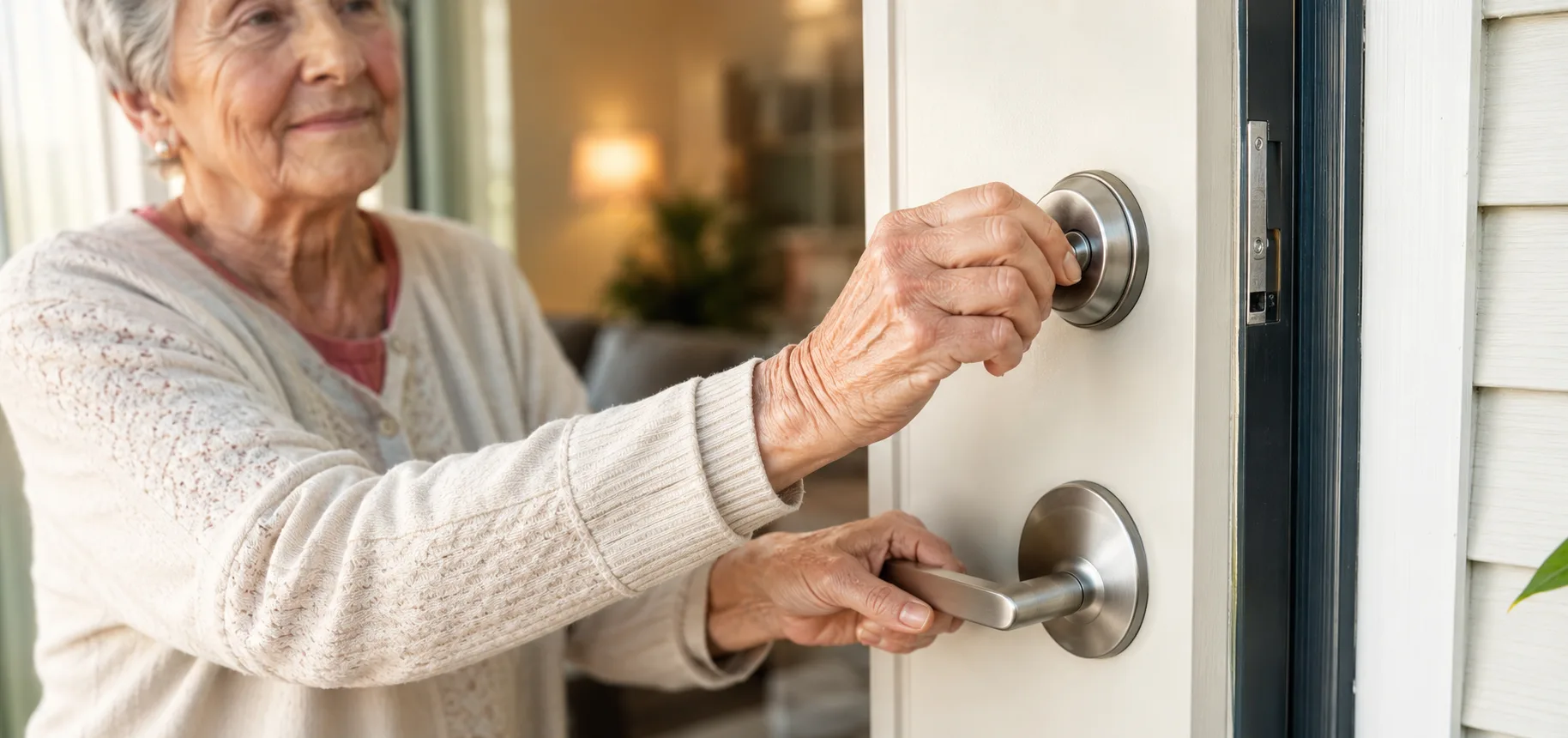
Now the part many do not want to hear, because they have already bought a box. Anyone who lets regularly is almost always better off with an electronic door lock with a code. You issue a unique code per guest that automatically expires after checkout. No physical key sits outside any more. No box signalling that there is something to grab here.
The big advantage is the trail you can see. Good systems log when which code was used. If a guest stays longer or someone comes at night you did not expect, you see it. A box cannot do that.
But I stay honest here too. Smart locks are not for everyone.
- A retrofit motor lock on the cylinder costs 150 to 350 euros plus fitting.
- A full electronic mortise lock, say from Winkhaus blueSmart or a comparable system, sits much higher, easily 400 to 800 euros and more, depending on the door.
- The battery or rechargeable pack has to be maintained. Dead battery on a Sunday evening, guest standing outside, that is my emergency-callout classic.
- Radio modules can fail. I always advise a mechanical emergency-key backup that the host keeps, not the guest.
Whether the tech pays off depends on frequency. If you let a flat sporadically, a good box is enough. If you turn over two or three flats with constant guest changes, the lock pays for itself quickly. How we plan and secure such systems is on our burglary protection page. What a conversion actually costs is on our pricing page.
Last month a case in Bornheim that stuck with me. A host had run the same box with the same code for two years. Over a hundred guests knew the code. A former guest had simply walked in one evening and slept in the hallway, the next guest found him on the sofa in the morning. Nothing stolen, but a shock. We switched to a lock with a changing code, and suddenly it was clear again who may enter and who may not. The previous guest's code was long dead by then.
The most important rule about the code
Change the code after every guest. By hand on the box, automatically on the smart lock. If you do not, over months a whole crowd of people with access piles up, and you lose all control. The Bornheim case is no one-off, I see it constantly.
Locked out and in a hurry?
Price quoted up front, vetted partner business, ~22 minutes on site.
What costs what, at a glance
| Solution | Purchase | Security | For whom |
|---|---|---|---|
| Cheap box 15 euros | 12 to 18 EUR | practically none | nobody |
| Good box, screwed on | 60 to 130 EUR | solid | occasional letting |
| Motor-lock retrofit | 150 to 350 EUR plus fitting | high | regular letting |
| Electronic mortise lock | 400 to 800 EUR and more | very high | several units, pro |
The numbers are real-world values from Frankfurt, as of 2026. Door, condition and brand shift them. A creaking period lock in Hoechst often needs new mechanics first before any electronics go on at all.
Briefly on the Frankfurt rules
Short-term letting is not unrestricted in Frankfurt, and that is happily pushed aside. The city generally requires a permit for the misuse of residential space, often with a residential-space number, the so-called holiday-flat matter. Sort that out before you even mount a box or swap a lock. With rented flats the landlord's consent comes on top, or you risk eviction. More on the tenant question in the guide tenant, who pays the lock change.
And think about the insurance. The consumer advice centre has pointed out for years that stashed keys become a sticking point in the event of a claim. Anyone who leaves the key openly accessible risks reductions for gross negligence. A solid, hidden box or a code-controlled lock with no physical key is clearly at an advantage here. Background on verbraucherzentrale.de.
My verdict
A cheap box is theatre, not security. Take a solid, firmly screwed model with a changeable code, and mount it hidden, not on the front door. If you let often, save yourself the back and forth and go straight for an electronic lock with a changing code. Change the code after every guest, no exceptions. And register your short-term letting properly.
Unsure what suits your door and your letting frequency? Have a calm look at the pricing, or ask via our contact page. Better to get proper advice once than to argue with the insurer at the first break-in.