Accessibility and security are not a contradiction. That is the most important lesson from nineteen years in this trade. With older people it is about two things at once, that the door opens easily with stiff hands and that someone can get in quickly in an emergency. Both can be solved without turning the home into an open invitation. You just have to start at the right points, and that is almost never what sits at the front of the shelf in the DIY store.
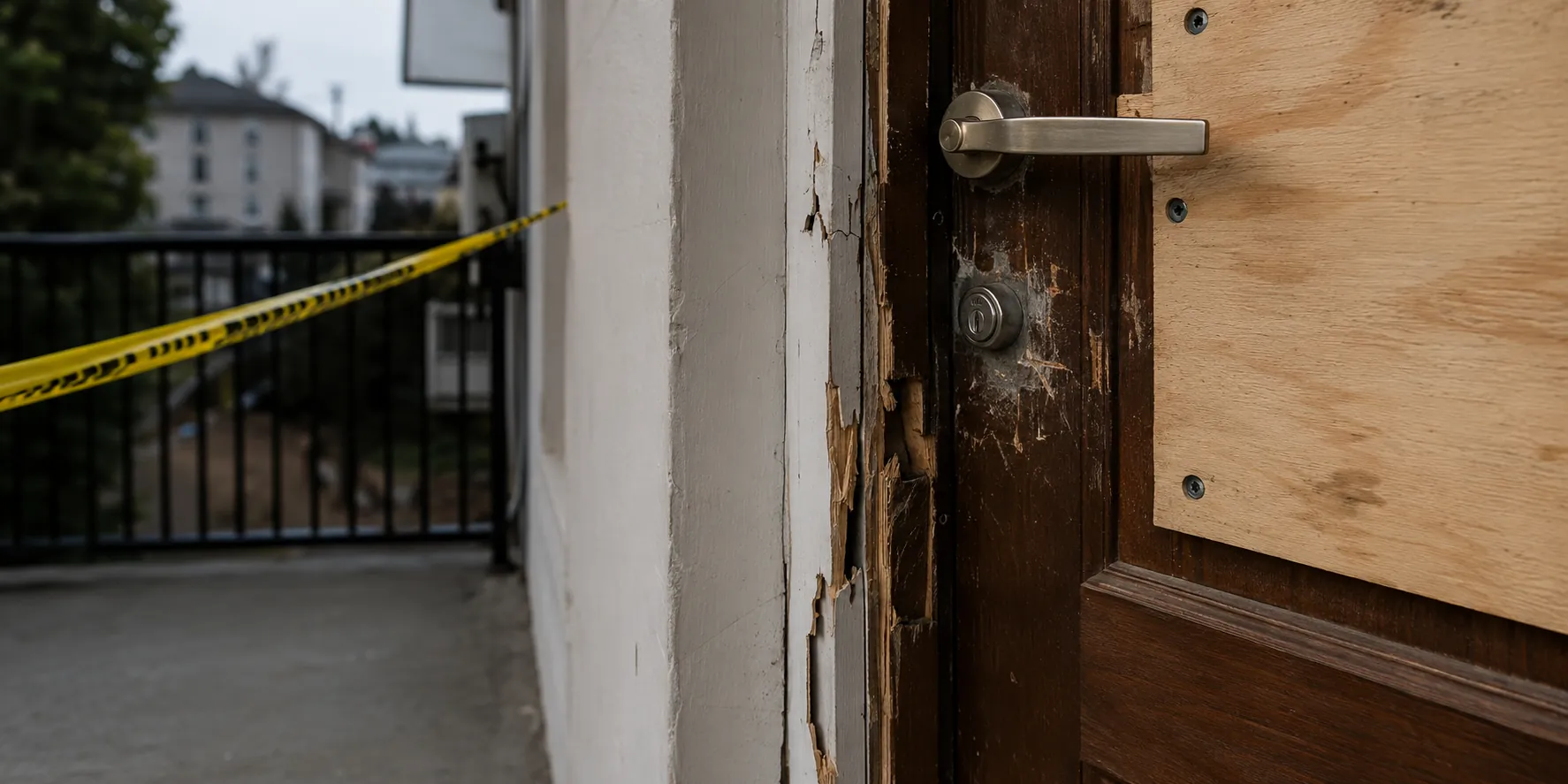
On average I open one door a week behind which an older person has fallen. Sometimes cleanly, via a spare key left behind. Sometimes with the drill, because no one planned ahead. With me, drilling is always the last step, never the first. And in nine out of ten of those cases, a conversation half a year earlier would have made the drill unnecessary.
The hardware decides, not the lock
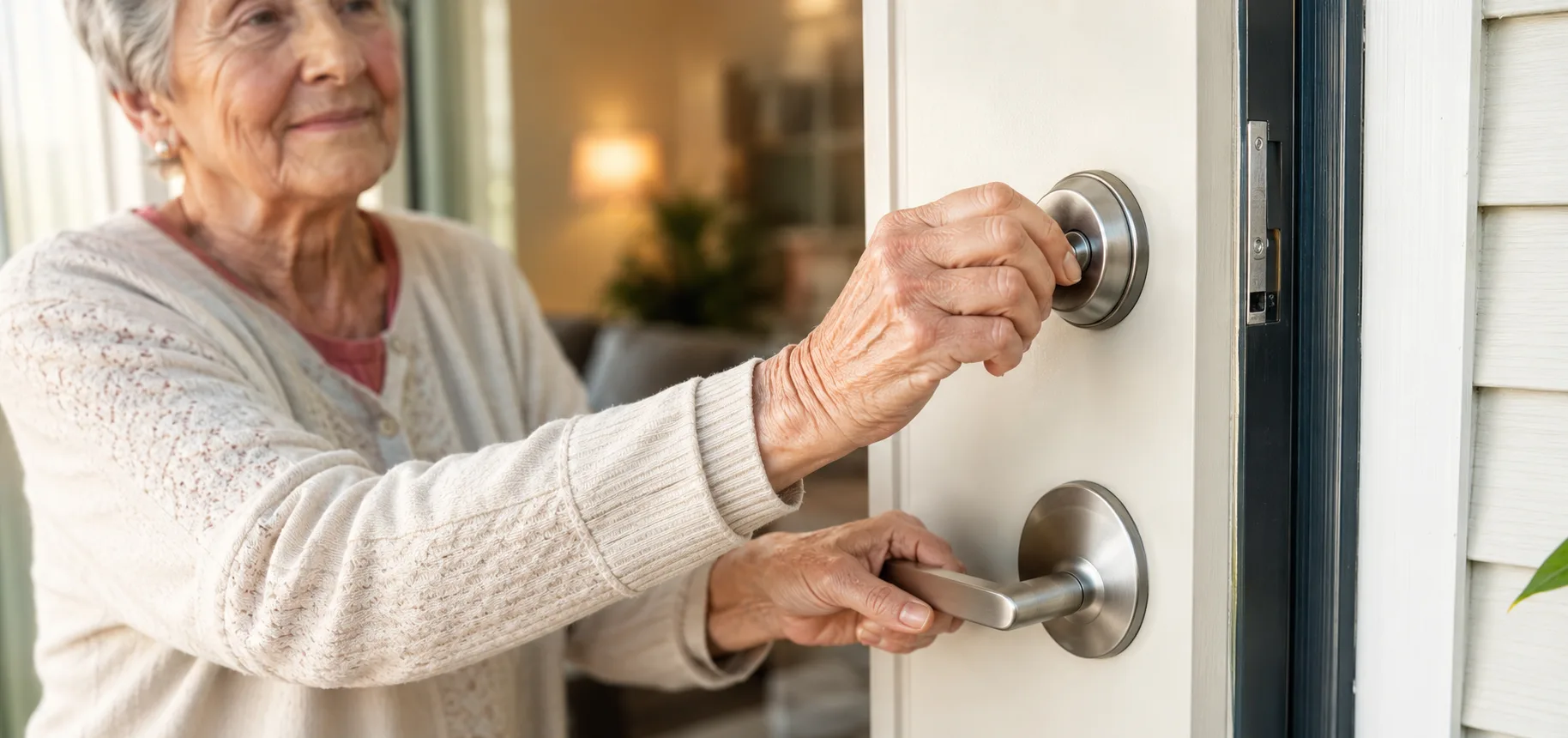
When fingers no longer grip well, the narrow knob is the problem, not the mechanism behind it. People come to me and say the lock is jamming. In truth the lock rarely jams. The hand jams. Arthritis, a stroke, simply eighty years of use. The cylinder usually turns flawlessly, it is just the person who can no longer manage it.
What I swap most often, in this order:
- Thumb-turn cylinder instead of a key inside. A grippy turning knob inside that you can turn with your whole palm or the heel of your hand. A key still outside. So no one inside has to thread the tiny bit into the hole with a shaky hand.
- Large lever handles instead of round knobs on interior doors. A long handle can be worked with the elbow, the forearm or the heel of the hand. Round knobs need grip strength many people simply no longer have.
- Contrast markings. A coloured strip on the right key helps failing eyesight more than you would think. Sounds trivial, but it saves daily frustration at the lock.
A thumb-turn cylinder is comfort, no question. But it comes with a hard condition. It belongs only on doors with no glass panel within reach and no letter slot right next to the lock. Otherwise a burglar reaches through the broken pane or the slot and turns it open from inside. On security I make no compromises. If the door has a glass field, either burglar-resistant glazing is added or the thumb-turn is off the table. Then we find another solution. More on that on our burglary protection page.
What I check on the cylinder
A good thumb-turn cylinder is not simply the one with the fattest knob. I look at the standard. DIN EN 1303 describes the security class of the cylinder, and for the front door of a person living alone I use nothing below a decent security cylinder with drill and pull protection. Brands I trust: ABUS, Winkhaus, EVVA, BKS. With the no-name cylinders from online shops for twelve euros, hands off. They feel the same on day one and turn stiff after two winters, exactly the last thing a stiff hand needs.
The emergency and hazard function also matters. It lets you open from outside with the key even when the key is in the lock on the inside. With older residents I almost always insist on it. That has saved doors, in the literal sense.
Getting in during an emergency without breaking the door
This is the part relatives underrate. If someone lives alone and falls, every minute counts. And in that moment the nicest handle is no help if no one can get in. Three clean solutions before we think about the drill:
- A spare key left with a trusted person, a neighbour or the care service. Costs nothing and is the simplest insurance there is.
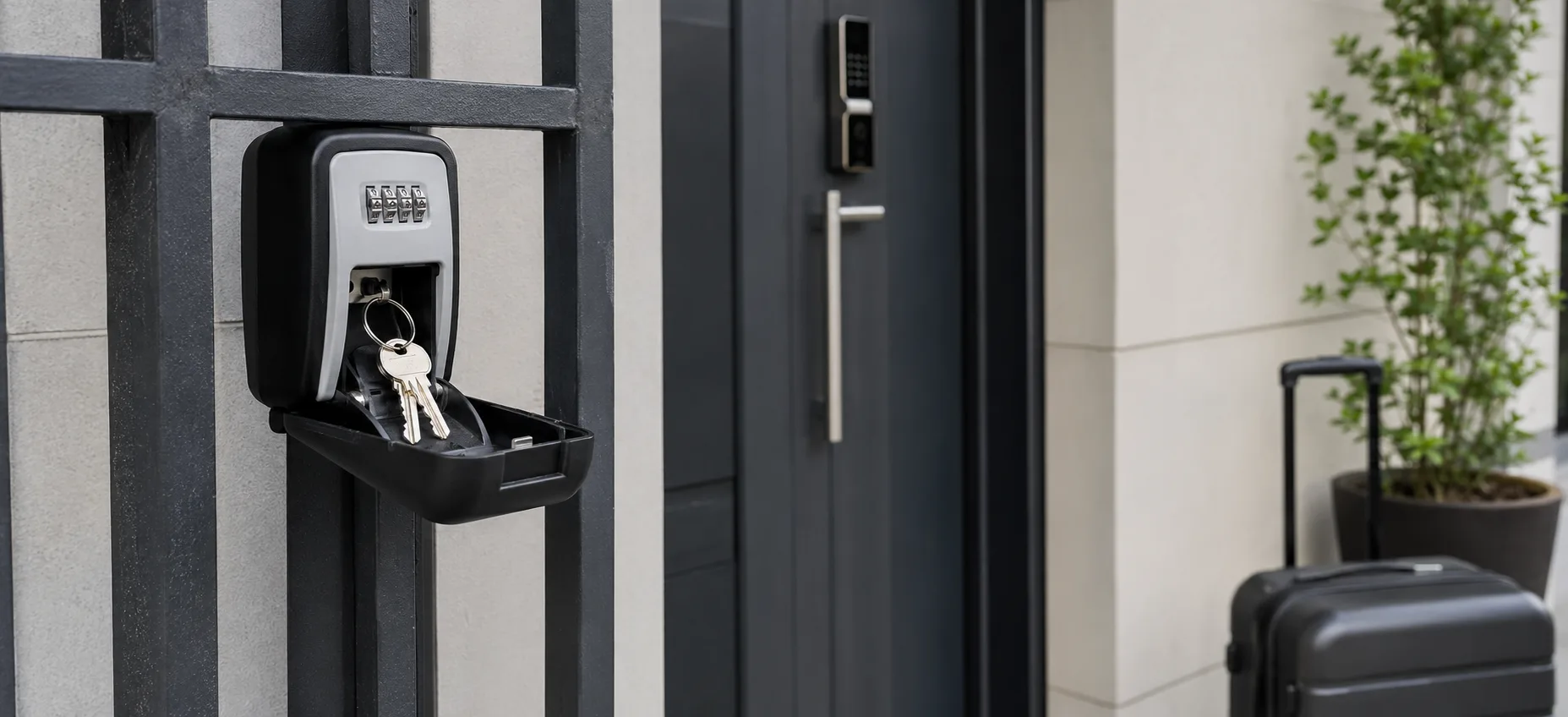
- A key safe on the outside wall with a code, known only to relatives and the care service. Sturdy models from about 40 to 90 euros. Look for a solid steel housing and protected mounting, the cheap plastic blocks for fifteen euros can be pried open by a child with a screwdriver.
- With a locking system in an apartment building, a defined emergency key kept documented and secure, ideally with the property manager or a named relative.
Last autumn the daughter of a lady from Nordend called me. Her mother had fallen in the bathroom, the front door locked from inside, the key still in. We came via the emergency service in twelve minutes and opened it without any damage, solely because on the phone she had said precisely that the key was in on the inside and the cylinder had an emergency function. Had a key safe hung on the wall, my coming would not even have been needed. The paramedics would have got in on their own.
Another story, a few weeks earlier, in Bockenheim. An older gentleman, mild dementia, had got into the habit of double-locking from inside at night with the key and then leaving it in. The carer stood at a locked door in the morning, the key in on the inside, no thumb-turn cylinder, no emergency function. Drilling really was the only option here. An hour of work, a destroyed cylinder, a good 180 euros, plus a new security cylinder. Had we fitted a cylinder with an emergency and hazard function beforehand, for around 90 euros for the part, this would never have happened. That is exactly why I preach prevention.
Locked out and in a hurry?
Price quoted up front, vetted partner business, ~22 minutes on site.
What it costs, and what is really worth it
Let us talk plainly about money, because everyone asks in the end. Here are the ranges I work with in Frankfurt:
| Measure | Material | Fitting roughly |
|---|---|---|
| Thumb-turn cylinder, good brand | 60 to 120 euros | 40 to 80 euros |
| Cylinder with emergency and hazard function | 80 to 140 euros | 40 to 80 euros |
| Long accessible lever handle | 30 to 80 euros | 20 to 50 euros |
| Wall-mounted key safe | 40 to 90 euros | 20 to 40 euros |
| Contrast marking on key | under 5 euros | included |
That is modest next to what a broken-in door costs in a real emergency. You will find a detailed breakdown on our pricing page. And yes, handy relatives can do some of this themselves, swapping a cylinder is no rocket science, as I show in the guide on changing the cylinder yourself. But the emergency and hazard function, and the question of whether the thumb-turn is even justifiable in security terms, that I am reluctant to leave to chance.
A quick reality check on security
I am often asked whether accessible locks are not automatically less secure. No. A thumb-turn cylinder with an emergency and hazard function on a door with no reachable glass is no weaker than a normal cylinder. The home break-ins I assess in Westend or Sachsenhausen almost never go through the lock. They go through the levered door or the tilted window. Anyone who really wants to do something for security invests in a multi-point lock and good hinges, not in a pricier cylinder. The police burglary figures, set out in the police crime statistics of the BKA, have shown the same weak point for years, prying at the door leaf and the frame.
Common questions from everyday life
What about smart locks for seniors? For some a real help, for others a trip hazard. If the app causes anxiety or the battery quietly dies and the door then stays shut, no one is helped. I only fit them when a relative co-manages the technology. Otherwise better mechanical and robust.
Is a key safe alone enough? For access yes, for security only if the housing is solid and well mounted. Change the code regularly, especially after a change in the care service.
Does every fall mean drilling? Absolutely not. With a spare key left behind or a safe we open without damage. Drilling is the exception, when nothing was prepared and the key is in on the inside. More on gentle opening under door opening.
My closing advice, and I say it to every family: solve this calmly in advance, not in an emergency at three in the morning. A quiet daytime appointment, together with the relatives, the carer and the person concerned, is the best investment. We go through the door once, check cylinder, handle and glass, and find the solution that fits the hand and the home. Advice gladly via our contact page.