
The short answer first: whoever causes the lock change almost always pays for it. If you as a tenant lose the key, as a rule you pay. If the lock fails through normal wear, the landlord pays. So much for the rule of thumb. The devil is in the exceptions, and that is exactly where tenants and landlords argue most often. I am not a lawyer. I have spent 19 years on locks, safes and locking systems, and I will tell you what I know from the field and from countless tenancy conversations.
The polluter-pays principle in one sentence
Ask yourself one simple question: who set the reason for the change? Did you lose the key, then it was your carelessness. Is the cylinder worn out after 18 years, then it was time. That is not a legal trick, it is common sense, and the courts see it the same way at heart. In German tenancy law it is called the landlord's duty of maintenance on one side, and damages due to fault on the other. Sounds dry. In everyday life it is usually clear.
What creates the dispute is the grey area in between. I will take that apart piece by piece.
Lost key: usually the tenant's matter, but not always expensive
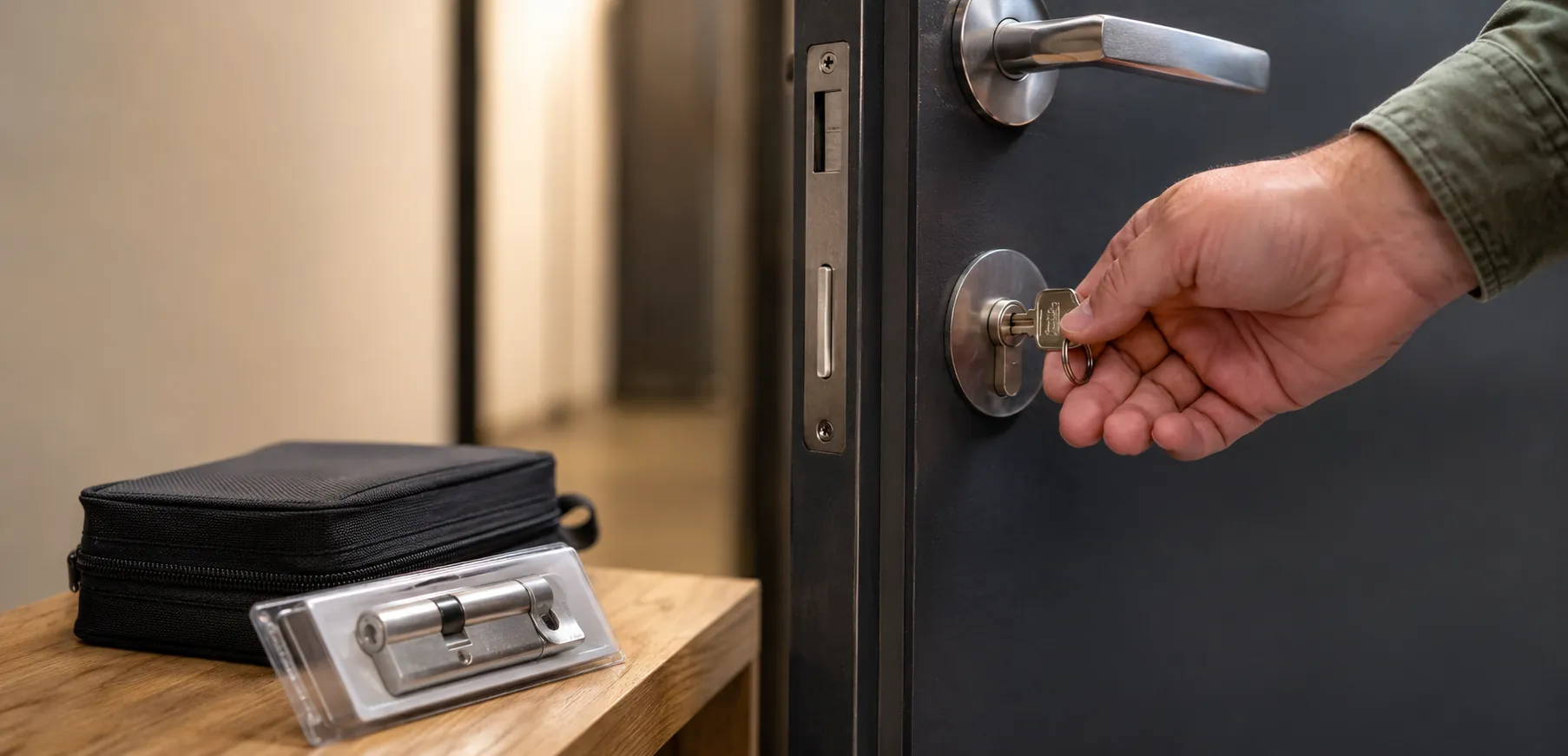
If you lose a flat key, that is your fault. The cost of a new cylinder falls to you. With a simple profile cylinder it stays manageable. A standard cylinder from ABUS or Burg-Waechter costs 15 to 40 euros as a part, a decent security cylinder with drill protection 60 to 150 euros. With fitting you often land at 70 to 150 euros for a normal swap. By the way, on many doors you can change the cylinder yourself and save the call-out. How that works is in the guide on changing a cylinder yourself.
Important: a lost key does not force you into a change automatically. If the key was lost with no link to your address, say on holiday at the other end of the country, the risk of misuse is low. If it was in a wallet with your ID card and address, it looks different. Then a swap is sensible, and your home insurance may cover part of it. More on that in our piece on home insurance and locks.
The expensive case: a key to a locking system
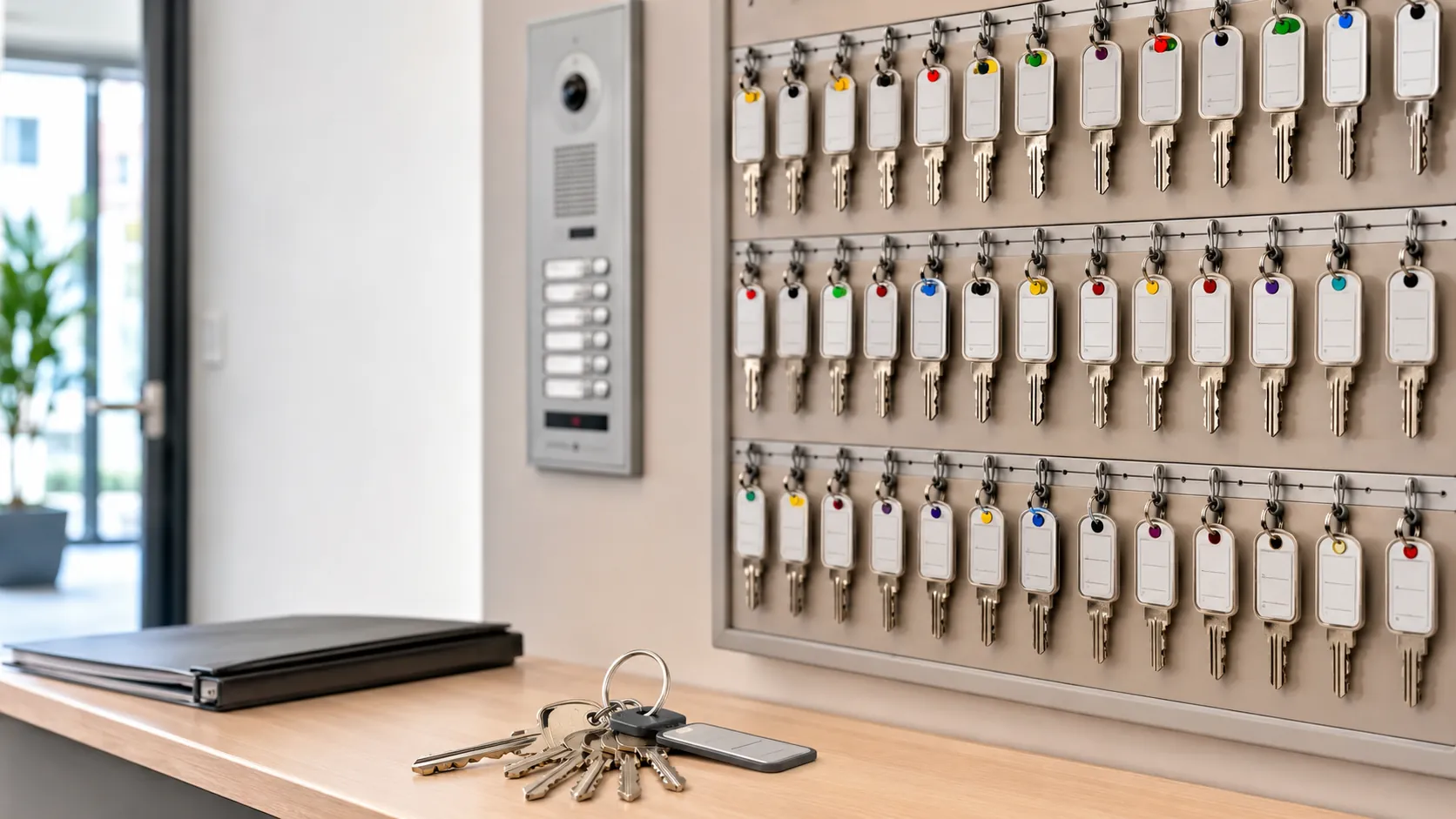
Now it gets serious. If the lost key belongs to a locking system for the whole building, meaning a system where one key opens several doors, then in theory the entire system may have to be replaced. That runs into the thousands. A medium-sized system with a front door, basement, bin room and twelve flats quickly hits 2,000 to 5,000 euros.
And here is the point many landlords do not know or deliberately ignore: the landlord may only demand a replacement of the whole system if there is a concrete risk of misuse. Not abstract, concrete. The German Federal Court of Justice has ruled in this direction several times. If the key demonstrably sank in the sea, the concrete risk is missing. If the whole key pouch with an address note was found in the stairwell, it very much exists.
Last week I had exactly this case in Bockenheim. A student loses his system key, the landlord wants to swap the entire system for 3,400 euros at once and send the student the bill. We looked at it. The key had been lost while jogging in the Niddapark, no tag, no hint pointing to the flat. I advised the student to object to the landlord in writing and point out the missing concrete risk of misuse. Result: only his own flat cylinder was re-keyed, 140 euros instead of 3,400.
Wear and defect: the landlord's matter
If the lock jams because it has worn out over the years, if the key catches, or if the cylinder breaks through age and material fatigue, that is normal wear. Maintaining the rented property is the landlord's duty, full stop. You pay nothing for it.
But, and this is the most common mistake I see: do not simply swap it yourself and send the bill. Report the defect in writing, ideally by email with a date, and wait for approval. If the landlord does nothing despite a deadline, in urgent cases you may commission the work yourself and reclaim the cost, but only then cleanly. Commission too hastily and at worst you are left carrying the cost. How a lock replacement is done properly you can read with us.
What counts as wear, what as damage?
A quick distinction, because this often gets muddled:
- Key turns loosely, tumblers worn out: wear, landlord.
- Cylinder only turns with force after years: wear, landlord.
- You snapped the key in the lock because you forced it: fault, tenant.
- Door slammed shut from inside, key inside: no damage to the lock, that is a pure door opening, and you pay that.
The line is not always sharp. When in doubt, photo documentation of the old lock before anyone touches it helps.
Locked out and in a hurry?
Price quoted up front, vetted partner business, ~22 minutes on site.
On moving in: the wish for security is a private matter
A classic from my practice. On moving in, the new tenant wants to change the locks because the previous tenant might still have keys. Understandable, I would want it myself. But: this is your need for security, not a defect of the flat. So you pay yourself. The landlord must allow you the change as long as you keep the old cylinder and put it back when you move out, but he does not have to pay for it.
Last month that was the case with a couple in Sachsenhausen. Freshly moved in, ground floor facing the street, they wanted certainty. We swapped in a cylinder rated to DIN EN 1303 with an emergency and danger function for around 95 euros, so you can unlock from inside even when a key is in the outside. They carried it themselves and have slept soundly since. That is exactly how it should be: small amount, big relief, clear arrangements.
If you are upgrading on moving in anyway, think straight away about the burglary protection of the flat door. A cylinder alone is only one building block.
After a break-in: a split situation
After a break-in the split is often mixed. Repairing the damaged door and the prised-open lock is damage to the rented property, so in principle the landlord's matter, provided you did not enable the break-in yourself through gross negligence. Your own stolen belongings and often the new cylinder too are covered by your home insurance, depending on the policy. Report the break-in to the police at once, you need that for the insurer.
A figure for context: according to the police crime statistics of the BKA, residential burglary has been trending upwards again for a few years, after falling for a while. That is no reason to panic, but a good reason to properly sort out a worn door while you are changing it.
What you should concretely do
So you do not fall into the trap, here is my approach from the field:
- Always record a defect or loss in writing, with a date.
- For wear: inform the landlord, wait for approval, do not commission hastily yourself.
- For a lost key: check whether a locking system is affected and whether a concrete risk of misuse exists.
- For a break-in: police and insurer at once, have the door secured, then repair.
- Keep the old cylinder if you swapped it yourself on moving in.
When in doubt, ask the tenants' association, they know the fine points and are cheap for members. If you need someone fast at night or on the weekend, say because you are locked out or the lock is jammed, our emergency service is reachable around the clock. What a call-out costs you can see transparently on the pricing page.
Short and honest
Bottom line, the polluter-pays principle applies. You lose the key, you pay. The lock wears out, the landlord pays. You want to swap on moving in out of caution, that is your business. And with the expensive locking system: nobody has to swap a system for several thousand euros just because a key with no link to an address is gone. Settle everything in writing before anyone picks up the screwdriver. It saves money and nerves, and I have seen too many tenants learn the opposite the expensive way.