Yes, you can replace a normal lock cylinder yourself, as long as the door is open and there is no locking system attached. Tools: a Phillips screwdriver, the right new cylinder, five minutes. That is all it takes. What you should not do yourself comes further down, and honestly that is the more important part of this article.
I have worked in burglary protection advice for fourteen years, mostly in Bornheim, Nordend and Sachsenhausen. I see cylinder swaps every day, some done well, some botched. So let me say it up front: the swap itself is not rocket science. The mistake almost always happens before it, in the measuring and the buying.
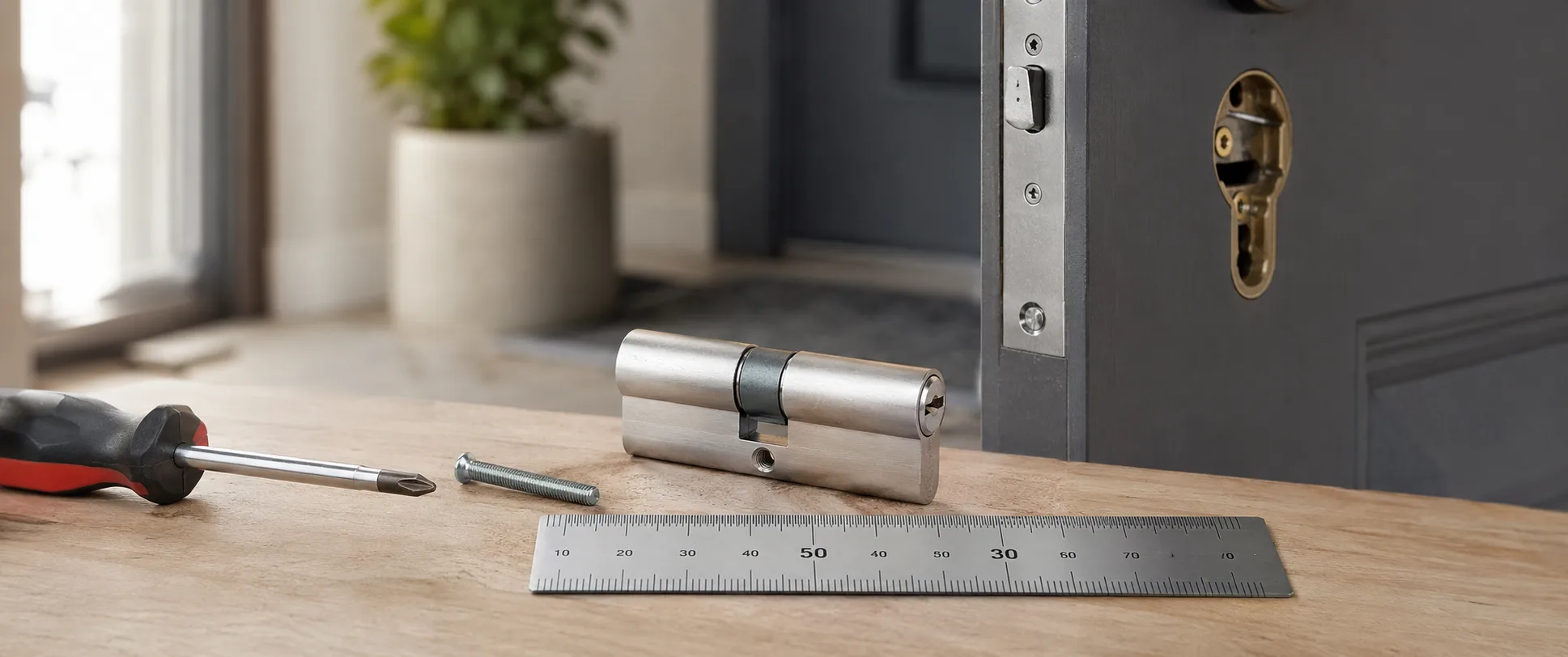
Measure the length first, or you will buy twice
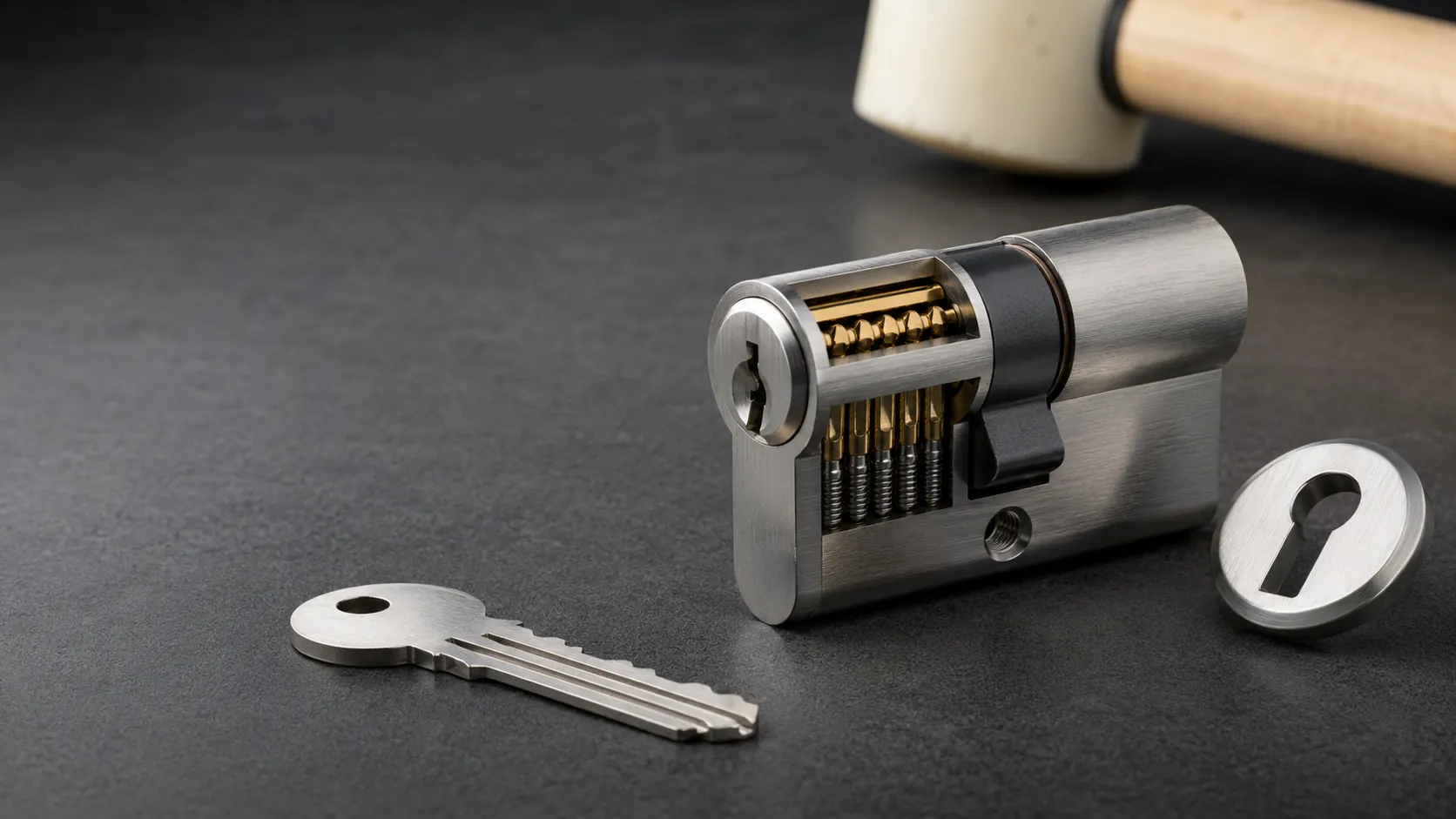
The most common mistake is dull: just buying any cylinder. That does not go well. A profile cylinder has two measurements, each taken from the centre of the forend screw outward and inward, so for example 30/30 or 35/40. That centre is the reference point, not the outer edge of the door. Many people mix that up.
How to measure correctly:
- Key in the old cylinder, door open.
- Find the forend screw on the narrow door edge, it sits roughly at the height of the cylinder centre.
- With a ruler, measure from the centre of the screw to the outer face of the door, that is the outer dimension.
- Then from the centre of the screw to the inside, that is the inner dimension.
- Round both values to the nearest 5 millimetres.
The outer dimension is the one that matters for security. If the cylinder sticks out more than three millimetres past the fitting escutcheon, that is an open invitation to snap it off. A burglar grips the protruding part with pliers, twists it off and is inside in under a minute. I have documented that as damage often enough. The rule: flush or slightly recessed, never protruding. If the cylinder does stick out, it needs a protective escutcheon or a security fitting in front.
Which brand, which class
Brands I happily fit: ABUS, BKS, Winkhaus, and for higher demands EVVA or Kaba. For the no-name part from the discount bin I say it plainly: hands off. The pins are soft, the drill protection is marketing, and a key like that gets copied at any corner shop.
Look for the DIN EN 1303 standard. Among other things it describes resistance to drilling and attack. A cheap standard cylinder costs 15 to 40 euros for the part. A solid security cylinder with anti-drill, anti-pull and key copies only against a security card sits at 60 to 150 euros. Sounds like a lot for a piece of brass. It is not, when you consider what a levered door costs. More on that in our overview on burglary protection.
A quick reality check: a good cylinder alone does not make the door burglar-proof. If the strike plate is flimsy and the screws bite only two centimetres into the wood, any screwdriver levers the door open, no matter which cylinder is inside. The cylinder is one building block, not the whole wall.
The actual swap, step by step
Now to the hands-on part. If the measurements are right, this really is quick.
- Open the door and keep it open. Never start with the door closed, or you lock yourself out the moment the old cylinder is out.
- On the narrow edge of the door, the forend, there is a long screw near the bottom of the lock, the forend screw. Take it right out, do not just loosen it. Set the screw aside, do not lose it.
- Put the key in the cylinder and turn it slightly, about ten to fifteen degrees, until the small cam at the bottom of the cylinder sits flush in the housing. Only then will the cylinder slide out.
- Pull the cylinder out toward the outside or inside, whichever has room. A little wiggle sometimes helps.
- Push the new cylinder in, again with the key turned slightly, until it sits flush.
- Refit the forend screw and tighten it, but with feeling, do not overtighten.
- Run the key several full turns and check that the bolt throws cleanly and fully.
If it jams on the way out, the cam is not flush. Do not force it. Turn the key a touch further and try again. If the cylinder will not move a millimetre even with the cam standing right, then usually the forend screw is not fully out, or the door is under tension. Lift the door leaf slightly by the handle, and often the cylinder releases on its own.
Small details many people forget
Before you buy, note down how many keys you need. A cylinder usually comes with three, every extra one costs extra to copy, and on a security cylinder only against the card. More on the costs in the guide on getting a key copied.
Also check whether you want a thumb-turn instead of a key on the inside. Handy if there are children in the house and nobody should misplace a key. But you have to specify that when buying, a standard cylinder cannot simply be converted to a thumb-turn.
And keyed-alike: if two doors should open with the same key, say the flat door and the cellar door, the cylinders have to be matched at the factory. You do not buy that on a whim at the hardware store. As soon as several doors come into play, we are often already looking at a small locking system.
Locked out and in a hurry?
Price quoted up front, vetted partner business, ~22 minutes on site.
This is where the DIY ends
Now the part most guides online leave out. The limit.
Last week a man in Westend called me. He had bought a 35/35 cylinder at the hardware store and wanted to swap it himself. Sounded harmless at first. Then it came out: his flat ran on a locking system with a central stairwell key, every cylinder in the building keyed in. Had he fitted the hardware-store cylinder, his flat door would have worked, but his key would no longer have opened the front door and the cellar. That is exactly the limit.
Hands off the self-swap if any of this applies:
- A locking system is attached, recognisable by a security card or a patent-protected key profile.
- The cylinder has a thumb-turn, which often sits differently and can jam.
- The door is warped, dropped, or the lock already sticks.
- The old cylinder simply will not pull out because the cam will not come flush or the key has snapped.
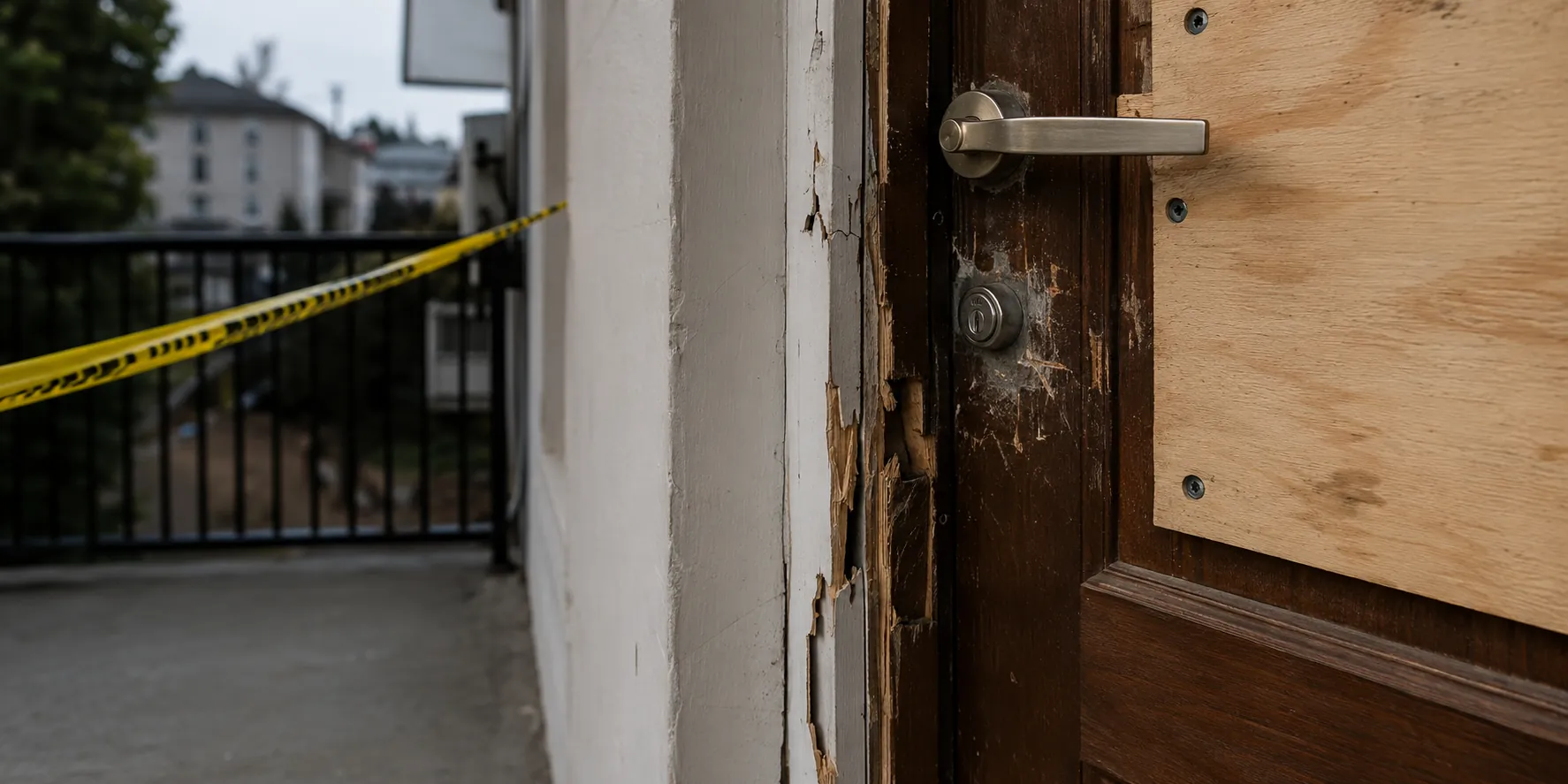
A second example from practice. Two weeks ago in Gallus: a tenant, key snapped off in the cylinder, door shut. She wanted to swap the cylinder herself but could not reach the forend screw, because the door had fallen shut. With a closed door, DIY is over. The only option then is a clean door opening, and after that the swap.
Tenants, take note
If you rent, there are two pitfalls. First: with a locking system you must not swap the cylinder for a foreign make on your own, it belongs to the landlord and is part of the system. Second: if you lose a key to a system it can get expensive, because the whole system may have to be re-keyed. The German tenants association (see mieterbund.de) has clear notes on who pays when. When in doubt, talk to the landlord first, not after the drilling.
Frequently asked questions
How do I know if it is a locking system? Look at the key. If it has a number on it and came with a security card, it is almost always a system. Also, if one key locks several doors in the building, it is one.
Can I swap just the cylinder, or does the whole lock have to come out? In the vast majority of cases the cylinder is enough. The mortise lock in the door leaf stays in. Only if the mechanism itself is faulty, say the bolt catches, does the lock have to be replaced, and that is a job for a pro.
What does it cost to have it done? A plain cylinder swap by us, depending on material and labour, often lands in the low three-figure range. You get the price up front, transparent, see pricing. Be suspicious of 0800 numbers that give no price on the phone, more on that in the guide on spotting locksmith rip-offs.
Bottom line: standard cylinder with the door open, measured correctly, do it yourself. Locking system, thumb-turn, security card or a sticking door, better call. We do the lock replacement cleanly and you know the cost up front.