In Nuremberg's old town you secure a door differently than in a new build outside the city wall, and that is the whole point of this piece. The short answer first: in almost every listed building modern security can be retrofitted without touching the historic fabric. The trick sits inside the door, not in its looks. A good cylinder with anti-pull protection, a suitable add-on lock and secured hinges lift a 120-year-old door leaf to a level that deters opportunist burglars. And it usually costs less than most people fear.
I am Lena Hoffmann, a locking-systems technician, and I work a lot between the Sebald and Lorenz sides, meaning north and south of the Pegnitz river. What makes the old town here so special: it was largely rebuilt after the air raids of January 1945, in what is called the Nuremberg way, with sandstone facades and the typical red roofs, but at the old scale. Behind that sit doors from every conceivable era. Solid oak from 1900 next to a plain reconstruction door from the 1950s next to a modern flat door in a freshly converted attic. Each one wants different handling. How we generally work as a locksmith in Nuremberg you can see on our city page.
Why old-town doors are their own chapter
Walk through Altstadt/Sebald once, over into the Weissgerbergasse. It is the finest surviving timber-frame ensemble in the city, narrow houses, carved beams, many of which came through the war. Such doors are often narrower and lower than today's standard, the wood is dry and hard, and the frame is rarely square. Anyone turning up with an off-the-shelf door from a DIY store fails at the measuring stage.
On the Altstadt/Lorenz side, south of the Pegnitz, the picture is more mixed. More commercial buildings, more footfall, more doors that swing open and shut all day. And to the north, towards the imperial castle, sits the Burg sandstone that half of Nuremberg is built from. This sandstone is soft. It works beautifully, but it also crumbles if you force a striking plate into it with the wrong plugs. That is one reason I work more slowly here than elsewhere.
A second reason: heritage protection. Large parts of the old town are under ensemble protection. That does not mean you may do nothing. It means you must not simply saw away at the visible facade and at old original doors.
What heritage rules allow and what they do not
Let me clear up a misconception I meet constantly. Many owners in the old town believe they are not allowed to secure their door at all. That is not true.
The rule of thumb from practice: what you can see from the street is delicate. What sits inside the door or on the inner face is almost always doable. A cylinder, a mortise lock, an add-on lock on the inside of the leaf, secured hinges, none of that changes the appearance of the facade and is as a rule unproblematic. As soon as a fitting becomes visible on the outside or you want to swap the historic leaf, talk to the local heritage authority first. That is not harassment, it is a short phone call, and often more is possible than you would think.
All of this is general trade information, not legal advice. When in doubt, one sentence with the authority settles more than an hour of brooding. We collect exactly these questions in our FAQ, so you do not have to search anew at every step.
The three weak spots I check first
When I stand in front of a door in an old-town house, I look at three things in this order. Not the brand, not the age. These three.
The cylinder
By far the most common weak spot. In a great many old doors there is still a simple profile cylinder that stands proud at the front and has no anti-pull protection at all. That is a problem, because cylinder pulling is one of the fastest break-in methods there is. The offender grips the protruding cylinder with pliers, twists it out and is inside in seconds.
My position on this is clear: a cylinder must not stand proud of the fitting, full stop. Fit a cylinder with drill and pull protection, flush, plus a protective fitting with a cylinder cover. That is the single most effective move and often the cheapest. How a cylinder replacement works in detail and what matters about the length, we have written up separately.
The lock and an add-on lock
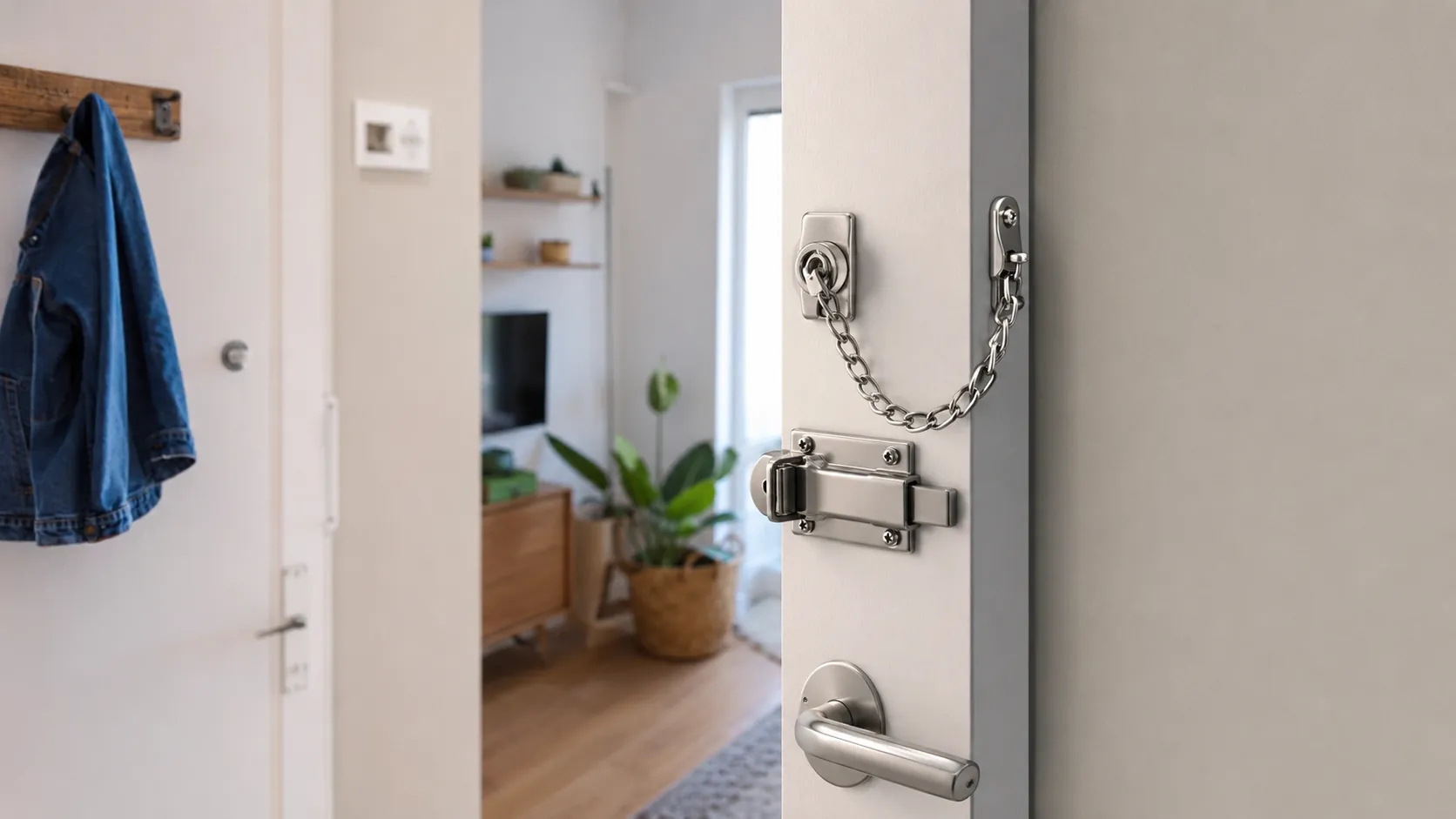
Many period doors have a simple mortise lock with one latch and one bolt. That is not enough against a determined lever attack. In timber-frame and period buildings I therefore like to add a box lock or a cross-bar lock on the inside. The cross-bar lock spreads the force to both sides of the frame, and precisely with these old, often no longer square frames that helps enormously. If a new lock is due anyway, it is worth looking at a full lock replacement with the right security class instead of patchwork.
The hinge side
The underrated side. Every door has two edges: the lock side and the hinge side. Inward-opening doors with exposed or weak hinges can be levered open even when the lock is top notch. The answer is hinge-side security or dog bolts that engage in the frame. Discreet, effective, and on old doors almost always retrofittable. A proper package of cylinder, add-on lock and hinge protection is exactly what I mean by real burglary protection, and not the sale of an expensive armoured door that would not fit a timber-frame house anyway.
Last week in St. Johannis
A case from last week, because it shows the point well. A couple in St. Johannis, old house with cobblestones in front of the door, was set on having a modern steel door fitted. Fear after an attempted break-in at the neighbour's. Understandable. Only: the leaf was original, the house under ensemble protection, and the new door would have stuck out visually a mile.
We solved it differently. The old leaf stayed. In went an anti-pull cylinder with a protective fitting, a surface-mounted cross-bar lock on the inside and two hinge bolts. From the outside you see almost nothing, the door looks as it has for a hundred years. From the inside it is a different calculation for anyone who wanted to lever it open. Cost well below what the steel door plus frame rebuild plus trouble with the heritage office would have run to. The couple was relieved, and honestly so was I. Saving a beautiful old door simply feels better than skipping it.
Locked out and in a hurry?
Price quoted up front, vetted partner business, ~22 minutes on site.
What it costs
Prices in our trade are often fog. So here are clear market ranges for Nuremberg, no guarantee, but realistic. The exact price depends on the door, its condition and the material.
| Measure | Realistic range |
|---|---|
| Anti-pull cylinder incl. protective fitting, fitted | 90 to 180 euros |
| Add-on or cross-bar lock, fitted | 200 to 450 euros |
| Hinge-side security per door | 40 to 120 euros |
| Full lock replacement period door | 150 to 350 euros |
| On-site advice, often creditable | 0 to 60 euros |
A word of context: anyone who quotes you a fixed 500 euros for a simple cylinder question over the phone, without having seen the door, is not serious. And anyone advertising a bait price of 39 euros and then billing ten times that is not either. Serious means a range plus a fixed price before work starts, once I have seen the door. A full overview of what we do is in the services overview.
Windows, cellar doors and the rest
Front door top, the rest open: I see that constantly in Nuremberg's period buildings. A burglar takes the most convenient way, and that is often not the secured flat door but the tilted courtyard window on the ground floor or the rotten cellar door to the inner yard. In the densely built quarters around the old town, where houses often share a common backyard, the rear area in particular is a theme. Mushroom-head fittings on windows, a lockable window handle, a secured cellar door. Think of the house as a whole, not just the one door.
Common questions from the old town
Am I even allowed to fit a new lock in a listed building? Internal technology like a cylinder, mortise lock or an add-on lock on the inside is almost always uncritical. It only gets delicate with visible changes to the facade or the historic leaf. When in doubt, ask the heritage authority briefly.
Is a security door worth it in an old house? Often not. First it rarely fits visually, second retrofitting the existing door is usually cheaper and, in a period building, just as effective against opportunists. Only when the leaf is done for anyway does replacement become the topic.
What is the single most important measure? The cylinder. A flush cylinder with anti-pull protection and a protective fitting close the most common weak spot and cost the least. If you do only one thing, do this.
How high is the burglary risk in Nuremberg really? Residential burglary remains, according to the police crime statistics, an offence with a low clearance rate, but many attempts fail on good security hardware. Concrete figures and tips are at the BKA and the police at K-EINBRUCH.
And if something really happens at night? Then call. We come out on emergency in the evening and at the weekend too, secure the door temporarily and do the permanent fix calmly the next day.
My advice to close
Nuremberg's old town is not a museum where you may touch nothing, and it is no place for armoured doors either. The right path lies in between: modern technology inside, old looks outside. Start at the cylinder, think of the hinge side, do not forget the ground-floor windows. And get advice on site rather than a phone price for a door nobody has seen. Anyone wanting a neutral take on what their door needs should first read the independent notes from the consumer advice centre. And if you are unsure, ask. An honest answer costs nothing.