The short answer first: you do not have to rip out an old door in List or Suedstadt to make it secure. In the vast majority of cases I replace the cylinder, upgrade the existing mortise lock and fit an extra lock, and the door is then at a standard that reliably shuts out an opportunist. Original preserved, security modern all the same. It works, and it costs less than most people think.
I am Lena, a locking-systems technician, and for eleven years I have fitted and serviced locks in Hannover's apartment blocks. Hannover is a special place for my trade, because here two building worlds stand close together: the period building that survived October 1943, and the post-war building that rose on the rubble. Both have their own doors, their own locks and their own weak points. Those are exactly what I will go through with you. There is a separate overview of our locksmith in Hannover.
Why so many doors in Hannover come from two worlds
In October 1943 much of Hannover's inner city was destroyed in a few nights. The reconstruction under city planning director Rudolf Hillebrecht then shaped a largely new, car-friendly city. What that means for doors I see every day: where the bombs tore gaps, post-war buildings of the 1950s stand today with plain, often thin doors. And where streets were spared, the original period building still stands with its heavy, double-leaf flat doors.
So in Hannover I can enter two houses on the same street and find completely different locking hardware. Anyone who wants to retrofit their door sensibly must first know which world it comes from. Let us start with the period building.
The period building: List, Oststadt and Nordstadt
Along the Lister Meile in List, in Oststadt and in Nordstadt you find the finest preserved period buildings in the city. High ceilings, stucco, and flat doors that look half a metre wider than is usual today. Often they are double-leaf doors, one leaf bolted fast, the other in use.
The beauty of these doors is at the same time their problem. The wood is solid, but the lock frequently still dates from a time when nobody thought about levering. There I find:
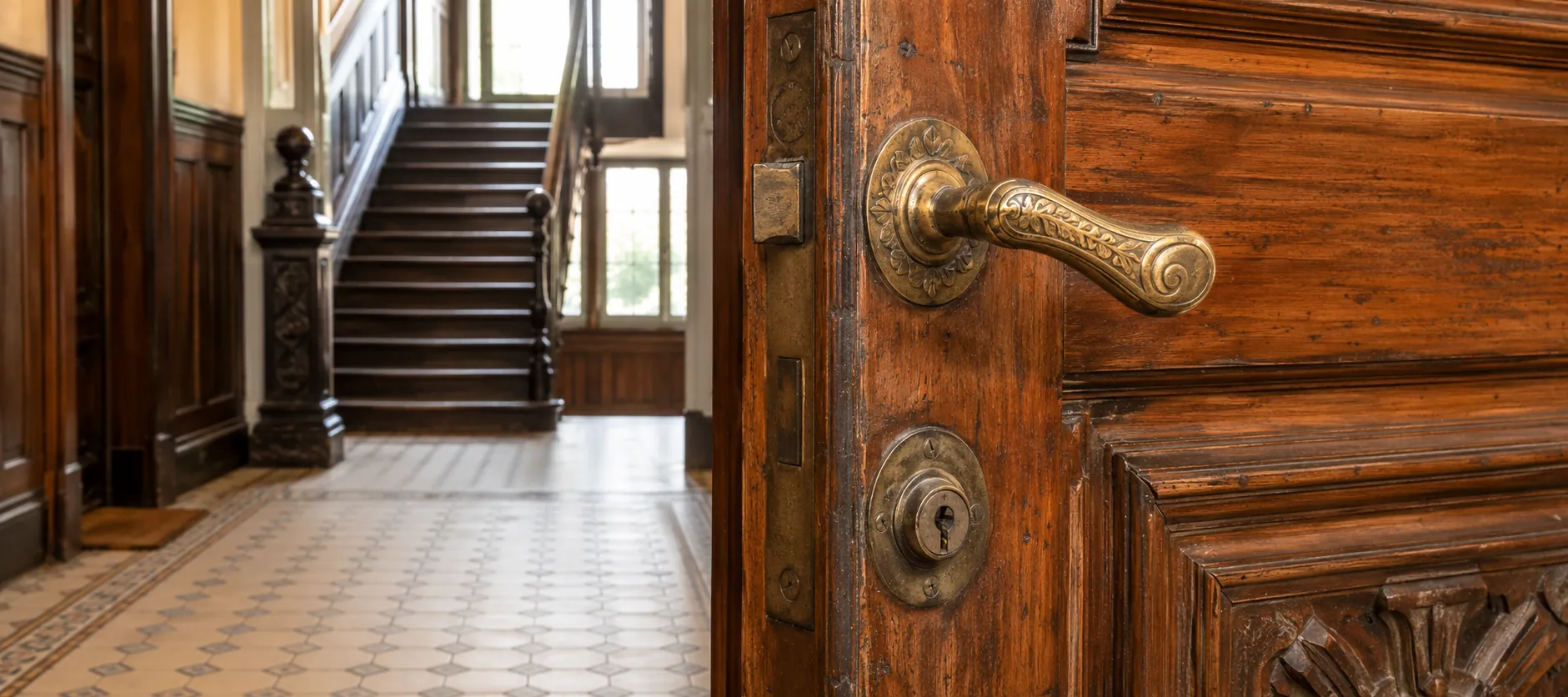
- old mortise locks with a bit key, the classic large key that stands no chance against a modern tool.
- profile cylinders fitted later on without any drill or pull protection.
- a single locking point in the middle, so the door stays unsecured at the top and bottom edge.
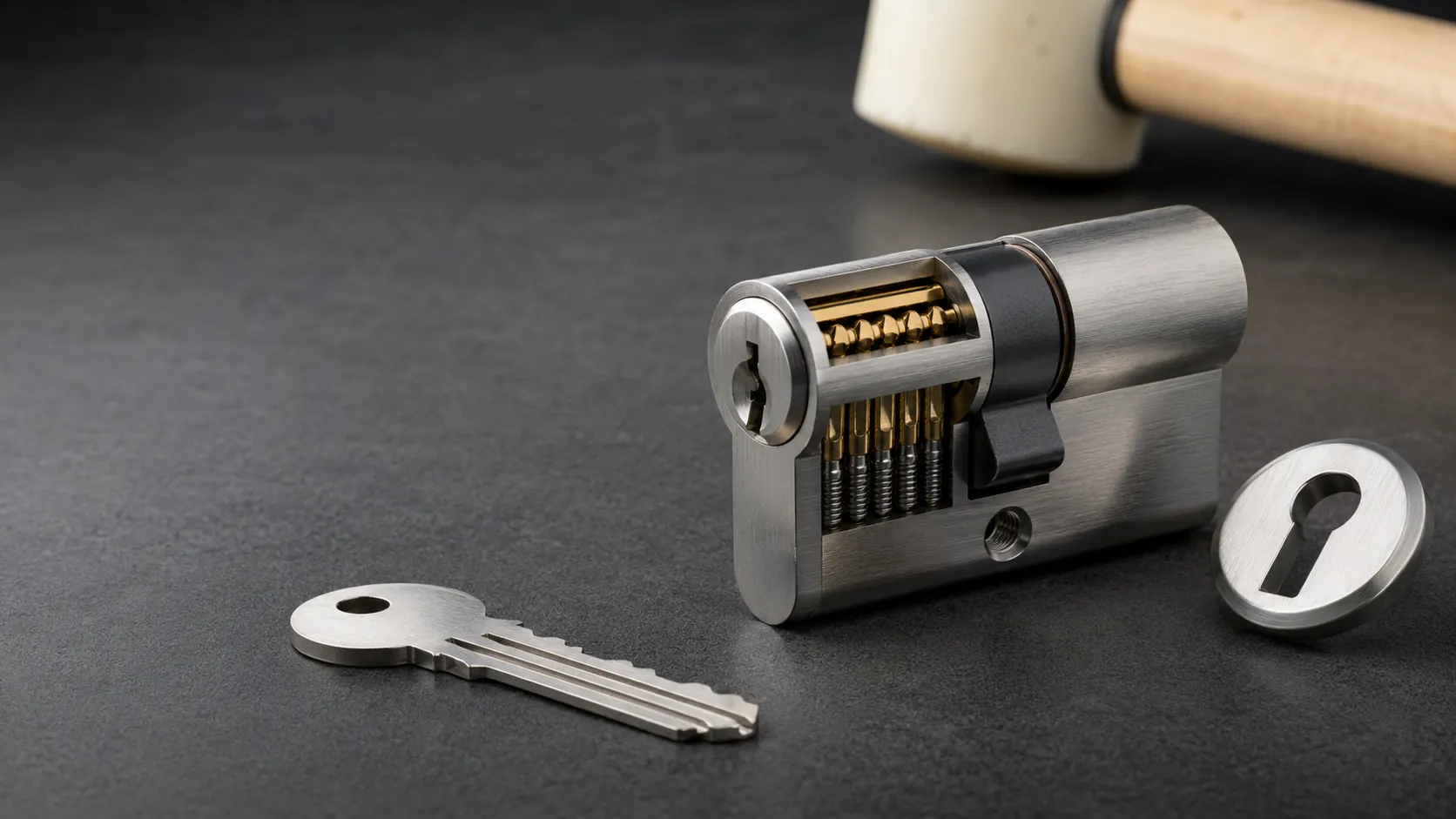
My standard solution for the period building: the bit-key lock or the old cylinder is swapped for a security cylinder with an emergency function and drill protection. On double-leaf doors I fit a cross-bar lock that bolts the door across its full width and grips both leaves. That keeps the look and suddenly the door withstands a levering attack. Where the mortise lock itself is worn out, a full lock replacement to a suitable model beats a repair.
Suedstadt and the building culture of the 1920s
A chapter of its own is Suedstadt around Sallstrasse and Stephansplatz. Here the period building mixes with the solid residential architecture of the 1920s. The doors are often a generation more modern than in List, yet the cylinder inside sometimes still dates from the 1970s. That is the classic: good door, tired cylinder.
In Suedstadt my most frequent job is therefore the plain cylinder swap plus a thorough service of the lock. A cylinder that catches does not get better, it gets worse, until one day the key snaps off. Whoever has the door open anyway should have a clean spare key cut while at it, because key cutting for old bit-key locks often gets difficult later when no blank fits any more.
The 1950s post-war building: thin doors, soft frames
Now to the other world. In parts of Linden-Nord and in Calenberger Neustadt the 1950s post-war houses stand between the preserved period buildings. Their flat doors are the opposite of the period building: light, slim, often a thin plywood door in a soft steel frame. The lock is usually a simple mortise lock without a security fitting.
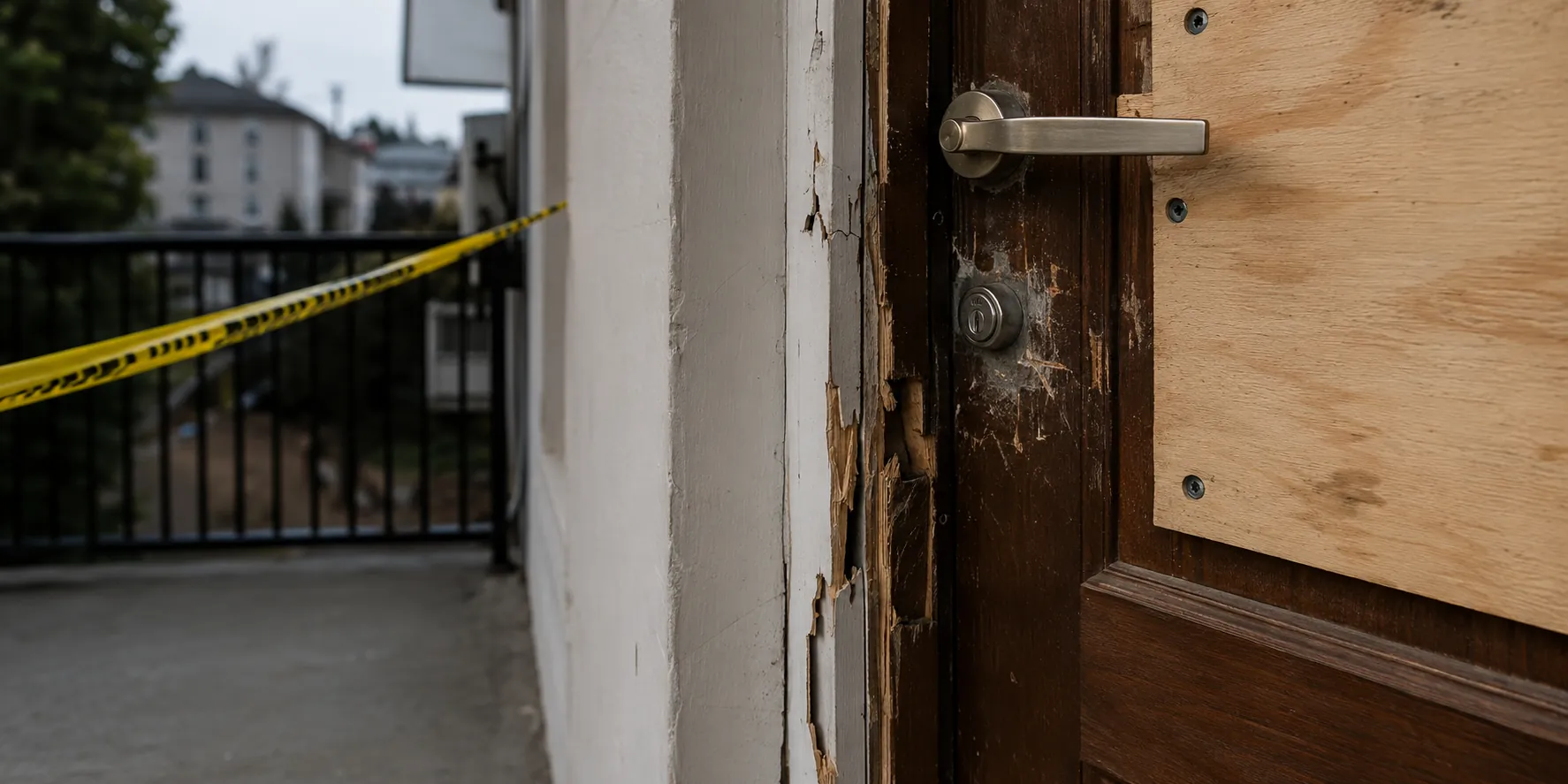
These doors look inconspicuous, but that is exactly what deceives. A thin door in a soft frame does not give way at the lock under a levering attempt, but at the frame or the door leaf itself. Here the most expensive cylinder does little if the rest is soft. My order in the post-war building:
- A security cylinder with pull protection and a continuous security fitting that covers the cylinder.
- A surface-mounted extra lock that bolts the door at a second point and stiffens the thin leaf.
- A hinge-side security so the door cannot simply be levered off on the hinge side.
That sounds like a lot, but it is done in two hours and turns a paper door into a serious barrier. When choosing products I follow the recommendations of the police at k-einbruch.de and the consumer association Verbraucherzentrale, which show independently which upgrades really make a difference.
Locked out and in a hurry?
Price quoted up front, vetted partner business, ~22 minutes on site.
What I actually retrofit, with realistic prices
So you have an idea of the costs, here are the ranges I charge in Hannover. They are market values including fitting, not guarantees, because every door and every frame is different:
| Measure | Realistic price |
|---|---|
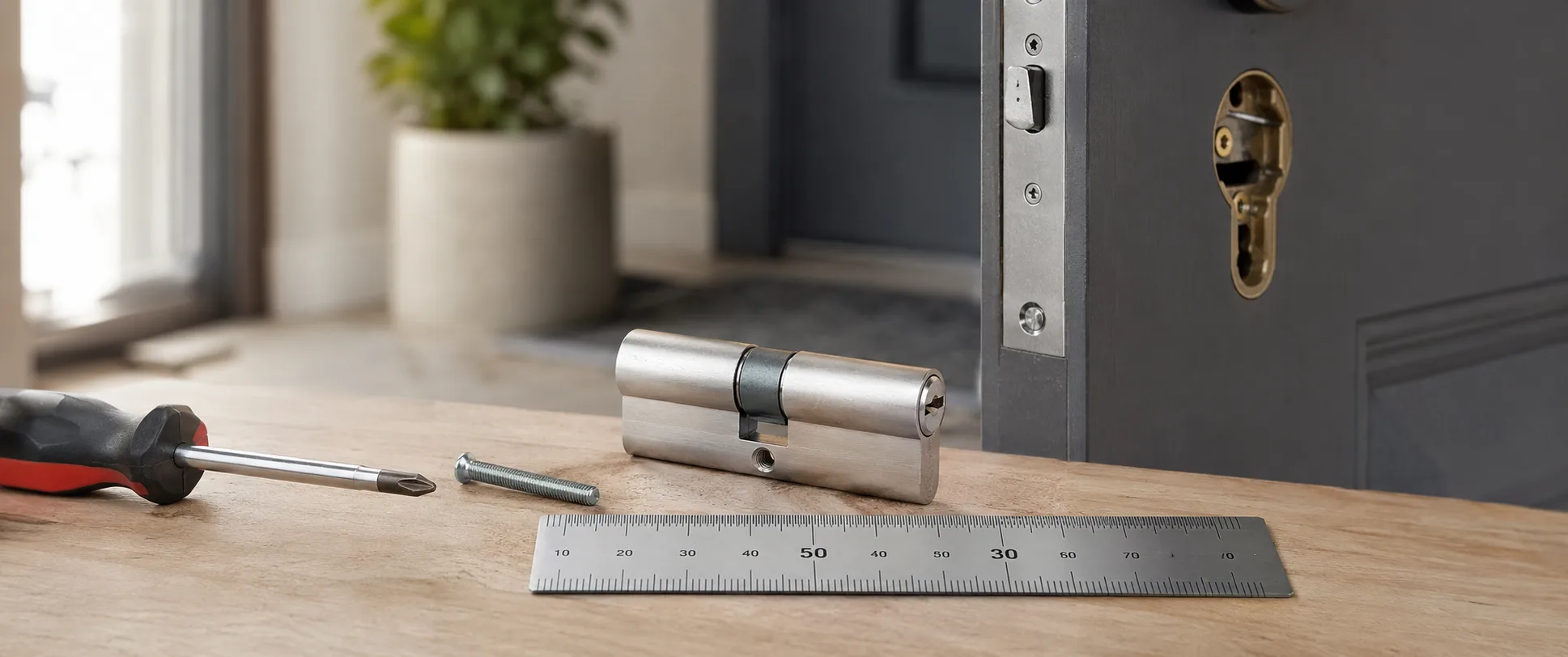
| Security cylinder with emergency function, fitted | 90 to 200 euros |
| Replacing a mortise lock in a period building | 120 to 250 euros |
| Surface-mounted extra lock, fitted | 150 to 300 euros |
| Cross-bar lock for a double-leaf period door | 300 to 600 euros |
| Hinge-side security per door | 30 to 80 euros |
My position, quite clearly: in the period building the money goes into cylinder and cross bar, in the post-war building into the extra lock and frame reinforcement. Whoever mixes that up buys against their real need. And keep your hands off the twenty-euro cylinder sets from the hardware store, they have no place in a Hannover flat door.
The other week in List
A story from last month, because it shows the period building perfectly. A couple in List, a beautiful double-leaf flat door from 1908, stucco all around, just wanted to get rid of a jamming key. I look at the door and find a profile cylinder sticking out two centimetres unprotected from the fitting, a gift for any pair of pliers.
We swapped the cylinder for a flush security model with pull protection and fitted a slim cross-bar lock on the inside, in a tone that matched the old wood. The two had worried about spoiling the door. In the end you could see no difference from outside, and the second leaf, which before was only loosely closed, is now properly bolted in too. Cost in the mid three-figure range, and the door is ready for the coming decades without a piece of original fabric being lost.
Heritage protection: what is allowed in a period building
A word of caution, especially in List and Oststadt, where many houses are under ensemble protection. On a listed facade or building entrance door you may not simply screw on a visible box lock. Inside on the flat door the scope is usually much greater, and for extra locks there are discreet variants that do justice to the heritage.
My advice: with a protected building entrance door, speak first to the management or the lower heritage authority. This is general information and not legal advice, but it saves you trouble. As a rule there is always a solution that reconciles security and heritage, you just have to look for it.
Frequent questions
Do I have to replace my lovely old door for more security? Almost never. A good security cylinder, an upgraded lock and a suitable extra lock get most of the security out without touching the door leaf. Replacement only pays off when the wood itself is done.
Can I still get spare keys for an old bit-key lock? Often yes, but not always. If no blank fits any more, that is the moment to think about converting to a modern profile cylinder, which is safer anyway.
Why does my cylinder in the period building jam in damp weather? Period doors work with the moisture, the wood swells. Usually a service and the right care of the cylinder is enough. If it gets worse, a tired cylinder often sits behind it that is due for replacement soon anyway.
Can I get in when the old key snaps in the lock? Call before you lever around. A proper door opening saves the old cylinder in most cases rather than destroying it. In an emergency we are reachable in the evening and at the weekend too via the emergency callout.
My bottom line
Hannover's doors tell the story of the city, from the period building in List to the plain post-war building of the 1950s. Making them secure does not mean replacing them, but understanding them. In the period building I upgrade cylinder and lock and add a cross bar on double-leaf doors. In the post-war building I reinforce door leaf and frame and add an extra lock. Both are affordable, both preserve the character of the door. You will find more guides on locks and security in our guide, and we answer frequent questions in one place in the FAQ. If you are unsure which world sits behind your door, I will take a look and tell you honestly what it needs and what it does not.