Short and clear first: if the lock failed through normal wear and tear, the landlord usually pays. If, on the other hand, you lost the key yourself or left it inside and locked yourself out, then you as the tenant bear the cost of the door opening and, if needed, the new cylinder. The cause decides, not who happens to be holding the invoice.
I am Nina Hartmann and I have advised tenants for years, many of them from the large housing estates in the Berliner Viertel and the Dicker Busch. The subject of locks and keys lands on my desk surprisingly often, and almost always the dispute turns on the same question: who has to pay for this? I will sort it out here, step by step. An honest note up front: this is general information from advisory practice, not legal advice for your individual case. You will find no invented statutes here, but plain everyday logic instead.
The principle: wear and tear versus who caused it
Tenancy law is less complicated here than many think. It comes down to two questions. First: did something break that the landlord has to keep in usable condition? Then it is his problem. Second: did you cause a damage or an emergency through your own behaviour? Then it is yours.
A cylinder that wears out and jams after fifteen years is wear and tear. A key that falls out of your pocket while jogging at the Blauer See lake is your affair. Most real cases lie between these two poles, and that is where it gets interesting. Precisely for that reason it is worth going through the typical situations one by one rather than judging in the abstract.
Case 1: locked out, key lying inside
The most common call. Door fell shut, key inside on the shelf. Here the position is clear: you locked yourself out, so you pay for the door opening. The landlord has nothing to do with it, because nothing on the door or the lock is broken.
The good news: if the door had only fallen shut and was not locked, it is usually a cheap, non-destructive job. No new cylinder, no damage, no reason for a three-figure fantasy invoice. So do not let anyone talk you into swapping the lock. It only needs to be opened.
Case 2: key lost, but the flat is still reachable
You lost your flat key but can still get in, via a spare or because someone was home. Even so, the question arises: does the lock have to be changed now, and who pays?
Here it depends on whether the key can be linked to the address. If the lost key carried a fob with the address on it, the worry about misuse is justified, and a lock replacement can make sense. Because you lost the key, you usually bear the cost. If the lock belongs to a whole-building locking system, as is the case in many estates in the Dicker Busch and Hasengrund, it gets expensive and delicate, because a single key is then tied to the entire system. In such a case report the loss to the property management immediately, before you act on your own.
Case 3: the lock broke by itself
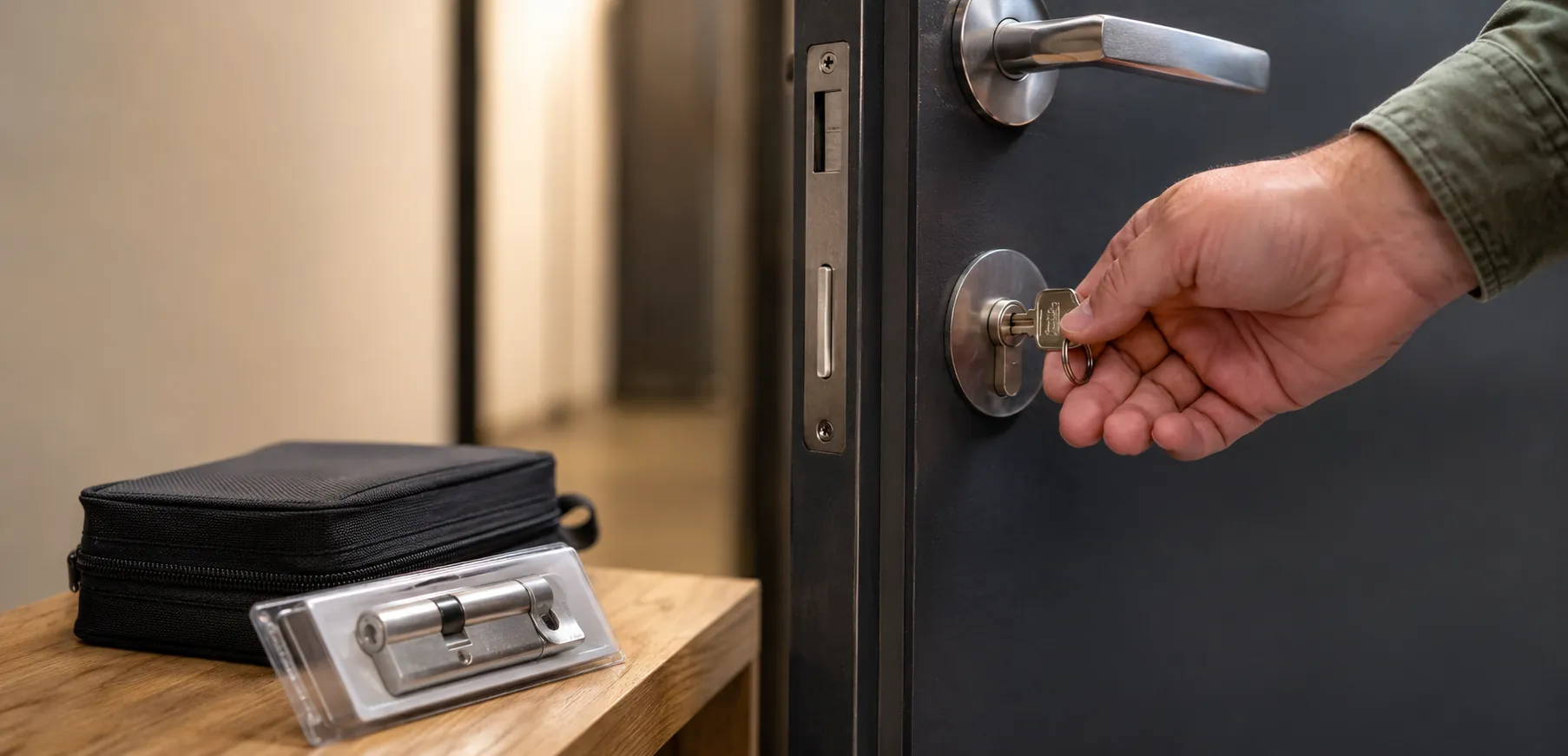
Now we are at the classic landlord case. The cylinder spins, the key can no longer be withdrawn, the door jams despite gentle handling. That is wear and tear, and the landlord has to fix and pay for it. You are entitled to the flat remaining usable, and that includes a working flat door.
The right procedure matters. Report the fault to the property management, ideally in writing, and give them the chance to deal with it. Only if there is imminent danger, meaning you stand at night in front of a door that can no longer be locked and cannot reach anyone, may you call a tradesperson yourself and claim the cost later. In that case be sure to keep the invoice. By the way: a defective cylinder that is simply worn out after years also falls under this landlord duty.
Case 4: burglary or attempted break-in
If the lock was damaged during an attempted break-in, you are not at fault for the damage. The repair is the landlord's matter, because again it concerns the flat's usability. For stolen items and often for the damaged door too, your contents insurance comes into play alongside, provided you have one. How the burglary situation in Hesse is developing you can read from the police crime statistics of the BKA, rather than relying on gut feeling. Always report a burglary to the police, if only for the insurance.
Locked out and in a hurry?
Price quoted up front, vetted partner business, ~22 minutes on site.
The two mistakes I see most often
From my advisory work I know two mistakes that cost tenants dearly again and again.
First: having the lock changed on your own initiative and sending the bill to the landlord without asking him first. That almost always goes wrong. Without a prior request and without a genuine emergency, you are often left with the cost, even when the landlord would actually have been responsible.
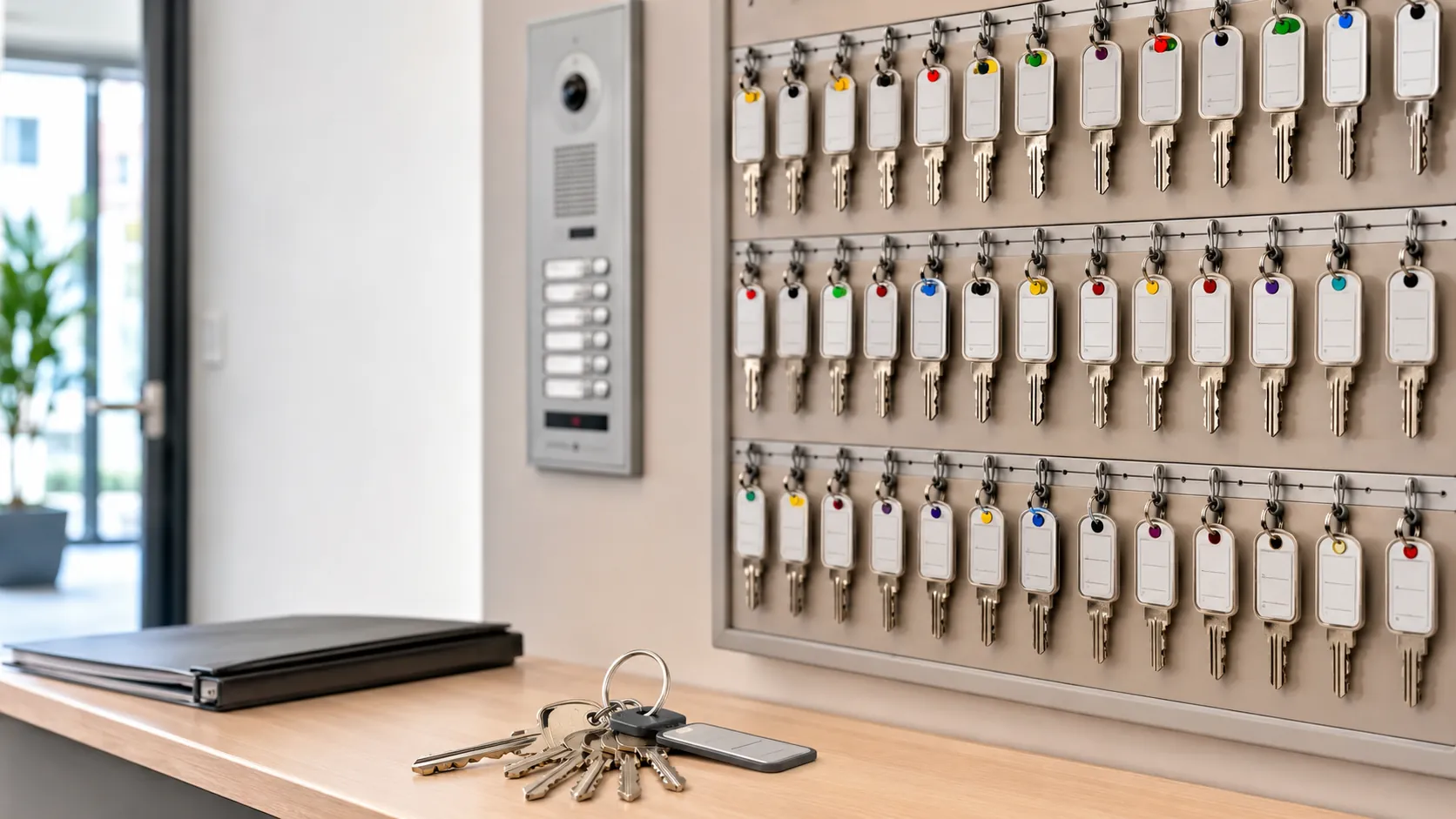
Second: not returning the original keys in full when moving out. If a key from a locking system is missing, the landlord may under certain circumstances demand the replacement of the entire system. That can get seriously expensive. Count the keys when you move in, record the number in the handover protocol, and hand back exactly the same number when you leave.
Last month in the Berliner Viertel
A case that shows well how important the right procedure is. A tenant in the Berliner Viertel, a high-rise flat, told me her cylinder had been jamming for weeks and could barely be turned. She had already considered quickly calling a locksmith herself one evening and deducting the cost from the rent. I reined her in. We reported the fault to the management in writing, with a photo and a short deadline. The management sent a tradesperson, the cylinder was clearly worn out, and the tenant paid nothing. Had she acted herself at night without reporting it, the reimbursement would have been questionable.
And a counter-example from the Hasengrund
Different case, different lesson. A young tenant in the Hasengrund lost his keyring during the move, complete with a fob showing street and house number. Understandable panic, because whoever found the key knew the address. Here the lock replacement was justified, and because he had lost the key, he bore the cost himself. What mattered was only that he reported the loss to the management immediately, because the flat was tied to a locking system. That way it stayed at the replacement of one cylinder, instead of the entire system being called into question later.
Common questions, answered briefly
Can I simply deduct the cost from the rent? Only within narrow limits and usually only if the landlord was responsible, you requested him beforehand and he remained inactive. Deducting on your own is risky. Get advice first.
The landlord does not respond to my fault report. What now? Remind him in writing with a reasonable deadline and document that the report arrived. Only if he stays inactive despite the deadline, or there is imminent danger, does acting yourself come into consideration.
Do I have to have the lock changed when I move out? No, not with normal use. You only have to return all the keys you received. If one is missing, it gets complicated, especially with a locking system.
I lost a key, but with no name on it. Does it still have to be changed? If no link to the flat is possible, the risk of misuse is low, and a replacement is often not compulsory. Agree it with the management rather than acting hastily.
Where do I get reliable information on tenancy law? The consumer advice centre and the local tenants' association are good places to start. For a concrete dispute, real legal advice is worth it.
My bottom line
The question of who pays almost always comes down to the cause. Wear and tear belongs to the landlord, the self-lost key and locking yourself out are yours. The most important thing is the procedure: report faults in writing, give the landlord the chance to act, and only act yourself in a genuine emergency and keep the invoice. If it then has to be quick after all, we are reachable via the emergency service in the evening too, and we tell you honestly whether a new lock is needed at all. An overview of all services is in the service overview, more answers in the frequently asked questions, and local information at locksmith in Rüsselsheim.