Short and honest up front: yes, an old wooden door or a half-timbered house door in the Mainz old town can be made secure without ruining its original fabric. The trick is simple and still rarely done cleanly. You do not replace the door, you upgrade it. A surface-mounted rim lock, a good security cylinder in the existing case, and a secured hinge side deliver the most protection per euro. All reversible, all without drilling a core through 150-year-old oak.
I am Lena, a locking-systems technician, and I spend a lot of time in the old corners of the city. Between the Kirschgarten and Augustinerstrasse stand doors older than many a Mainz family tree, and almost every week I hear the same line: "I want to live safely, but the door should stay the way it is." That works. You just need to know where to start and where to keep your hands off.
The short answer for the impatient
If you tackle only three things, make it these: fit a tested security cylinder with an emergency function, mount a surface-mounted rim lock or cross bar on the inside, and secure the hinge side against levering. These three measures stop the vast majority of break-in attempts, because most offenders lever within seconds and give up the moment it takes longer. A properly planned burglary protection starts right here, not with an expensive new front door. That is my firm conviction after more than ten years on old doors with the Mainz locksmith team.
Why you do not bolt a modern door leaf onto a period door
A catalogue RC2 front door looks great on paper. In a Wilhelminian building in the Neustadt or a half-timbered structure in the Altstadt, it often simply does not fit. The frames are crooked, the wood has moved, the dimensions are not standard. And even when it fits, a modern door kills exactly what makes the flat valuable: the old casing, the profile, the hand-made fittings.
Then there is heritage protection. Large parts of the Mainz old town and many individual buildings are listed, and you cannot simply alter the street facade. The good news: almost all sensible security measures work from the inside or discreetly, and those rarely give the heritage office a headache. You just need to know what to apply for and what is exempt anyway.
What really helps, in the right order
I run through the same order on every old door. Not because it is a template, but because each step makes the next one cheaper.
The cylinder first
The cylinder is the cheapest and most underrated component. Many period doors still hold an ancient cylinder with no drill protection at all, and that can be beaten with tools in minutes. A modern cylinder with drill protection, pull protection and an emergency function costs 60 to 150 euros as a part and fits almost any existing lock. The right length matters, otherwise it protrudes and can be snapped off. How a cylinder replacement is correctly measured and swapped is no magic, but it decides the security.
If your door holds an old warded lock, the kind with a big classic key, that is a different story. Such locks are pretty but from a security angle they belong to yesterday. Here a lock replacement to a mortise lock with a profile cylinder often pays off, and a good tradesperson keeps the old fitting and only modernises the internals. The look stays, the security jumps forward.
Then the hinge side, the blind spot
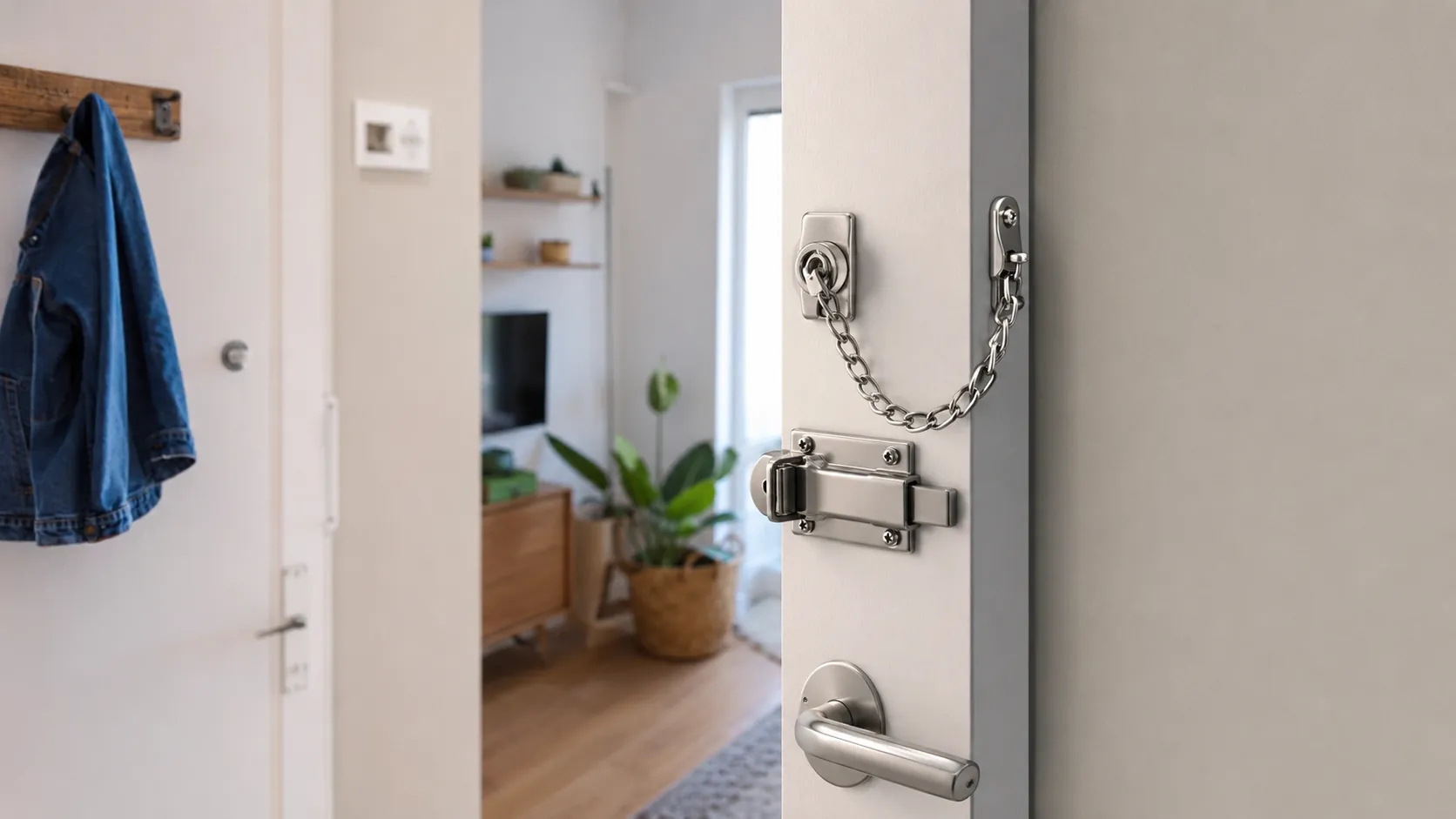
This is where almost everyone makes the mistake of looking only at the lock side. On outward-opening period doors, and Mainz has many, the hinges sit on the outside. A burglar sets the lever where there is no lock. A hinge-side protector, sturdy pins that engage the frame as the door closes, costs 30 to 90 euros in parts and can usually be screwed on from inside. It is my favourite trick because it stays invisible and does not bother heritage rules.
Last the rim lock or cross bar
A surface-mounted box lock or a cross-bar lock across the full door width is the most visible but also the most effective element. It spreads the levering force across the whole door instead of taking it at one point. A solid rim lock runs 80 to 200 euros as a part, a cross bar with fitting quickly reaches 250 to 450 euros. With half-timbering and thin historic leaves I prefer a lighter model, anchored cleanly in the load-bearing frame, rather than screwing a heavy armoured thing into brittle wood. For a whole floor or an apartment block, locking systems come into play, where one key sensibly covers several doors.
Half-timbering is its own building site
Half-timbering forgives no force. The wood is often dry, partly worked by woodworm, and a misplaced drill hole tears the grain open. In the Altstadt around the Kirschgarten and in the old village cores of Weisenau and Laubenheim, I have seen doors into which someone drove a cross bar with a cordless drill, and the result was a splintered panel and a wobbly fixing that holds nothing. With old wood the rule is: pre-drill, use the right plugs or through-bolting, and when in doubt carry the load into the frame rather than the leaf. Whoever bodges here ruins exactly the fabric they meant to protect.
Locked out and in a hurry?
Price quoted up front, vetted partner business, ~22 minutes on site.
What all of this roughly costs
Prices are market ranges, not guarantees, but they give you a feel. Material prices vary, and the effort depends on the state of the door.
| Measure | Realistic range |
|---|---|
| Security cylinder with drill protection | 60 to 150 euros part |
| Hinge-side protector retrofit | 30 to 90 euros part |
| Surface-mounted rim lock | 80 to 200 euros part |
| Cross-bar lock with fitting | 250 to 450 euros |
| Mortise lock swap, keeping the fitting | 120 to 280 euros |
My advice: never take the cheapest hardware-store cylinder just because it fits. The difference between a 12-euro cylinder and a tested model for 80 euros is precisely the difference between "open in two minutes" and "the offender moves on".
Heritage and tenancy, briefly and in plain language
If you rent, visible changes to the door generally need the landlord's approval. Internal, removable security measures are usually uncritical because you can take them off when you leave. If the building is listed, ask the city's lower heritage authority before larger changes to the street side. This is general information and not legal advice, but experience shows discreet interior solutions are almost always waved through, while visible metal bars on the show side rather not.
If you want to know how residential burglary is actually developing, you will find solid figures in the police crime statistics of the BKA. Concrete, tested retrofit recommendations come from the police initiative K-EINBRUCH, which also explains which standards matter for tested products.
Last week in the old town
A case from last week, because it shows the point. A couple in a half-timbered house near Augustinerstrasse wanted "finally some peace" and had ordered a heavy security door online. When I came to measure up, it was quickly clear: the door would never have fitted the crooked old frame, and heritage rules would have blocked the facade change anyway. Instead we swapped the cylinder, secured the hinge side and fitted a flat rim lock on the inside. Cost: about a third of the door they ordered, which they cancelled. The old door still stands, looks the same as ever, and now takes a great deal more.
And in Weisenau I recently had the opposite: a young family that had already survived an attempted break-in. The door had been levered on the hinge side, classic, because nothing was secured there. Two hours of work, and the weak point was gone.
Frequent questions
Do I really have to keep the old door, or is a new one safer? A new tested door can be safer, yes. But in a period building it often does not fit without massive intervention, and heritage rules have a say. A well-upgraded old door comes very close to that security level at a fraction of the cost.
Is an expensive cylinder worth it if the hinge side is open? No. That is the most common mistake in thinking. A chain is as strong as its weakest link. The hinge side and the lock side belong secured together.
Will I run into trouble with heritage protection? With discreet interior solutions, practically never. For visible changes to the show side you should ask first. When in doubt I plan the security so it is invisible from the street.
Does insurance contribute? Some contents insurers and grant programmes support retrofits. Ask your insurer, and have the installed products receipted with their standard designation.
My bottom line
Old and secure is no contradiction, not even in the Mainz old town. Start with the cylinder, do not forget the hinge side, and fit a rim lock that suits the wood instead of splitting it. An honest on-site assessment costs you nothing but half an hour, and it saves you the expensive new door you do not need. If it has to be fast, for example after an attempted break-in, we are there on emergency too. An overview of all services and answers to further questions are in our FAQ.