Straight to the point, so you do not have to scroll: a Leipzig Gründerzeit front door can almost always be retrofitted without sacrificing the beautiful old leaf. The leverage lies in the cylinder, the strike plate and the fittings, not in the wood. If you live in a Plagwitz, Connewitz or Gohlis flat built between 1890 and 1914, you do not need to rip the door out. You need to make it smarter.
I am Sophie Krüger, a burglary-protection adviser, and I spend half the week standing in exactly these hallways with terrazzo floors and stucco ceilings. These doors are a heritage you barely find in Frankfurt or Munich anymore, because more was bombed and gutted there. Leipzig kept much of its Gründerzeit stock. That is a gift. And a responsibility, because the original locking technology from back then holds a modern burglar off for less than thirty seconds.
Why the Leipzig period door is a special case
Most online guides talk about the standard flat door from the eighties, smooth, standardised, with a modern mortice lock. That gets you nowhere in Leipzig's Gründerzeit quarters. Here you often deal with two layers: the heavy street entrance door and the flat door up in the stairwell. Both are usually old, both usually timber, and both have been painted over three times, so the fitting half sticks to the lacquer.
The leaf itself is often the smallest problem. Solid oak or pine with framed panels is surprisingly sturdy. The weak point is the periphery: a hundred-year-old warded lock or an early profile cylinder with no drill protection at all, a strike plate held by two short screws in a soft, dried-out frame, and hinges the door hangs on slightly after a century. A burglar does not lever the wood. He levers where door and frame meet, and that is where everything is decided.
The old lock and the cylinder
If your flat door still holds a warded lock, the kind with the big romantic-looking key, then it is pretty and practically worthless as security. A lock like that opens in seconds with a pick, something you could learn at any flea market on Ostplatz. The first, often only truly necessary step is swapping to a modern profile cylinder with an emergency function and drill protection. Getting the cylinder replaced usually needs no work on the historic leaf at all, because the cylinder goes into a standardised lock body that stays invisible from outside.
If a profile cylinder is already in there, that does not mean it is any good. The early hardware-store cylinders from the nineties, found in many renovated old buildings, can be pulled or drilled. Look for a cylinder to DIN 18252 with pull protection. Brands like ABUS, BKS or Winkhaus deliver that, a nameless four-euro model does not.
The strike plate is the real truth
Now comes the point almost everyone overlooks, and the one I hold to be the most important of all. You can fit the most expensive cylinder in the world, but if the strike plate sits in a rotten frame on two short screws, the door still holds nothing. The bolt grips the plate, the plate grips the frame, and if that frame is soft after a hundred years, the whole thing tears out at the first firm heave.
The answer is a long security strike plate fixed with long screws deep into the masonry behind the frame, not just into the wood. It is unspectacular, costs little, and it is the difference between a door that holds and one that gives way. Anyone who forgets the strike plate while changing the lock has thrown away half the money.
Double-leaf doors and the transom
Many Leipzig entrances are double-leaf, with a fixed leaf held top and bottom by bolts, and an ornamental glass transom above. Both are classic weak points. The fixed leaf is often held only by ancient edge bolts that can be pushed open from outside, and the transom is sometimes just single glass hung in place. This is where a professional eye pays off, because a chain is only as strong as its weakest link.
What really helps in each quarter
Now let us get concrete, quarter by quarter, because the building stock differs and so do the typical cases.
Plagwitz: factory floors and lofts
In Plagwitz many live in former factories and in the dense Gründerzeit rows around Karl-Heine-Straße. The entrances are often grand and large, with heavy double doors. Last month I was in one such row where intruders had worked on the fixed leaf. The active leaf was sound, but the fixed one was secured only by a rusted edge bolt you could lever open with a screwdriver. We fitted sturdy edge bolts and moved the main lock to a proper cylinder. Modest cost, big effect.
Connewitz: flat doors in a busy stairwell
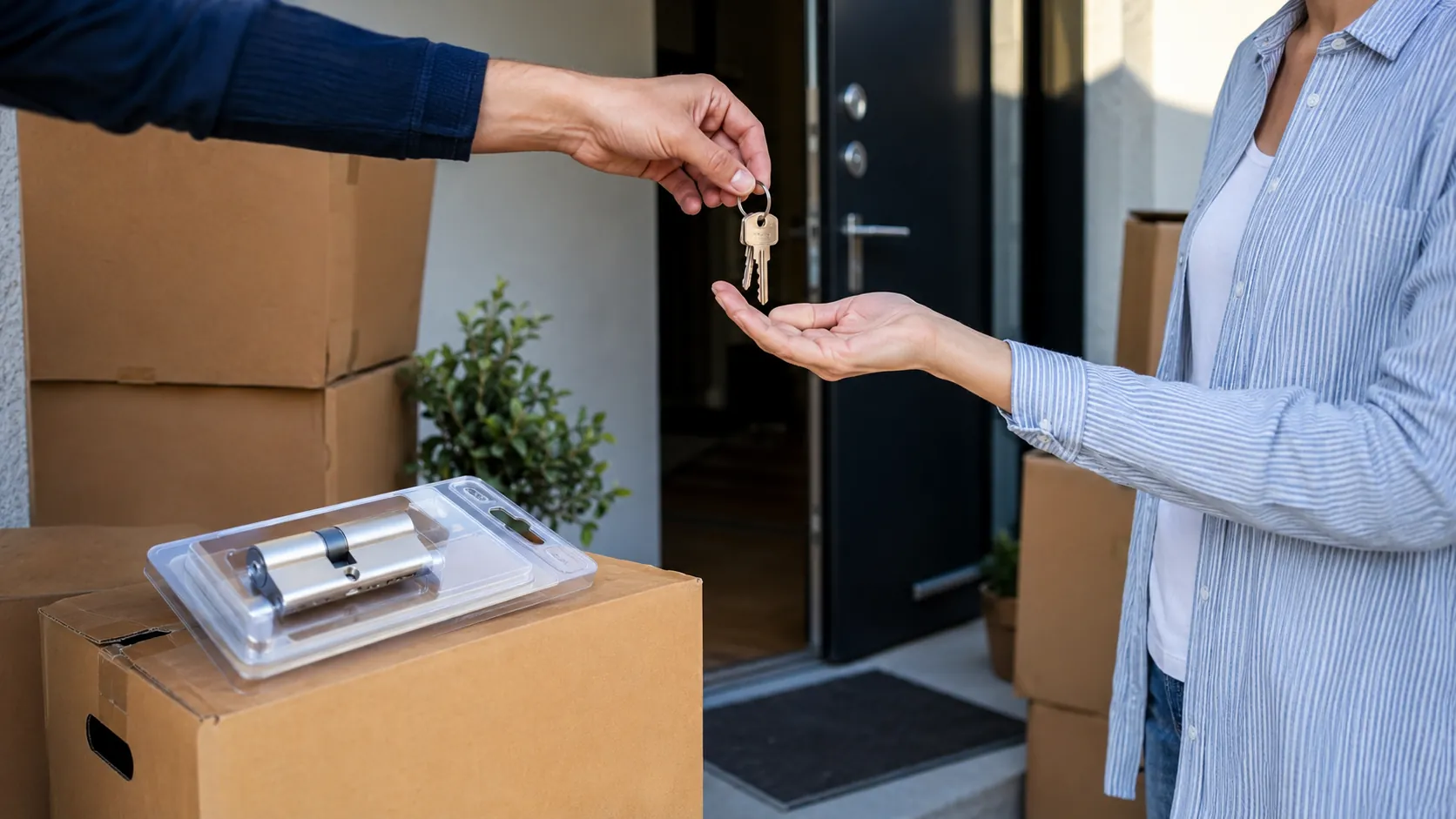
In Connewitz many live in large old-building shared flats, and turnover is high. Someone is always moving in or out, keys go missing, and nobody knows how many copies of the flat key are in circulation. My urgent advice for such shared flats: the topic here is not the most expensive fitting but control over the keys. A cylinder swap at every major tenant change is cheaper than the uneasy feeling that the ex-flatmate can still get in. Anyone planning a locking system with defined keys and a security card straight away has peace of mind for years.
Gohlis: the quiet, well-off quarter
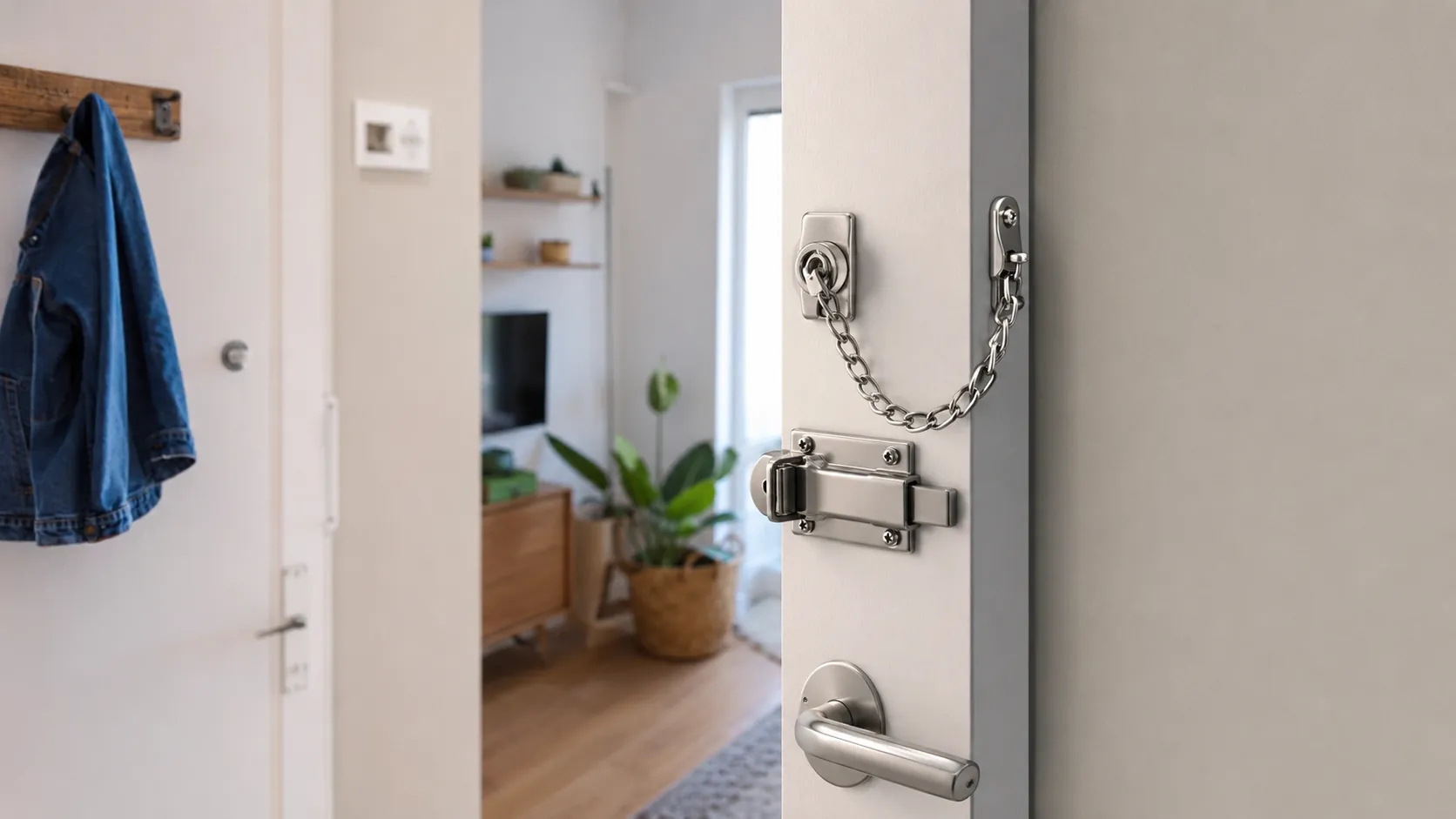
Gohlis is different. Quieter, more manicured, often owners rather than tenants, many detached or semi-detached Gründerzeit houses with front gardens. That very setting, a little off the street, with a hedge and no passing crowd, is pleasant for a burglar, because nobody sees him. Here I almost always advise a real mechanical upgrade: security strike plate, cylinder with pull protection, and if the budget allows, an add-on like a crossbar lock that bars the door across its full width. Which of these makes sense in your case is settled by honest on-site advice, not a flat quote over the phone. For an overview of the individual measures, see the topic burglary protection.
Heritage protection: what you may and may not do
Many Leipzig Gründerzeit houses are listed, and that unsettles people. The good news: almost everything I recommend here is exempt or uncritical, because it does not change the external appearance. A different cylinder, a longer strike plate behind the frame, a modern edge bolt inside, none of that is visible from the street.
It only gets critical when you want to alter the leaf itself, swap visible fittings or replace the ornamental glass. Then you should speak to the local heritage authority first. This is not legal advice, just a practical note from daily life: talk to the office in advance, and solutions that preserve the door's character while still being secure almost always turn up. I have yet to see a case where sensible burglary protection failed on heritage rules, as long as you respect the look.
Locked out and in a hurry?
Price quoted up front, vetted partner business, ~22 minutes on site.
What all this costs
Let us talk money, honestly and in ranges, because every door is different and remote diagnoses are dishonest. These are market prices, not guarantees.
| Measure | Realistic range |
|---|---|
| Profile cylinder with pull protection, material | 40 to 120 euros |
| Cylinder swap, labour | 30 to 70 euros |
| Security strike plate, fitted | 60 to 150 euros |
| Sturdy edge bolts for the fixed leaf | 80 to 200 euros |
| Crossbar lock, fully fitted | 250 to 600 euros |
| On-site consultation | often free or for a small flat fee |
You can see it: the most effective start, cylinder plus strike plate, rarely exceeds 300 euros and brings the biggest security gain per euro. The big items like the crossbar lock are optional, not compulsory. If money is tight, get the periphery right first and retrofit the rest later. For further services and what they cover, see the services overview.
A word on statistics, without scaremongering
I am not inventing numbers here. According to police crime statistics, residential burglary is among the offences with a low clearance rate nationwide, and a large share of attempts stalls at the attempt stage, precisely because well-secured doors hold offenders off. That is the whole point. You do not have to build a fortress. You only have to make your door hold a few minutes longer than the offender's patience. Anyone looking for solid figures and good basics finds them from the police at polizei-beratung.de and at the BKA. The consumer association also has usable, manufacturer-neutral guidance.
Frequently asked questions
Do I have to rip out my beautiful old front door? No, almost never. In more than nine cases out of ten the leaf stays and we work on cylinder, strike plate and fittings. The historic original is preserved.
Is a better cylinder alone enough? No. The cylinder without a solid strike plate is like a good lock on a cardboard door. The two belong together, otherwise the offender levers at the weak frame.
I rent, am I even allowed to do this? You may usually swap the cylinder, as long as you keep the old one and refit it when you move out. For work on the frame or fixed add-on locks, ask the landlord. This is general information, not legal advice.
How quickly does someone come if it is urgent? If the door no longer closes after an attempted break-in, that is a case for the emergency service, and then it is about hours, not days. For a planned retrofit, by contrast, we take our time for a proper consultation.
How do I know what my door needs? The most honest thing is a look on site. We also answer many questions in advance on the FAQ page, and through the Leipzig locksmith service we are out and about in every quarter.
My bottom line
The Leipzig Gründerzeit door is not a security risk, it is a jewel with outdated technology. Renew the technology and leave the jewel alone. Cylinder with pull protection, a long strike plate deep in the masonry, proper edge bolts on double-leaf doors, and an add-on lock in quiet settings like Gohlis. It is no big deal, it costs less than most people think, and it preserves the character you moved to Plagwitz, Connewitz and Gohlis for in the first place.