If you live in Bonn's Suedstadt, your biggest security gap is almost always the flat door, not the street door. Short answer first: a good profile cylinder with anti-pull protection, a solid security fitting and, where possible, a surface-mounted add-on lock protect a Gruenderzeit flat more than any alarm system. And often for 200 to 500 euros, not four thousand.
I am a certified locking-technology expert, and professionally I stand in front of exactly these doors all the time: double-leaf panelled doors, tall old flat entrances with fanlights, street doors from around 1900. The Suedstadt between Bonner Talweg, Reuterstrasse and Poppelsdorfer Allee is regarded as one of the largest continuous Gruenderzeit stocks in Germany. It is beautiful. For securing it, it is a discipline of its own.
Why an old building is unlike any new build
A new build comes with a standardised door, a defined resistance class and a frame that sits cleanly. In an old building almost nothing is standardised. The door leaves are often massive and heavy, but that hides the weak points. Because they sit elsewhere.
Three things I see again and again in the Suedstadt:
- The frame. Hundred-year-old timber, partly softened, painted over many times. A burglar does not lever the thick leaf, he levers the soft frame beside it.
- The old warded lock. Many flat doors never got a modern profile cylinder. A warded lock opens with a copy key from a flea market.
- The fanlight. Those lovely glass panels above the door are often only puttied in and can be levered out silently.
So it does little good to blindly buy an expensive lock. First look at where the door actually gives. That is the core of serious burglary protection: the chain is only as strong as its weakest link, and in an old building the weakest link is rarely what you would guess.
The cylinder: the cheapest upgrade with the biggest effect
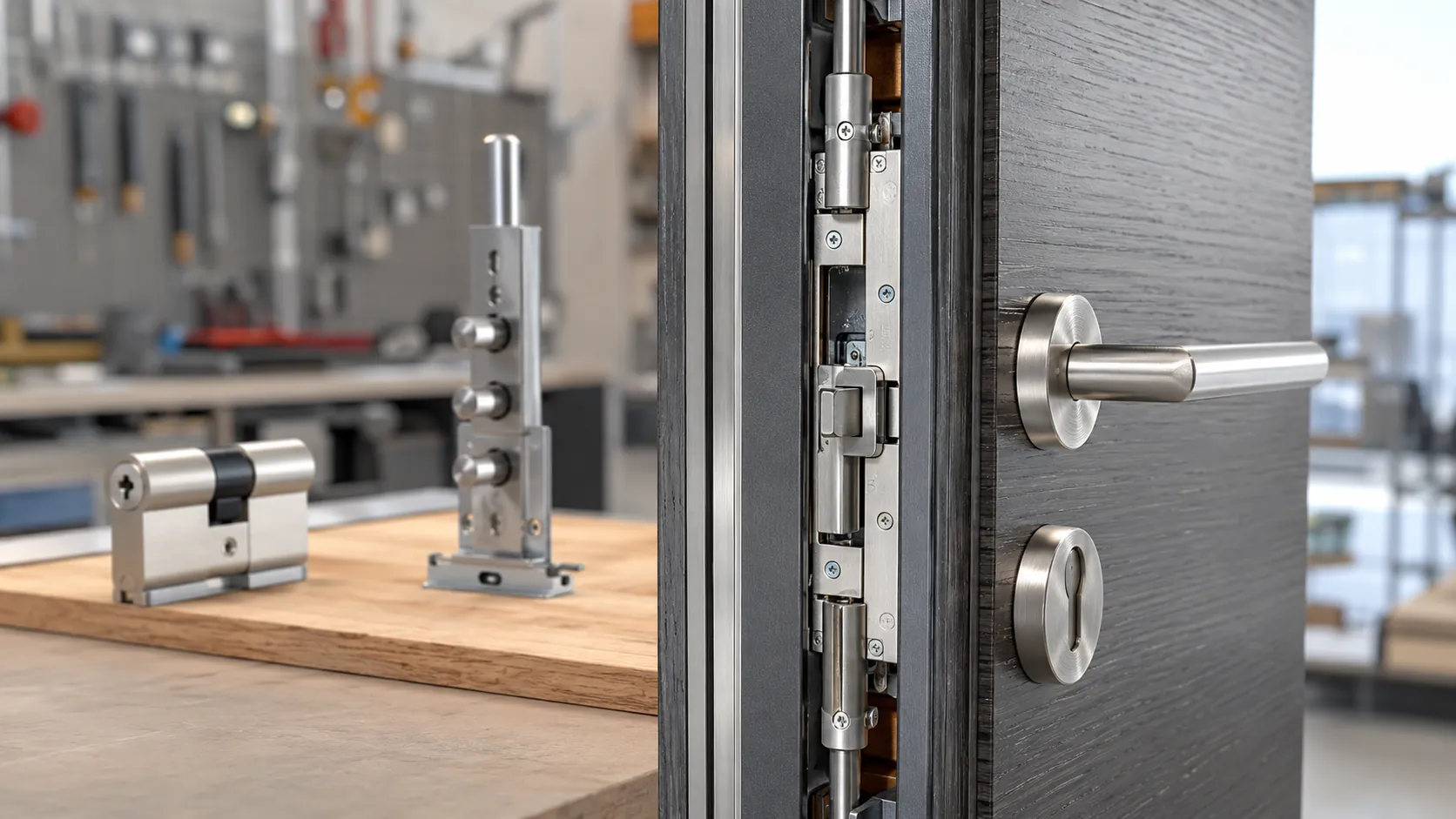
If you do only one thing, do this. Swap an old or simple cylinder for a modern profile cylinder with three properties: anti-pull, anti-drill and an emergency function. The last one lets you unlock from inside even when a key is in the outside.
A decent branded security cylinder costs 60 to 150 euros as a part. The cylinder replacement itself is done in half an hour if the measurement is right. And here comes the most common mistake in old buildings: the cylinder length. Old doors often have unusually thick or warped leaves. If the cylinder protrudes even three or four millimetres, the burglar has exactly the attack surface he needs to snap it off. The cylinder must sit flush, protruding a hair at most. That is not a detail, that is half the battle.
My clear opinion on cheap hardware-store cylinders with no certification: leave them. A 15-euro cylinder without anti-pull is ripped out of an old door before you have finished your coffee.
And the security fitting over it
The best cylinder is useless if it sits exposed. A security fitting with a cylinder cover shields the cylinder so no pliers and no tool can get a grip. Look for a fitting to DIN 18257, class ES1 and up. On double-leaf old doors, standard in the Suedstadt, the fitting has to match the door thickness. That is often a custom part, not something off the shelf.
The frame and levering: this is where it gets serious
Most break-ins in old buildings are levering attempts, not Hollywood stunts. A screwdriver, a crowbar, applied at the lock or the hinges, and with a crumbly frame the door is open in seconds.
Mechanical retrofitting helps against this, on both sides of the door:
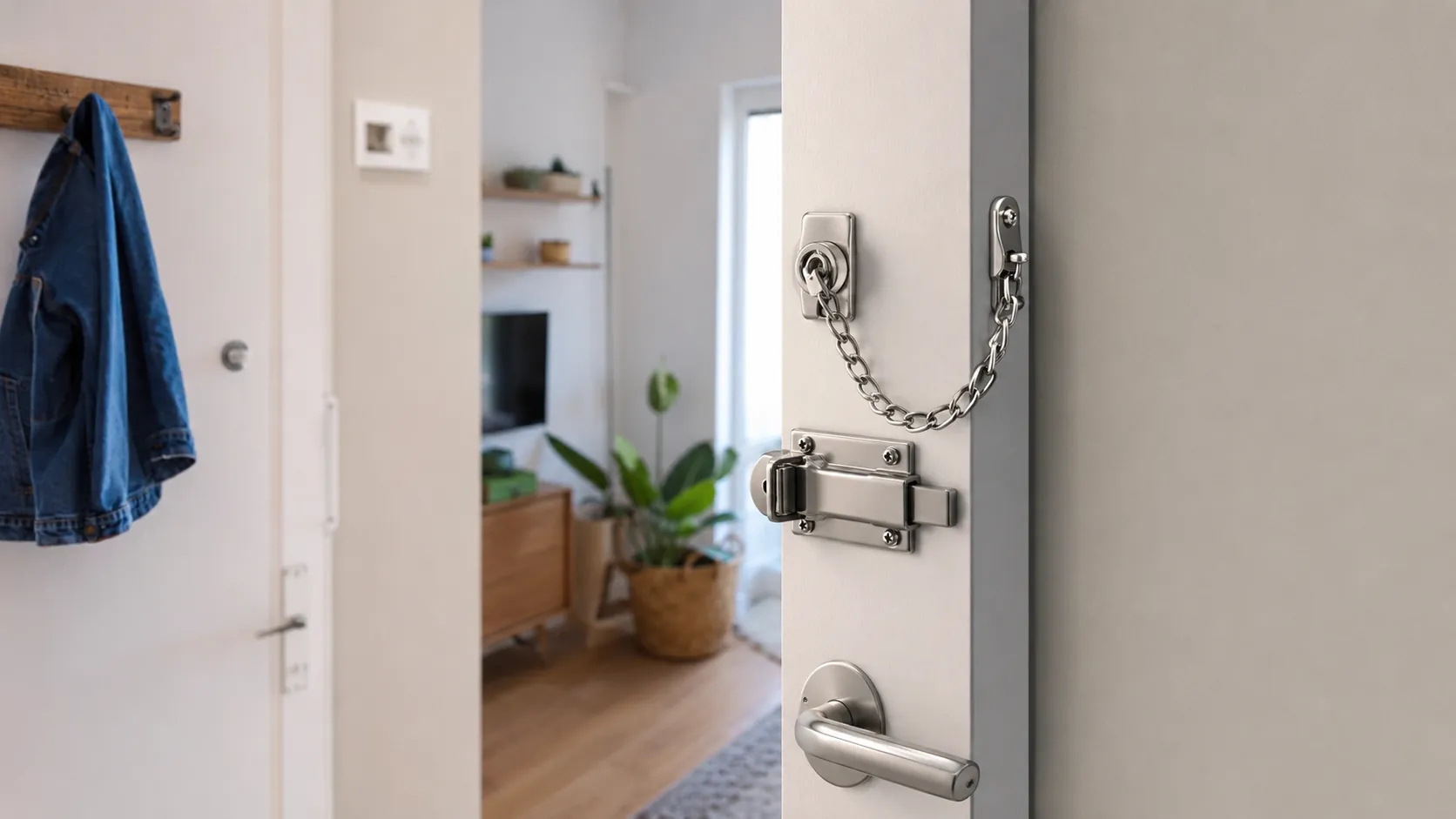
- Lock side: a surface-mounted lock with a locking bar, or a rim lock with a bar anchored in the masonry, not just in the frame timber.
- Hinge side: hinge-side bolts or catches, so the door holds even when the hinges are attacked.
This combination is proven and, in practice, hard to overcome without heavy noise. And noise is exactly what an opportunist avoids. The police crime prevention services recommend precisely this approach: not one miracle product, but the sum of several solid measures. Anyone who wants to read up will find plain, sales-free basics at the German police.
Last week in the Suedstadt
A concrete case, so this does not stay abstract. Last week I was at a family's flat on Bonner Talweg, a classic Gruenderzeit floor, fourth storey. The flat door, a beautiful old leaf, still had the original warded lock from, roughly, before the war. Charming, but security-wise wide open as a barn door.
We changed nothing about the look of the door. A modern profile cylinder with anti-pull went in, fitted flush, plus a security fitting in a matching old-brass tone and a surface-mounted lock inside. The leaf itself stayed original. Cost under five hundred euros. The family now has a door that looks like 1905 and protects like 2026. That is exactly what securing an old building should look like.
Locked out and in a hurry?
Price quoted up front, vetted partner business, ~22 minutes on site.
What a real locking system can do
The Suedstadt has many divided old buildings with several tenant parties, a shared entrance, cellar, attic. There, thinking about a locking system pays off. One key for street door, cellar and flat, clearly organised, and if one is lost only that key is barred instead of swapping the whole system. For owner communities that is often the most sensible solution, especially when twenty different keys have been in circulation over the years and no one remembers who holds which.
If security is suddenly needed after a move-in or a lost key, a complete lock replacement is sometimes the cleanest solution. But with a plan, not in panic. A thought-through concept is always cheaper than hectic single purchases that later do not fit together.
Prices: what to realistically budget
So you have a reference, here are the usual market ranges in Bonn. These are guide figures, not guarantees, and in an old building a custom part can push upward.
| Measure | Realistic range |
|---|---|
| Security cylinder (part) | 60 to 150 euros |
| Cylinder swap, labour daytime | 60 to 120 euros |
| Security fitting ES1, fitted | 120 to 280 euros |
| Surface-mounted lock with bar | 150 to 350 euros |
| Hinge-side protection | 80 to 200 euros |
A good basic package for an old flat door therefore often lands between 300 and 600 euros. That is a fraction of what a break-in costs in damage and nerves. An overview of all services is in the service overview.
What I concretely advise Suedstadt residents
The Suedstadt is no high-risk area, but it is densely built, easy to reach and full of attractive old flats. Opportunists look for the easy door, not the heavy one. Make yours the heavy one.
- Start with the cylinder. Cheap, fast, big effect.
- Put the security fitting on it, otherwise the good cylinder sits unprotected.
- Deal with the frame, that is the real weak point.
- Do not forget the fanlight and the cellar windows.
For anyone in the quarter unsure where to start: we look at the door on site and say honestly what is needed and what is not. Sometimes a cylinder is enough, sometimes it takes the full package. More on our service area is on the page for Bonn and specifically for the Suedstadt. In the neighbouring Gruenderzeit areas such as Poppelsdorf and the Nordstadt, the same basic rules apply, because the building fabric is related.
Frequent questions
I am a tenant. Am I even allowed to upgrade the door? Swapping the cylinder and fitting a surface-mounted lock that can later be removed with little trace is usually no problem. Discuss larger interventions on the leaf or frame with the landlord beforehand. This is general information, not legal advice. When in doubt, agree it briefly in writing.
Is an alarm worth it in an old building? Mechanics first, electronics second. An alarm reports the break-in, it does not prevent it. A door that holds for ten minutes prevents it. Only once the mechanical base is in place is an alarm a sensible addition.
How do I tell whether my cylinder is even secure? If the cylinder clearly protrudes from the fitting, has no drill or pull protection, or is even still a warded lock, then it is not. When in doubt, photograph it and show us.
What does a quick emergency cost if I have locked myself out? A plain door opening with no damage is usually in the low three figures during the day, higher in the evening and at the weekend. More important than the price is that it is opened without destruction, so your good cylinder stays intact.
Is there independent advice with no sales pressure? Yes. The consumer advice centre and the police crime prevention offices advise free of charge and product-neutral. Use that before spending a lot of money. For the acute case we are reachable on emergency, and further questions are answered on our FAQ page.
Securing an old building does not mean sacrificing its charm. It means knowing the right spots and working solidly there. In the Suedstadt both go together, a beautiful door and real protection. You just have to know where to start.