The honest answer first, because almost everyone expects the wrong one: in Hamburg there is no single dangerous district and no single safe island. A burglar is not looking for a bad reputation but for a badly secured door, a dark backyard and a fast route back to the arterial road. That is what the risk follows, district by district. And you can influence it, more than most people think.
I am Sophie, I have advised on burglary protection for years, and I spend more time in Hamburg stairwells than in my own office. What I give you here is not a statistics show with invented percentages, but what I see at real doors. The reliable figures on residential burglary come from the police crime statistics of the BKA, and Hamburg police publish their own annual analysis. Look there if you want numbers. I am talking about doors.
Short and clear: what really drives the risk
Three things decide whether you get burgled, and none of them is the postcode alone.
First, the building type. A Gruenderzeit period building with an old box door and a simple ward lock is a different world from a new-build flat in HafenCity with multi-point locking. Second, accessibility. Ground floor, an easily reached raised ground floor, a flat-roof extension you can use to reach a first-floor window, a cellar door in a dark yard. Third, the escape route. Proximity to a big arterial road, to the motorway, to a train that gets you away in minutes. Where these three come together the risk rises, no matter how smart the street looks.
That is why the classic period-building districts inside the ring are heavily affected, but so are the quiet terraced-house areas on the edge, where no one looks in the evening. Let us walk through the patterns.
The period-building belt: Eimsbuettel, Ottensen, Eppendorf, Winterhude
These are the districts where I stand most often. Beautiful old buildings, stucco, high ceilings, and sadly often front doors that date from a time when no one thought about levering. In Eimsbuettel and Ottensen I see row after row of flat doors that can be levered open in seconds with a simple screwdriver, because the leaf is soft and no mushroom-cap fitting grips. That is the most common method of all, no copied key, no pick, just raw leverage at the lock.
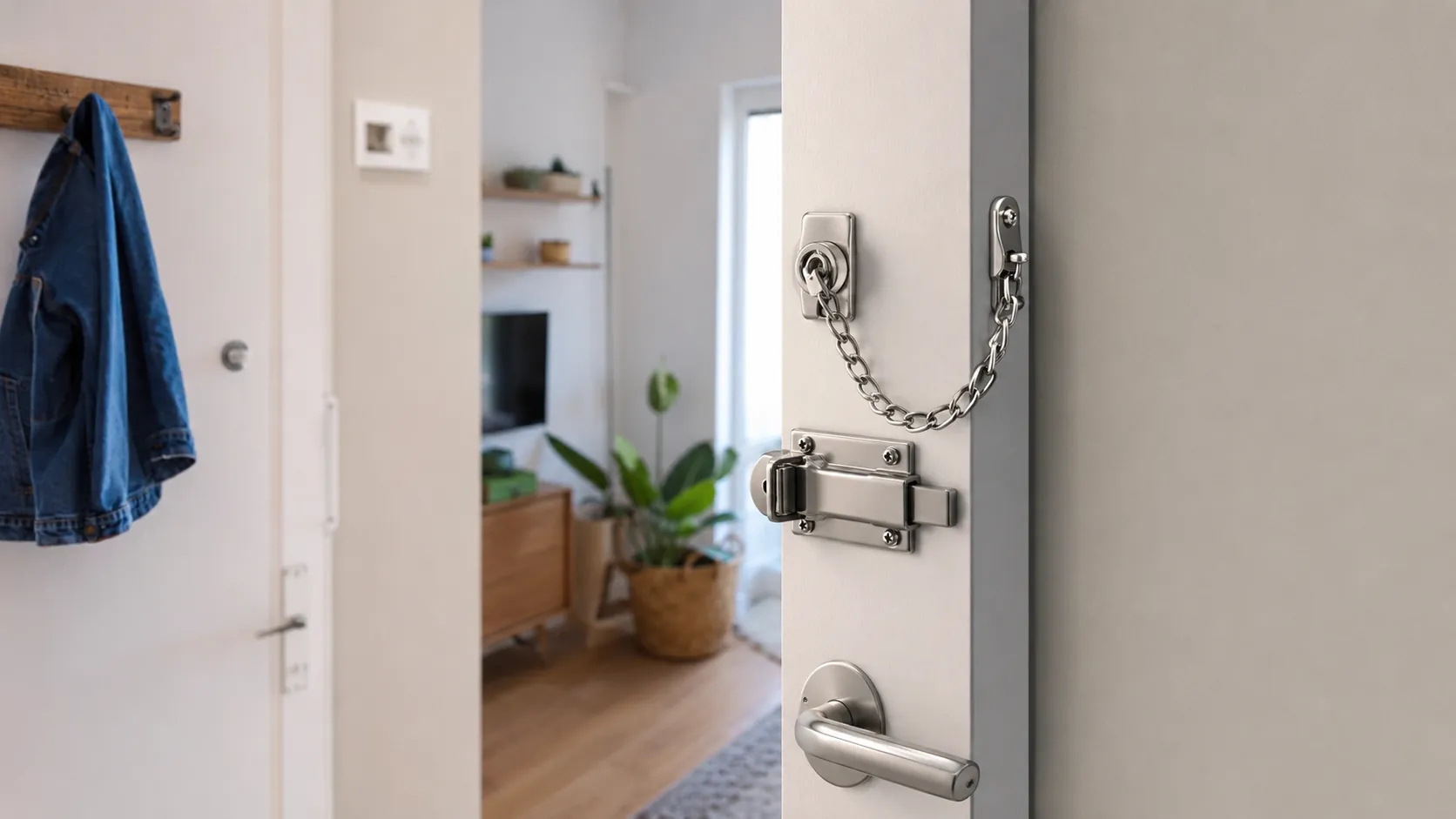
In Eppendorf and Winterhude the upmarket furnishing adds to the appeal. What helps here is rarely the big renovation. A cylinder with drill protection, a protective fitting that covers the cylinder, and on the flat door a cross-bar or additional lock. That is affordable and turns a ten-second door into one nobody bothers with. If you want to know what is technically possible in a period building at all, I have written it up separately under burglary protection.
The classic at the window
With period buildings many forget the raised ground-floor windows. A tilted window is an open window, and to a burglar that reads as an invitation. Lockable window handles and mushroom-cap pins in the frame are often more important here than an even better door lock. I say it bluntly with reluctance, but a tilted bathroom window on the ground floor makes the best door in the world pointless.
HafenCity, Neustadt and the new builds: modern does not mean safe
A widespread error. In HafenCity and parts of Neustadt there are new buildings with multi-point locking, and many residents think that settles it. It does not. The flat door is often good, but the weak point sits elsewhere: floor-to-ceiling windows, patio doors onto the promenade, underground car parks that get you into the building without a neighbour noticing.
My position on this is clear. An expensive flat door helps little if the patio door is a standard handle fitting with no anti-lever protection. With new builds it pays to look soberly at the second and third way in, not at the already good main door. And the underground garage: whoever gets in there uncontrolled stands in front of cellar compartments and the internal lift. Talk to the building management about access control, that is often more effective than any single lock.
St. Pauli, St. Georg, Altona-Altstadt: the mixed picture
Here it gets interesting, because many residents have a false gut feeling. St. Pauli and St. Georg are seen as restless, but daytime residential burglary follows different rules than the nightlife on the Reeperbahn. During the day, when everyone is at work, a quiet side street in Altona-Altstadt is more attractive to a burglar than a busy corner where someone is always passing.
The mix of commercial and residential use means these districts have a lot of foot traffic, and anonymity is the burglar's best friend. No one knows who belongs to whom. A tradesman with a tool bag does not stand out. What helps here, besides door technology, is social attention in the building. Know your neighbours. A community that looks out is a safeguard no catalogue sells.
Locked out and in a hurry?
Price quoted up front, vetted partner business, ~22 minutes on site.
The edge locations: Blankenese, Bergedorf, quiet terraced houses
Now to the part most people underestimate. The detached and terraced houses on the edge, Blankenese, Bergedorf and similar locations, are attractive to burglars for one simple reason: they offer cover. High hedges, dark garden sides, no neighbour in sight, many ways in. Patio door, cellar window, side entrance. And in the evening, when no one is home, often no one looks.
A detached house simply has more doors and windows than a flat, and each of them is an opportunity. Whoever invests here starts with the least visible side, not with the representative front door. Everyone sees that one anyway. The burglar goes round the back.
What really helps, in the order I recommend it
Enough about districts, now to practice. If you have a limited budget, spend it in this order.
- First upgrade the existing door. A drill-resistant cylinder, a protective fitting, and where possible a multi-point or additional lock. That is the best euro per unit of security.
- Then the reachable windows and patio doors. Mushroom-cap pins, lockable handles, retrofittable hinge-side locks if in doubt.
- Lighting with motion sensors on the dark sides. Light is cheap and it works.
- Only then think about alarms and cameras. Technology is good, but it does not replace basic mechanical security. An alarm that goes off when the burglar is already inside comes late.
The order matters. I constantly see people with an expensive alarm system next to a door you can lever in ten seconds. That is like fitting a smoke detector to a door made of paper.
Prices, so you have an idea
Guide values for Hamburg, no fixed price, because every door is different. But honest ranges you can orient yourself by.
| Measure | Realistic range |
|---|---|
| Drill-resistant cylinder plus protective fitting | 120 to 250 euros |
| Additional lock or cross-bar on the flat door | 200 to 500 euros |
| Retrofitting a window, per window | 80 to 200 euros |
| Securing a patio door | 150 to 400 euros |
| Motion sensor with light | 40 to 120 euros |
If a provider quotes you a complete price on the phone without having seen the door, be careful. Serious advice looks first, measures, and then names a figure. How a clean lock replacement works and how much security the cylinder provides you can read in the respective piece.
Last week in Eimsbuettel
A scene that is typical. Last week I was with a family in Eimsbuettel, ground floor, beautiful period building. Nothing had happened, they just wanted to take precautions because the house next door had been broken into. The flat door was solid, good substance, but the cylinder stood two millimetres proud and had no protective fitting. That is exactly where the lever bites. We swapped the cylinder for a flush one with drill protection and fitted a protective plate, no big deal, one afternoon. The neighbouring flat that was broken into, by the way, had the most expensive video door viewer on the street. Just a door you could lever open. You see where I am going.
Common questions
Are there really safe and unsafe districts in Hamburg? Not as simply as it sounds. Every district has safe and unsafe houses. The building type and the security of your flat decide more than the postcode. Do not rely on the street's reputation.
Does contents insurance pay after a burglary? As a rule yes, if a break-in can be proven, meaning there are signs of force. With simple theft and no break-in traces it gets difficult. Read your policy, and when in doubt ask the consumer advice centre what is covered.
Is burglary protection worth it in a rental? Yes. Many measures can be retrofitted without structural work and taken with you or removed when you move out. Discuss larger interventions with the landlord, small additional locks are often uncritical.
What does police advice offer? Quite a lot. Hamburg police offer free, manufacturer-neutral advice on burglary protection. Use it, it costs nothing and is independent. Afterwards you know where your weak points are.
My bottom line
Stop looking for the dangerous district and look at your own door. The risk in Hamburg is distributed by building type, accessibility and escape route, not by the image of a street. The period building in Ottensen, the patio door in HafenCity, the terraced house in Bergedorf, each has its own weak point, and each is affordable to close. Start with the door, then the reachable windows, then light, then technology. If you are unsure where you stand, we come by as a locksmith in Hamburg and take a look, honestly and without sales pressure. For an overview of all services or a quick question on emergency we are here, and you will find many more answers in our frequently asked questions.