
Who pays the locksmith comes down to a single question: what was the cause? If you locked yourself out because the key is inside, snapped or lost, then as a rule you pay. If the lock failed on its own, say the cylinder wore out after fifteen years and the key no longer turns, then that falls under the upkeep of the flat, and upkeep is the landlord's job. That one distinction, self-inflicted or material failure, settles the vast majority of disputes that reach us on the phone.
I am Nina, I have advised tenants in Frankfurt for twelve years and fit master-key systems on the side. Which means I see both sides: the tenant standing outside their own door at eleven at night, and the property manager who three weeks later refuses to accept the invoice. I am writing down how the cost question actually plays out in practice, without legal gobbledygook and without throwing statute numbers at you that nobody looks up anyway.
One note up front, honest and plain: this is general information from the workshop and from advising tenants, not legal advice. Every tenancy agreement is different, and in a real dispute a court decides in the end on your specific facts, not a blog post. When serious money is at stake, ask a tenants' association or a lawyer. For the 90 percent of everyday cases, though, the principle I am about to explain is enough.
The rule in one sentence
Whoever caused the damage bears the cost. That is the whole core of it, and almost everything else hangs off it.
Behind it sits a simple logic of tenancy law. The landlord owes you a flat you can actually use, and that includes a working door with a working lock. If that lock fails through normal use or age, he has to put it right, just as he has to have a dripping radiator fixed. That is the duty of upkeep. In return you, the tenant, owe him careful handling. Lose the key or slam the door with the bunch inside and that is your mishap, and therefore your bill. Fix that dividing line in your head and you can tell instantly, on the phone or at the door, whose problem this really is.
You locked yourself out: you pay, almost always
By far the most common case. Door falls shut, key is on the dresser inside, you are outside. Or you lost the key out and about, in a taxi, at the pool, somewhere. In both cases the cause sits in your sphere, and the plain door opening is on you.
This is not the landlord being difficult, it simply follows. He cannot help that you left the key inside. In that moment do not phone the property manager hoping they will cover it, phone a firm that opens cleanly and without damage. The good news: a plain door opening is the cheapest callout there is, as long as no cowboy is at work who wants to drill the whole door out. During the day an uncomplicated opening in Frankfurt usually runs 70 to 130 euros, higher at night and on weekends.
A sentence I have to say a lot: do not let anyone tell you a simple lockout means the whole lock must be swapped. It does not. A door that has fallen shut gets opened, not replaced. Anyone who wants to sell you a new cylinder on the spot for a plain lockout is mostly interested in selling.
The lock failed on its own: the landlord is on the hook
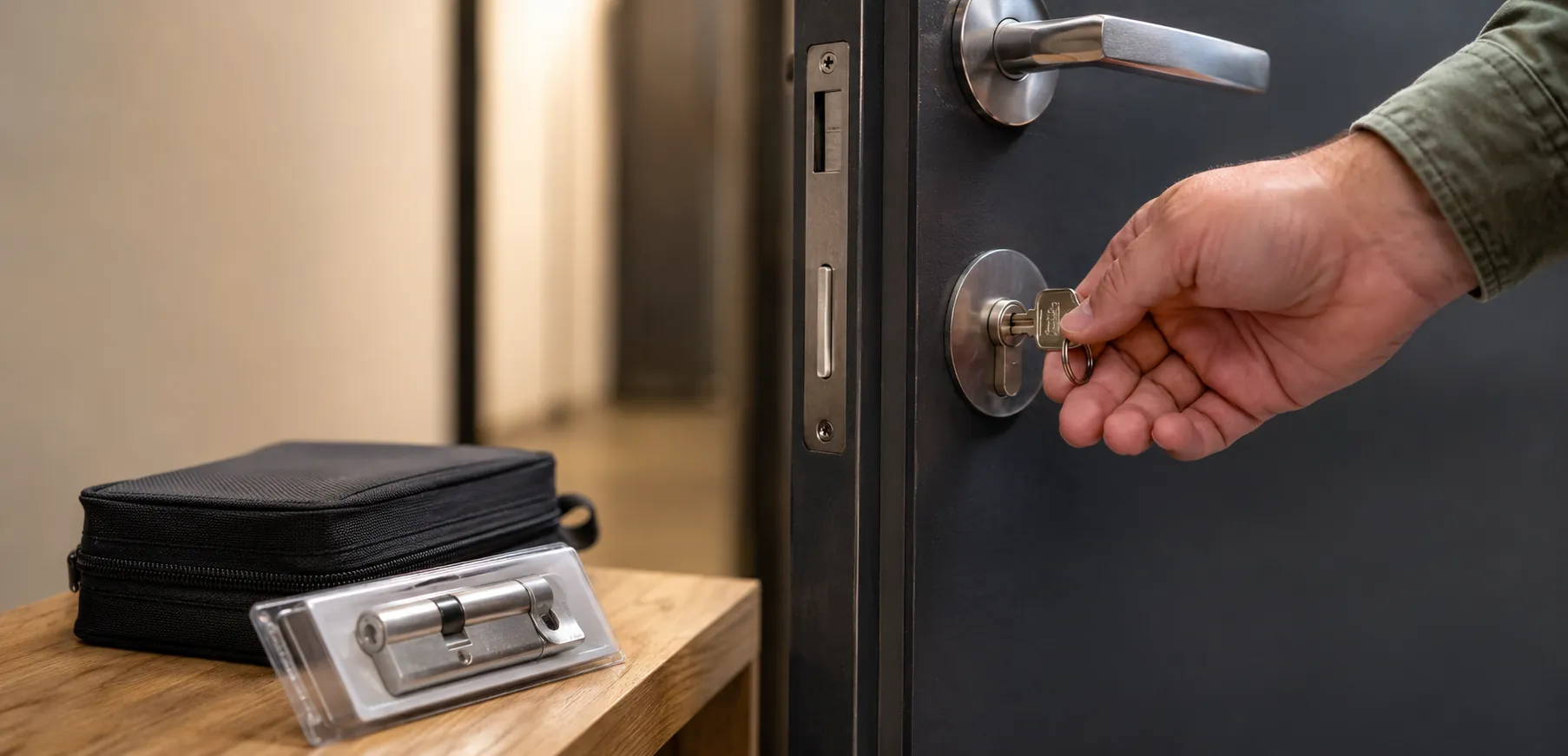
Now the other side. The key has been turning harder for weeks, one morning nothing moves at all, and you cannot get into your own flat even though you are holding the right key. The cylinder is finished, worn out, corroded, the wafers spent. That is a textbook upkeep case.
Here the landlord bears the cost in principle, both for the opening and for the subsequent lock replacement. The reason is the same principle as above: normal wear on the rented property is his risk, not yours. You did not wreck the cylinder on purpose, it simply reached the end of its life.
In practice there is a catch many people miss. If you can, tell the landlord or property manager before you hire the locksmith, or call the manager's own out-of-hours service if there is one. Why? Because otherwise you end up arguing later over whether the repair was even necessary and the price reasonable. If it is not a genuine middle-of-the-night emergency, a quick call to the landlord is the cleanest route. If it is eleven at night and you cannot get in, you may act and reclaim the money. Then keep every receipt, more on that shortly.
How to spot wear
Material fatigue nearly always announces itself. The key catches, you have to lift or push the door, withdrawing the key gets sticky. If you notice that over weeks, report it early to the manager, ideally in writing by email. That is your strongest card. Because then it is in black and white that the lock was already playing up, and nobody can later accuse you of breaking it. A short email today saves you a long argument in three months.
The grey zone: wear or your own fault?
This is where it gets interesting, and where the real disputes live. Example: the key snaps in the lock. If the cylinder was ancient and the key had been catching for months, wear is the strong reading, so landlord. If instead it was your bent, years-old soft-metal spare that you forced round, own fault is the strong reading, so you.
The truth is these cases are rarely crystal clear. It comes down to the details, the age of the system, the history, sometimes the gut feeling of whoever judges it later. My advice from years of counselling: do not argue over blame on the phone while you are locked out. Get in first, sort it after. Have it opened, secure the evidence, and settle the cost question calmly in writing. Whoever negotiates while shut out negotiates badly.
Why the invoice is worth its weight in gold
No matter who ends up paying: insist on a proper, itemised invoice. No scrap of paper, no cash without a receipt, no handshake in the dark.
A good locksmith invoice splits cleanly by item: callout, labour, parts fitted with their designation, any night or weekend surcharge, and the VAT. That exact breakdown is what you need if you want to reclaim the money from the landlord or the insurer. A lump sum with no breakdown is worthless when you have to put it in front of someone. I have seen tenants left carrying 300 euros purely because the receipt said nothing but a number.
Two things I strongly advise:
- Photograph the damage before any work starts. The jammed cylinder, the snapped key, the levered door. A dated photo is the best proof of cause.
- Ask for a fixed price, or at least a range, before you give the go-ahead. If the price is set beforehand there is no surprise afterwards, and the landlord can hardly claim it was too dear.
Skimp on the invoice and you throw away hard cash. It is that simple.
Locked out and in a hurry?
Price quoted up front, vetted partner business, ~22 minutes on site.
Moving out and lost keys: this is where it gets really expensive
The case most people underestimate. When you move out you have to return every key you received at move-in, copies included. If one is missing it can get unpleasant, and far more expensive than a simple door opening.
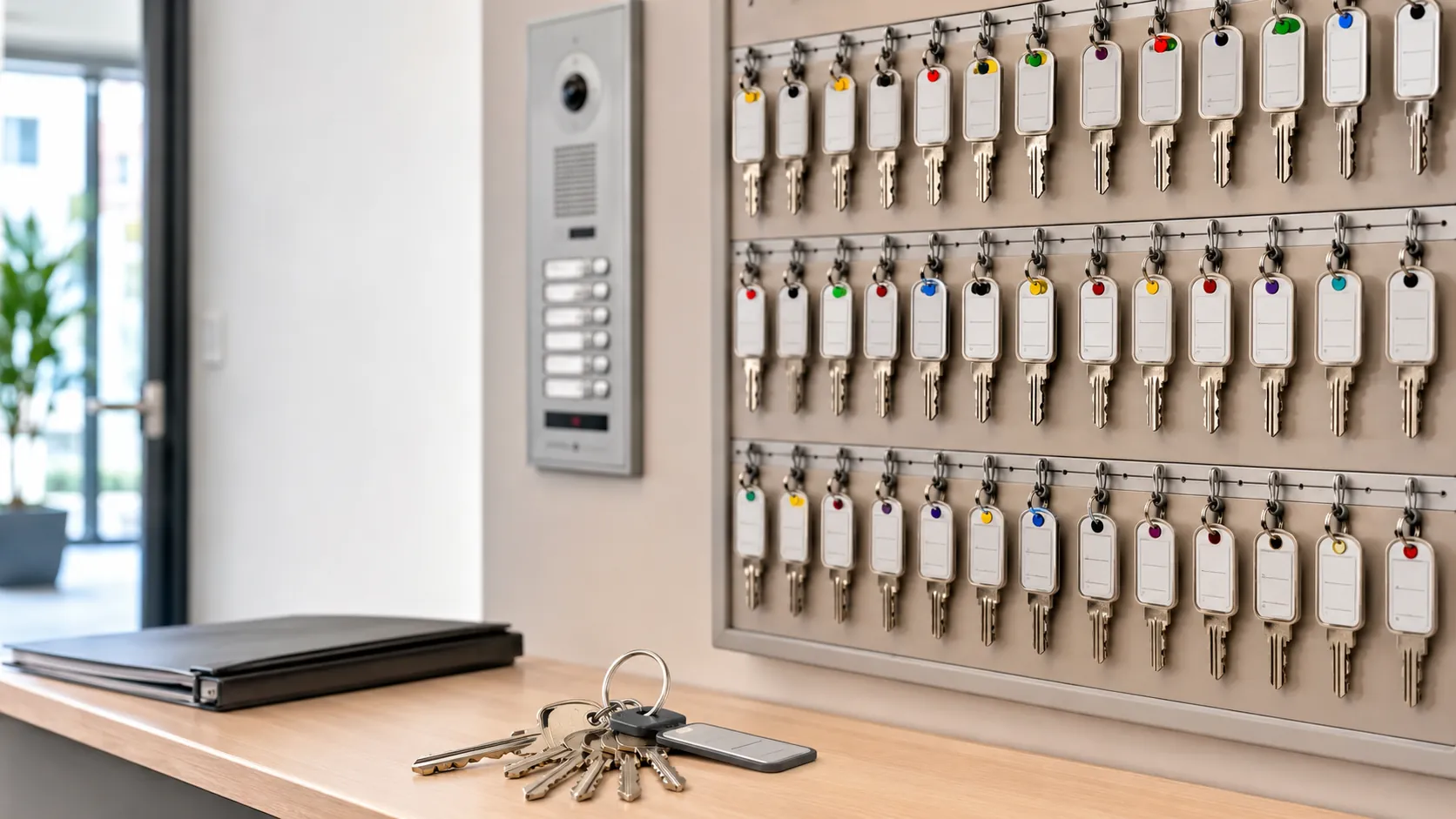
Why? A plain flat key is quickly copied for a few euros, no drama. The real risk is the master-key system. If your flat door belongs to a central system where one key also opens the street door, the cellar or the garage, then a lost key can, in the worst case, mean the whole system has to be replaced so the lost key fits nowhere anymore. And that runs into the thousands fast. I have seen cases where a single lost master key triggered a four-figure claim.
But, and this matters, nobody may charge the full new system as a blanket rule. It depends on whether there is a concrete risk of misuse and whether the replacement is actually carried out. Lose a plain flat key with no central function and as a rule you owe only the copy, not a whole new system. So do not simply let yourself be billed a horrendous sum for a system that in the end is not even replaced. Demand proof that it really was replaced.
My practical tip for moving out: count the keys through weeks in advance and compare against the handover record from move-in. If one is missing, look for it calmly instead of panicking on handover day. And have the return of all keys signed off in the final inspection record, otherwise someone may later claim one was missing.
An evening in Sachsenhausen
Last winter a tenant in Sachsenhausen called me just before midnight, completely frazzled. Her cylinder had been turning stiffly for days, that evening nothing moved at all, the key was stuck and would neither turn nor come out. Clear wear, the system dated from 2006. She had, and this was exactly right, already emailed the management two weeks earlier that the lock was playing up.
We opened it, swapped the cylinder, documented and photographed everything. Because she had reported the fault beforehand and kept the invoice properly, the management covered the cost without a fuss. Had she reported nothing and paid cash without a receipt, she would probably have had to argue. That email from two weeks earlier was her best friend.
And a rip-off in Bornheim
A counter-example, so this does not sound too rosy. A young tenant in Bornheim locked himself out at night, key inside. He googled in a panic, landed on a number with a bait price, and the supposedly reputable firm claimed on site that the door could only be opened by drilling and the cylinder had to be new. He ended up paying over 400 euros for something a clean opening should have cost under 130. And because it was a plain lockout, he carried it himself, the landlord owed nothing.
The lesson: precisely because you pay yourself for a lockout, be twice as careful about a fair price. Fixed price on the phone, no drilling routine for a simple door that has fallen shut. If someone wants to destroy the whole lock with no real reason, send them away. An honest overview of our services and prices is laid out transparently so you know what is normal.
Price guide, who pays what
So you have a rough sense of scale, here are the typical situations and who is usually on the hook:
| Situation | Usually pays | Rough cost |
|---|---|---|
| Door fell shut, key inside | Tenant | 70 to 130 euros daytime |
| Key lost out and about | Tenant | Opening plus copy if needed |
| Cylinder worn out, key will not turn | Landlord | Opening plus cylinder |
| Key snapped in the old lock | often landlord, it depends | Opening plus cylinder if needed |
| Break-in, lock damaged | Insurance, landlord | case by case |
| Lost central/master key on moving out | Tenant | Copy up to, in the extreme, the system |
The figures are Frankfurt reference values for 2026 and no guarantee. Nights, weekends and public holidays add surcharges. What matters is the left and middle columns, the pricing you best settle in advance.
Common questions, answered briefly
I am locked out, doesn't the landlord have to pay? No, not for a plain lockout. The cause sits with you, so you pay. It is only different if the lock itself was defective.
The cylinder was ancient, can I reclaim the money? If wear was demonstrably the cause, there is a strong case. Your best evidence is an earlier written report to the management plus an itemised invoice and a photo.
Can I just call a locksmith myself at night if the lock is broken? In a genuine middle-of-the-night emergency you may act and reclaim the money from the landlord. If it is not an acute emergency, tell the management first, otherwise there are arguments about necessity and price.
I lost a key when moving out, do I have to pay for the whole system? Not automatically. Only if there is a real risk of misuse and the replacement actually happens. Demand proof that it was replaced and accept no blanket fantasy sum.
Bottom line
Remember the one question: who caused it? Locking yourself out, losing the key, slamming the door with the bunch inside, that is on you. A lock that gives up on its own from age and use is on the landlord. Between them lies a grey zone where photos, an early written report and a proper invoice decide over real money. Do not argue while you are standing outside, get in first and settle the rest calmly. And when moving out: count the keys early, get the return signed off. If you are unsure whether an opening or a replacement is even needed, ask one time too many before you pay. This does not replace legal advice, but it will carry you through the vast majority of everyday cases without leaving you out of pocket.