The short answer first: for most Frankfurt flat doors a good cylinder is the most important part, a multipoint lock is the bigger protection during a conversion, and an add-on deadbolt is the cheap retrofit when nothing else on the door may be changed. Which one is right depends on your door and on your tenancy agreement. Not on the priciest quote.
I have been in locking technology for twelve years, and my focus is the tenancy law around it. That is exactly where most people come unstuck. Not because they buy the wrong lock, but because they have the right lock fitted the wrong way, without asking the landlord.
Three components, three completely different interventions
Before we talk about brands and prices, one thing has to be clear. These three are not interchangeable. They solve different problems.
The cylinder is the replaceable core. The part the key goes into. You swap it in ten minutes, without touching the door.
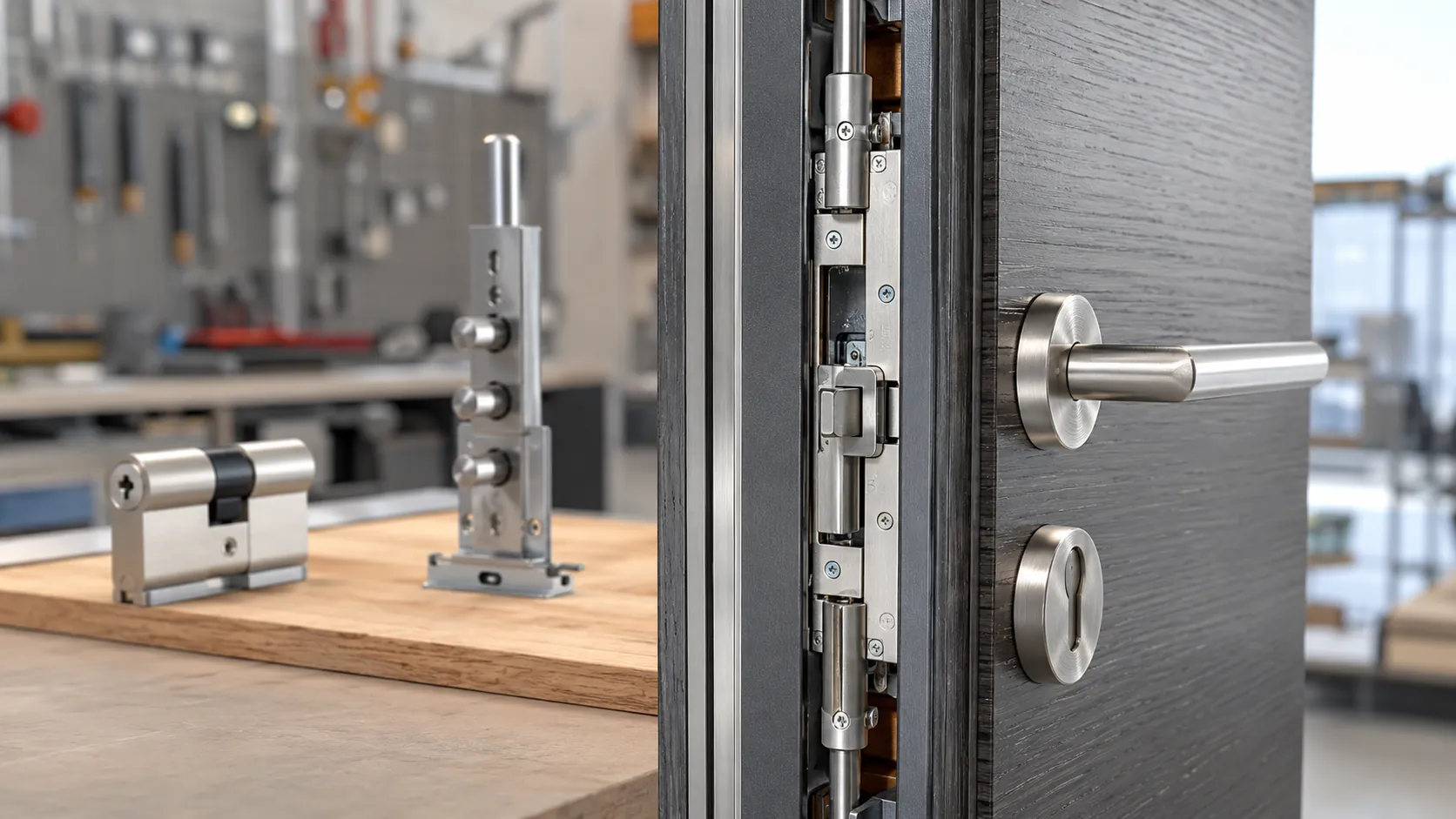
The multipoint lock sits inside the door leaf itself. When you lift the handle or lock up, it bolts at three, sometimes five points at once. That is a conversion of the door leaf.
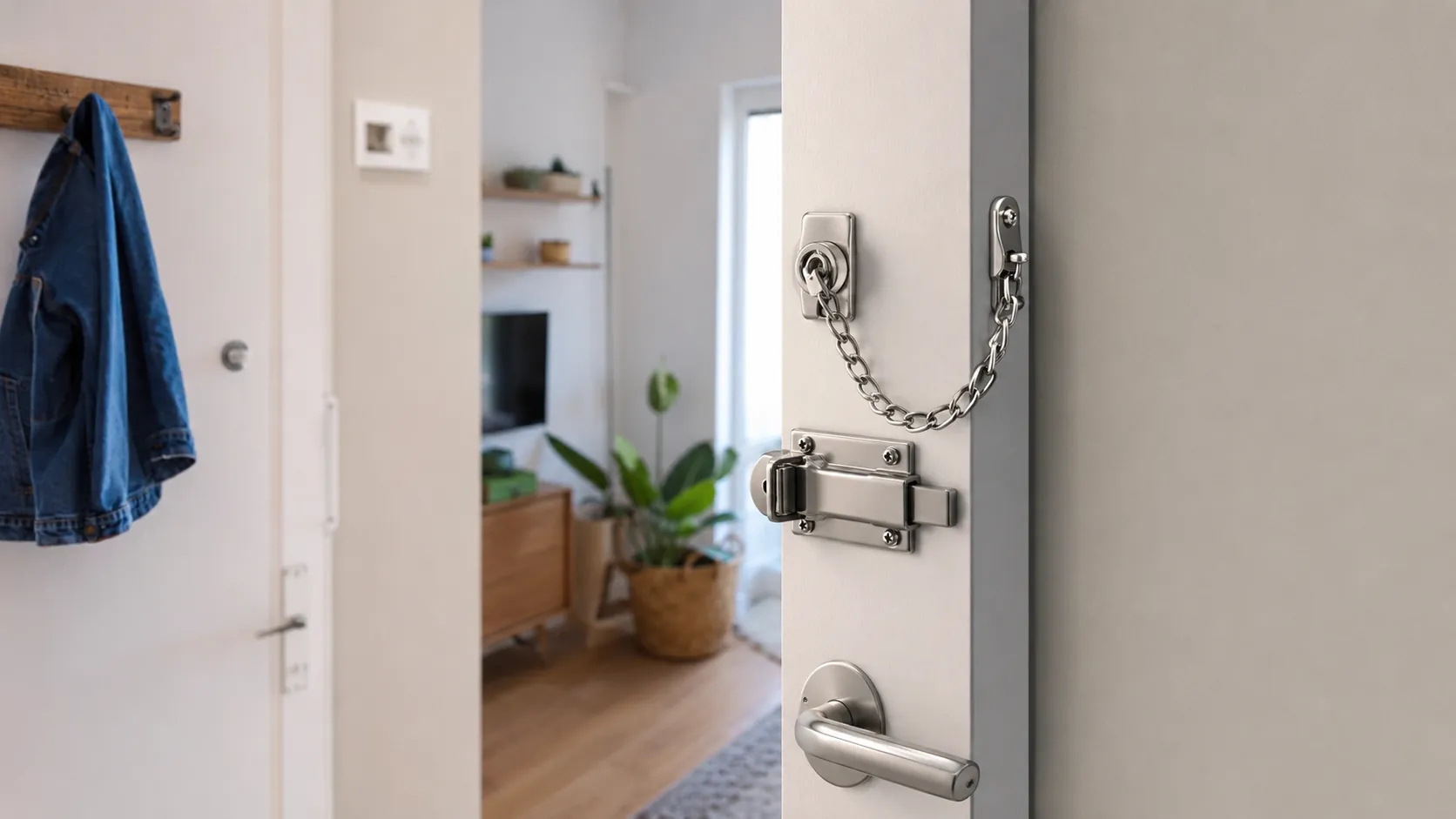
The deadbolt is mounted on top. Screwed onto the existing door, crosswise or as a box. An add-on, not a conversion.
Anyone who lumps these three together ends up buying the wrong thing.
The cylinder: the heart of it, and the cheapest lever
You can almost always swap the cylinder without a new door. It decides how fast someone gets through with picking or a drill. This is where you gain the most protection per euro.
What does it honestly cost? A cheap standard cylinder from the hardware store runs 15 to 40 euros in parts. I often see those in rentals, and honestly: hands off, if security is the point. It will not hold a practised hand for two minutes. A decent security cylinder with drill and pull protection costs 60 to 150 euros in parts, plus a little labour.
What do I look at on a cylinder?
- The DIN EN 1303 standard. It covers, among other things, attack resistance and locking precision.
- Pull protection. Against so-called core pulling, where the cylinder is ripped out with a screw. That is the most common quick attack in Frankfurt.
- Drill protection. Hardened pins against the drill.
- The right length. A cylinder must not stick out more than three millimetres on the outside, or you can grip it with pliers.
Brands I fit with a clear conscience: ABUS, BKS, Winkhaus, EVVA. With EVVA and Winkhaus you pay for the patent protection of the keys, meaning that nobody can simply file a copy at the hardware store. Kaba is solid, but often pricier than necessary for a normal flat.
If you want to swap the cylinder yourself, the steps are in our guide on changing the cylinder yourself. It is one of the few jobs a handy person can really manage alone.
The multipoint lock: sealed all round, but a real intervention
A multipoint lock bolts the door at several points at once when you lock it. Top, middle, bottom. That spreads the load across the whole frame and makes prying much harder.
It is the strongest mechanical protection a door can have. This is where DIN EN 1627 comes in, the resistance classes RC2 and RC3. RC2 is the sensible target for most flats, RC3 for ground floor or exposed locations. A genuine RC2 door holds up an opportunist burglar with simple tools for around three minutes. Three minutes sounds short, but it is exactly the three minutes after which most give up.
The catch: a genuine multipoint lock usually means a new door or a bigger conversion of the door leaf. That starts at 400 euros and, with a complete RC2 flat door, quickly reaches 1200 to 2500 euros including fitting.
It makes sense for ground-floor and basement flats, say in Bockenheim or Niederrad, where the door is easy to reach and unobserved. On the fourth floor in Nordend? There it is usually money thrown away.
The add-on deadbolt: the smart retrofit for tenants
An add-on or crossbar deadbolt mounts onto the existing door and locks it across the full width, anchored into both sides of the wall. For a good crossbar lock from ABUS or Burg-Waechter you pay 150 to 300 euros including fitting.
For me this is the most honest compromise. You gain a lot of security without replacing the door, and you barely touch the building fabric. Just right for tenants who may not cut into the door leaf.
There is also the hinge-side security set, that is protection on the hinge side. Sounds unimportant, it is not. Many doors are pried open on the hinge side, not at the lock. A pair of hinge-side bolts costs 20 to 50 euros and is probably the most underrated measure of all.
Locked out and in a hurry?
Price quoted up front, vetted partner business, ~22 minutes on site.
Which type for which situation? An honest table
| Situation | My advice | Rough cost |
|---|---|---|
| Rental from 2nd floor up, solid door | Good security cylinder with pull protection | 80 to 200 euros |
| Ground floor, basement, easy to reach | Crossbar plus good cylinder, or RC2 door | 300 to 2500 euros |
| Tenant, may not cut the door leaf | Crossbar plus hinge-side security | 200 to 400 euros |
| New build or refurbishment, free hand | RC2 door with multipoint lock | from 1200 euros |
| Old building, warped door | Fix the door first, then the cylinder | by effort |
What tenants really must watch for
And here it gets delicate, this is my daily subject. A multipoint lock or crossbar changes the door structurally. That usually needs the landlord's consent, in writing. And on moving out you may have to remove it and fill the holes.
The cylinder, by contrast, you may usually swap as long as you keep the old part and put it back when you leave. That counts as a reasonable, reversible measure.
A few rules from practice:
- Drill nothing into the door leaf without written agreement. A WhatsApp from the caretaker will not hold up in a dispute.
- Keep the original cylinder. In a labelled bag. I constantly see it missing on move-out, and the tenant pays again.
- Settle who pays. If you, the tenant, lose the key to a locking system, you usually pay for rekeying. For normal wear, the landlord pays.
Who covers which swap is set out in detail in the guide on who pays for the lock change as a tenant. When in doubt, the German tenants' association can give an assessment before you fit something you later have to remove at cost.
Two cases from the past week
Last week in Ostend a couple wanted a 600 euro multipoint lock fitted in a third-floor rental, because a pushy colleague had recommended it. We looked at the door. Solid flat door, well-seated fitting, third floor, no balcony access. A 110 euro cylinder with pull protection was plenty. They saved almost 500 euros and sleep just as soundly.
And a counter-example, also last week, in Bornheim. Ground floor, door onto a quiet side street, old standard cylinder sticking out two centimetres. There I did not debate long. ABUS crossbar, new cylinder fitted flush, hinge-side security added. Just under 380 euros. With that location a mere cylinder swap would have been negligent.
The difference is not in the lock. It is in the location and in the door.
Quick questions, quick answers
Is a new cylinder enough against burglary? On a higher floor with a solid door, often yes, if it has pull and drill protection. On the ground floor, rarely.
Is the multipoint lock the deciding factor? Only if the door is being replaced anyway or the location is exposed. Otherwise you pay for security nobody attacks.
As a tenant, can I just screw on a crossbar? Not without consent. It is a structural change. Get the okay in writing.
What is the cheapest sensible measure? Hinge-side security plus a decent cylinder. Together often under 200 euros.
My advice
Look at the door and the risk first, then decide, and with rentals always keep the tenancy agreement in mind. Anyone who sells you an expensive multipoint lock on the phone without seeing the door wants to sell, not to protect.
If you are unsure, we advise you honestly on lock replacement or the right burglary protection. What the individual jobs cost you can see transparently on our price overview. The right lock is rarely the most expensive one.