If your door is closing harder than it used to, do not ignore it. From the phone desk I know this: most door-jammed emergency calls could have been prevented weeks earlier with a small fix. A door almost never jams suddenly. It announces itself, and the warning signs are surprisingly clear once you know what to look for.
I sit at the phone, not on site with a drill. But that is exactly why I hear the same sentences over and over. "It has been stiff for weeks, now nothing works at all." Almost every second evening emergency call starts like that. And almost every one of them could have been a cheap daytime appointment.
The first warning sign: you lift or push
When your fingers start lifting the door slightly or pressing it against the frame so the key will turn, that is no coincidence. Usually the door leaf has settled and is rubbing at the bottom or the top corner. Look for wear marks on the frame or sill, a bare spot in the paint reveals the friction point at once.
A second sign is the sound. A healthy door drops shut with a full, short noise. When that turns into a scrape, a squeak or a dull bump, something has shifted. Your ear often notices it before your head does.
And the third: the key suddenly needs a feel for it. You hunt for the one angle where it turns. You wiggle. You pull the door towards you. Anyone who operates their key "with a trick" already has a problem that simply has not escalated yet.
Do the paper test
A simple check I often pass on over the phone. Take a strip of paper, slot it between the door leaf and the frame and pull it out at different spots. Where it sits tight or tears, the door is pressing. Where it slides out loose, there is air. In two minutes you can see whether it is sticking at the top, the bottom or the side, without touching a tool.
Where it sticks, and how to tell
Three typical causes, in the order I would check them:
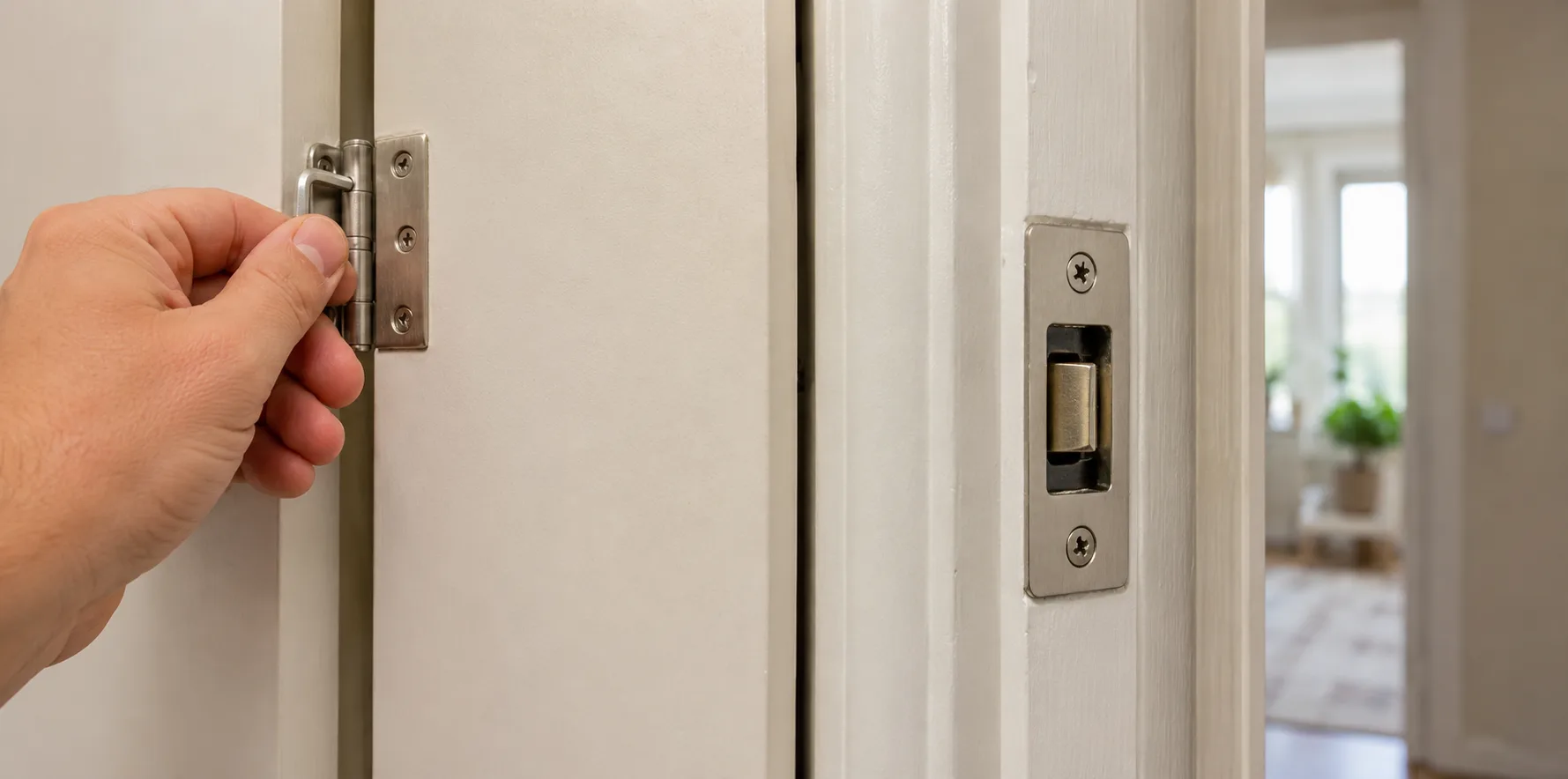
- Worn hinges. If the door visibly hangs crooked or lifts a few millimetres at the handle, the hinges are tired. Often readjusting the hinges is enough.
- Swelling from damp. Wooden doors in older buildings, in Bockenheim or Sachsenhausen say, draw water in a wet spring and stick precisely then. In summer it eases again. That is a hint, not an emergency.
- Lock and strike plate. If the latch no longer meets the strike plate cleanly, you have to jiggle. Over time that wears out the latch and cylinder.
The most dangerous case is the third. When the key turns hard or catches in the cylinder, a fault is brewing that will one day snap mid-turn. More on that when the key catches in the cylinder.
Hinges or lock? How to tell them apart
The question I ask most often: does it stick when the door simply falls shut, or only when you try to lock it? If it sticks on the plain pull-to, it is almost always the door leaf or the hinges. If the door closes cleanly but the key catches only in the last stretch, it is the cylinder or strike plate.
One more distinguisher. Open the door fully and look at the bottom gap to the floor. If it is a different width on the left and the right, the door hangs crooked, a classic hinge issue. If the gap is even but it still sticks, the fault sits somewhere else.
What it costs when you wait
Here it gets concrete, because on the phone it all comes down to money in the end. I say the figures openly, because many people in the evening believe a jammed door is worth a fortune. It is not, if you act early.
| Situation | When | Approximate price |
|---|---|---|
| Door adjusted, strike plate reset | weekday, daytime | 80 to 130 EUR |
| Standard cylinder swapped | weekday, daytime | 60 to 120 EUR with part |
| Security cylinder ABUS or Winkhaus | weekday, daytime | 120 to 220 EUR with part |
| Simple opening, door just fallen shut | evening, weekend | 150 to 250 EUR |
A simple daytime door opening is fair at around 80 to 150 EUR. At night, on a weekend or a public holiday a surcharge is added, and you are quickly at 150 to 250 EUR for exactly the same job. The full overview is on the pricing page. Anyone who will not name a price on the phone, I would not go further with them, and that holds for every reputable firm.
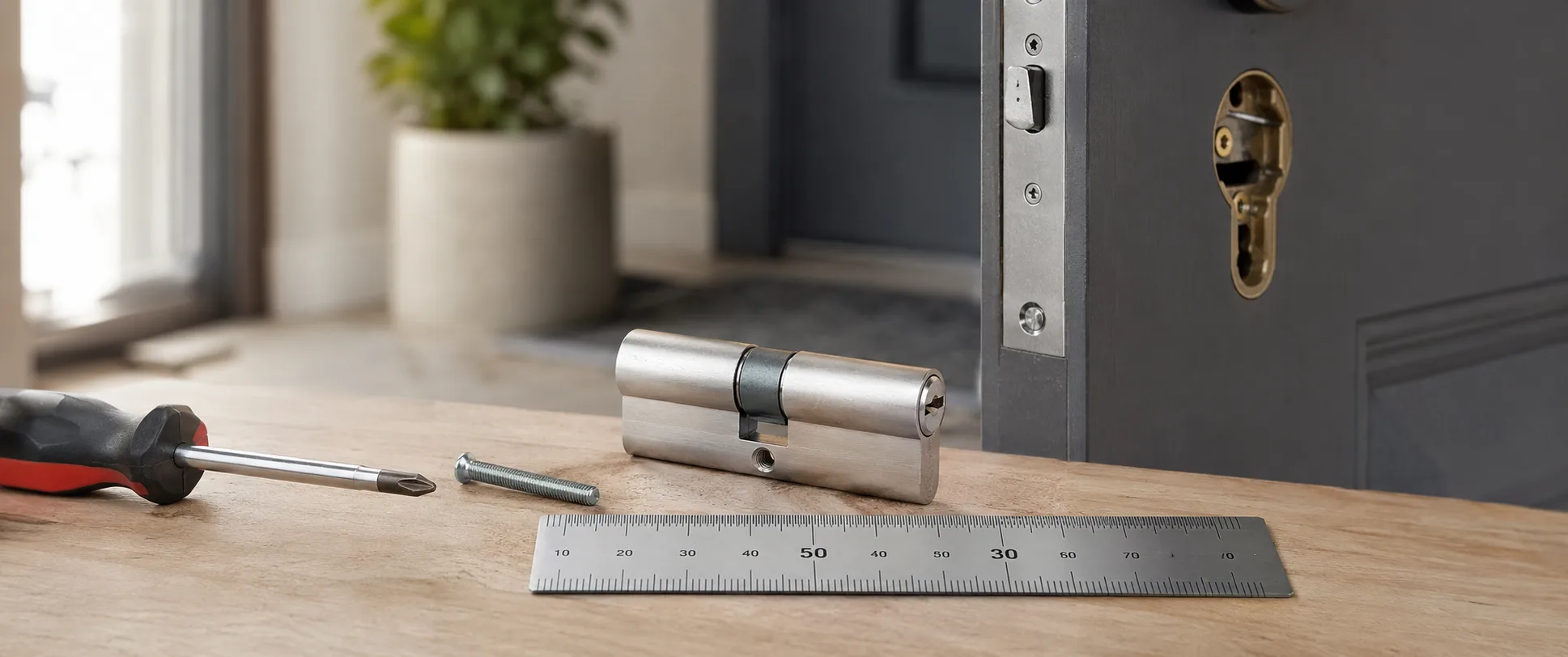
A word on the cylinder while we are here: a good security cylinder to DIN EN 1303 usually costs 60 to 150 EUR as a part. The cheap DIY-store cylinder for 15 to 40 EUR does the job short term, but does not last as long and protects less well. If the door is open anyway, it is often worth fitting the better one straight away instead of starting over in two years. More on that under lock replacement.
What you can do yourself
Quite a bit. Hinges with an adjusting screw can be nudged with an Allen key. Always turn just a quarter turn, then check, then carry on. File the strike plate slightly if the latch just misses, one or two strokes with the file are often enough. And once a year keep the cylinder moving with graphite or a care spray, that extends its life noticeably, see our guide on maintaining a lock.
What not to do: squirt oil into the cylinder. It gums up, traps dust and after a few weeks makes things worse than before. No WD-40 in the cylinder either, that is a solvent, not a lubricant, and the good impression lasts only days. Graphite or a real lock spray, nothing else.
Where the DIY ends
Honestly: if you have shifted the Allen key three times and it still sticks, stop. On the phone I often hear the story of the door that finally hangs crooked after the home attempt. If the hinges are worn out and not just out of adjustment, no amount of readjusting helps, then parts have to be replaced. And on an apartment door with multipoint locking you should not experiment with the file, your security hangs on it.
Locked out and in a hurry?
Price quoted up front, vetted partner business, ~22 minutes on site.
Two calls I do not forget
Last week a customer in Niederrad called whose key had been stiff for weeks. He had waited until nothing turned at all, half past seven in the evening, family locked out. Had he called at the first catch, it would have been a daytime appointment instead of an emergency call-out with a surcharge. He would have nearly halved the daytime price for an adjustment.
And in Nordend, a few days before, a lady whose apartment door stuck in spring. She was already about to order an expensive lock swap. On the phone it turned out: old building, wooden door, weeks of damp. I advised her to wait. Three weeks later, drier weather, the door ran like clockwork again. Cost: nothing. Not every bit of sticking is a fault, sometimes it is just the weather, and an honest firm tells you so.
When it really does become urgent
A few signs where, on the phone, I advise an appointment straight away rather than waiting:
- The key only turns with force, or does not spring back after turning.
- The door no longer falls shut on its own but has to be pushed and held.
- You hear or feel a crack in the cylinder, often the warning of a break.
- The door can only be opened from outside if someone helps from inside.
If any of these applies, the question is not whether but when it jams. And in my experience that happens in the evening, at the weekend or just before you have to leave for work, never at a convenient moment. Once it has got that far, only a clean door opening by a professional helps, ideally without damage.
Common questions from the phone
Do I have to replace the whole door right away? Almost never. In the vast majority of cases adjusting, a new strike plate or a cylinder swap is enough. A whole new door is the exception.
Can I change the cylinder myself? With a simple profile cylinder and an accessible forend screw, yes, that is doable. On a security door or multipoint lock, better not. If you want to try it yourself, there is a guide on changing the cylinder yourself.
Who pays if I am renting? Normal wear on door and lock is usually the landlord's business. If the damage traces back to a lost key or your own doing, it looks different. When in doubt, check the guide on who pays for a lock change, and have a quick word with the landlord before you order anything yourself.
Is prevention even worth it? Yes, and that is not a sales pitch. An annual service and a look at the hinges cost almost nothing and save you the expensive evening call-out. For the record: the consumer advice centre also recommends agreeing a clear price in advance for tradesperson work, rather than being caught off guard in an emergency.
The simple rule
When you start fighting your door, the door is losing in instalments. If it sticks two weeks running, have it checked. A daytime appointment is always cheaper than a jammed door in the evening. And if you are unsure whether it is already urgent, better to call once too early than once too late, a short description on the phone costs nothing and often saves you the surcharge. You can reach us through the contact page.