The short answer: a good lock easily lasts twenty to thirty years with the right care, while a neglected one gives up after five. And the most important thing up front, because it is the most common mistake: do not put oil in the cylinder. Never. I have fitted locking systems for eleven years, and I see most damage not from wear but from wrong care. People who mean too well ruin more cylinders than every burglar in Frankfurt combined.
Why oil has no place in a cylinder
A profile cylinder is a piece of precision mechanics. Inside sit pin pairs, small spring-loaded pins that the key pushes to the right height. These pins move in tight bores, with tolerances in the hundredths of a millimetre. Oil is poison for that.
Why? Oil is sticky. It attracts dust and abrasion, and over time the two turn into a thick paste. That paste settles exactly where the pins need to glide. At first the key runs buttery smooth. After two years it catches. After four the cylinder jams in high summer or in the first frost.
What belongs there instead: a dry lubricant. Graphite or PTFE, as a spray or a powder. That lubricates without sticking and binds no dirt. WD-40, by the way, is no solution either; it is a creeping oil, not a permanent lubricant, and it gums up over time just the same. Which product works and which harms I have written up in detail in lubricating a lock correctly.
What actually kills a lock
Not use. Dirt, moisture and the wrong key. Three things reliably ruin cylinders, and none of them has anything to do with how often you lock and unlock.
- Dust and abrasion that combine with grease or oil into a paste and gum up the pins.
- Moisture on exterior doors that freezes inside the cylinder in winter and blocks the pins.
- A bent or badly worn key that loads the pins at an angle and grinds out the bores.
The third point is massively underrated. A key is a wear part. Carry the same key for ten years in your pocket with coins and grit, and you round off the cuts. A worn key then works like a file against the pins. Eventually it only fits with a jiggle, and then you reach for the next key, which is just as bad because it was copied from the same worn machine.
My advice: keep one original key unused. When the everyday keys are worn, have new ones cut from the original, not from a copy. A copy of a copy gets less accurate with every generation; we call that tolerance drift. After three stages the key often fits only this one cylinder and nothing else. More on that in key copy, price and reproduction.
The right care in five minutes
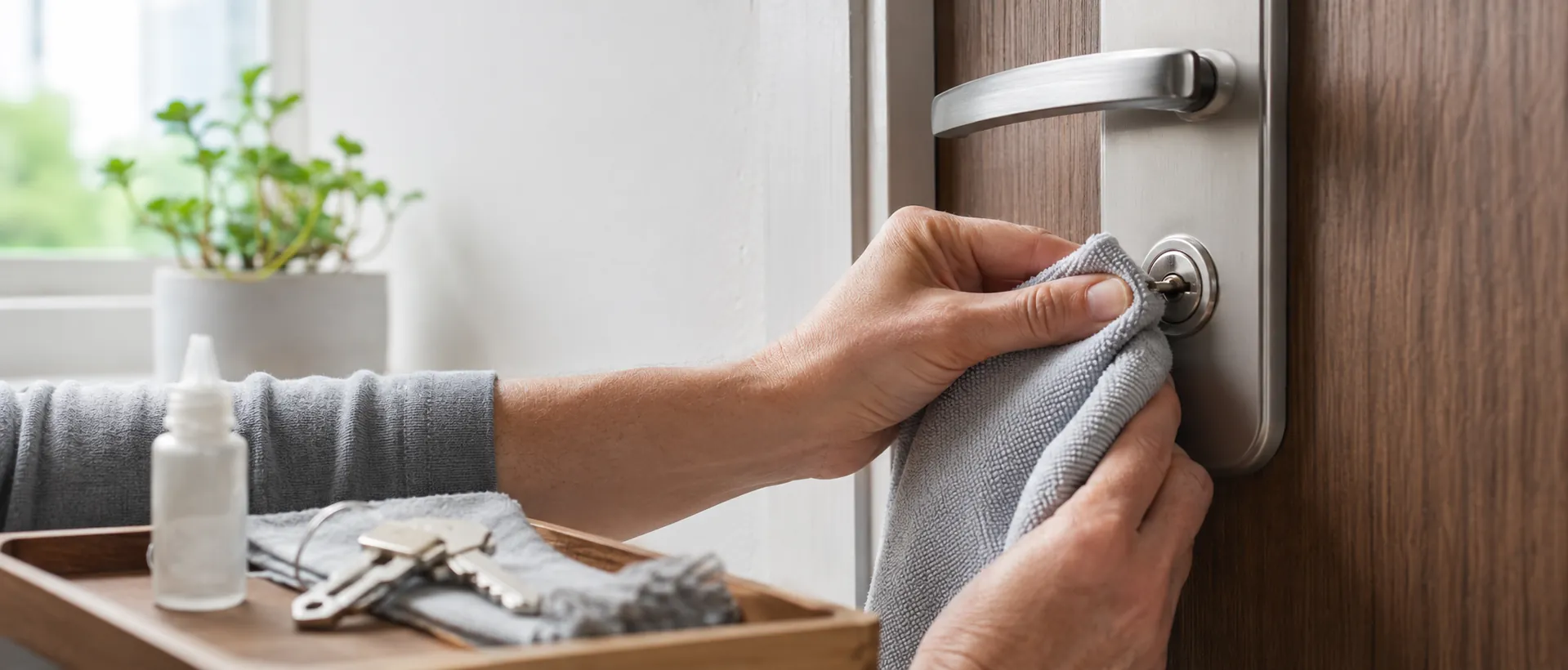
Once a year is usually enough. Autumn, before the first frost, is the best time. Here is how:
- Wipe the key with a dry, lint-free cloth. No water, no soap.
- Briefly blow out the cylinder from the outside with compressed air, if you have a can. That gets loose dust out.
- Put a short burst of a suitable lock spray based on graphite or PTFE into the keyway. One burst, not half the can.
- Work the key in and out five to ten times, turn it a few times. That spreads the product.
- Wipe the excess off the key.
Done. That is it. Do this yearly and you will never see a problem from the inside.
On exterior doors I also check the gap and the seal. A lock that rain gets into never lasts, no matter how well you lubricate. If the door faces the west wind with no canopy, a cylinder cover or a weatherproof escutcheon often pays off; five to fifteen euros, well spent.
Do not forget the hinges and the latch
A drop of resin-free oil does not belong in the cylinder, but it certainly belongs on the hinges and in the latch. A stiff door is the silent killer of every lock. It hangs up in the rebate, and with every pull you press the lock out of line. That wears the locking mechanism faster than anything else.
If the door lifts or jams when closing, usually only a hinge needs adjusting. On most brand hinges, whether from Dr. Hahn or Simonswerk, that is a five-minute job with an Allen key. Anyone looking after a whole locking system, say in an apartment block, should go through each door individually once a year. A neglected main entrance door otherwise gets expensive fast, precisely because it often holds a special cylinder or a panic function that is not sitting on a hardware-store shelf.
Locked out and in a hurry?
Price quoted up front, vetted partner business, ~22 minutes on site.
Two stories from the field
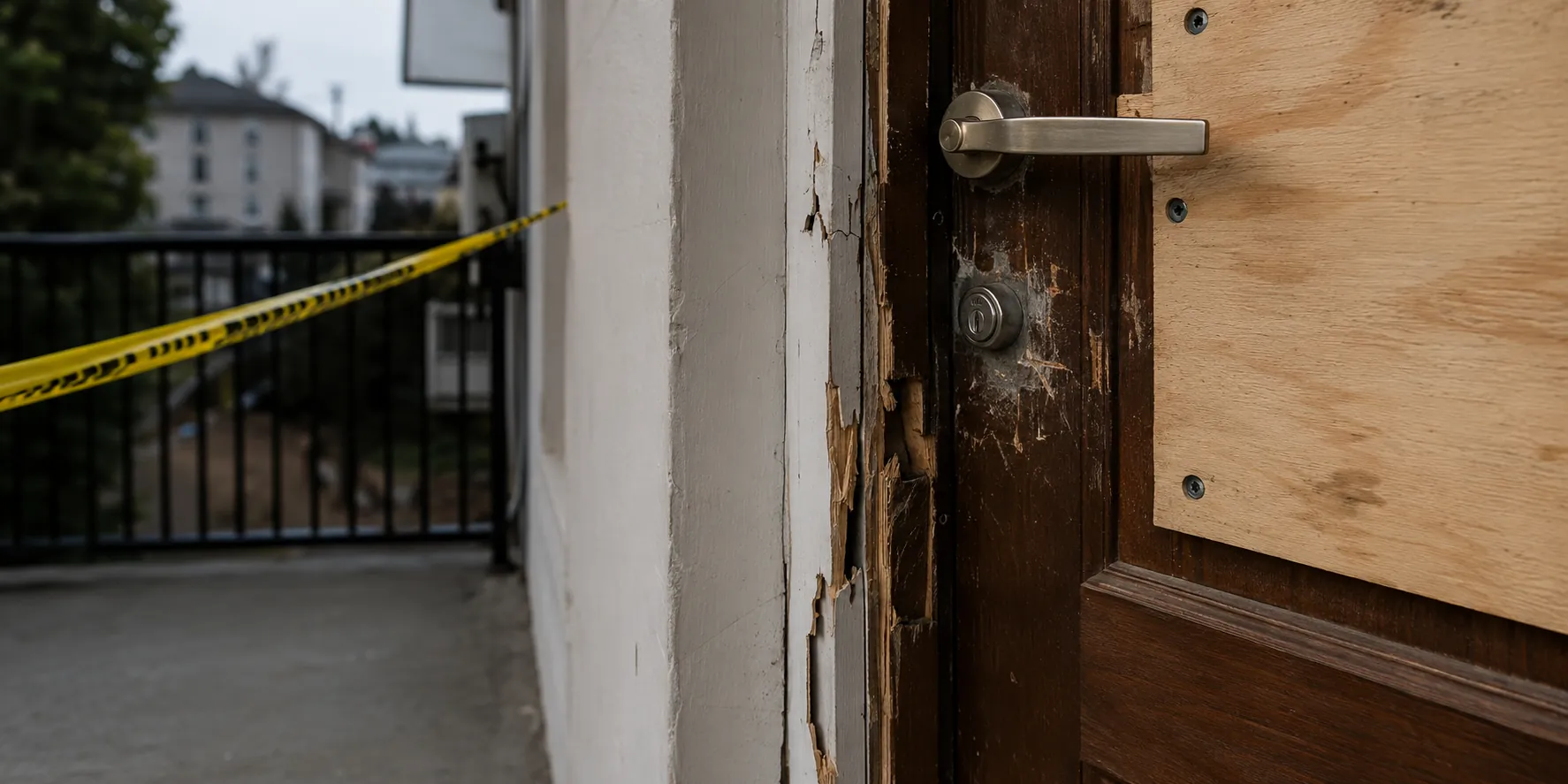
Last winter a customer in Bockenheim called me. The front door would not open at seven in the morning, the key stuck halfway in the lock. No fault in the real sense. Frost in the cylinder, and years of oil poured in before that had gummed up. We took the cylinder out, flushed it in brake cleaner, dry-lubricated it and adjusted the gap. Around 70 euros. No new cylinder needed. With the right care it would never have happened.
Then last week another case in Bornheim, a tenant community in an old building. The shared main entrance door had been stiff for months and everyone ignored it. Until the central cylinder of the locking system jammed completely and nobody could get in. Here it was not a care problem alone but a worn latch and a dropped hinge that had canted the cylinder for months. Replacing the system cylinder plus rework came to around 180 euros. Had the stiff door been adjusted in summer for 40 euros, the cylinder would still be in place.
The moral: a catching lock is never a cosmetic problem. It is the last warning before it gets really expensive.
Does pricier last longer? An honest look
Yes, but not for the reason the advertising sells. A good cylinder, say an ABUS Bravus, a BKS Janus or a Winkhaus Bluechip, is made to DIN EN 1303, with harder pins and tighter tolerances. It wears more slowly. For a brand cylinder you pay 60 to 150 euros for the part; for a no-name cylinder from the discounter, 12 to 25 euros.
The cheap one runs the same at first. It just wears out faster because the material is softer and the springs fatigue sooner. After six or seven years the key wobbles and you feel play. That is not just comfort. A worn-out cylinder is also easier to manipulate, picking being the keyword. Saving on the lock is saving at the wrong end.
| Item | Range | Note |
|---|---|---|
| Lock spray graphite/PTFE | 6 to 12 EUR | lasts years |
| Standard cylinder part | 12 to 25 EUR | softer material |
| Security cylinder part | 60 to 150 EUR | to DIN EN 1303 |
| Cylinder swap labour | from approx. 60 EUR | depends on door |
| Hinge adjustment | 30 to 60 EUR | saves the cylinder |
A sensible rule of thumb: if you value burglary protection, combine the good cylinder with a protective fitting to DIN 18257 ES1 or ES2. The cylinder alone does little if the fitting does not protect it from being twisted off. How that works together is in burglary protection, and anyone who wants the background on the standards will find it in DIN standards and resistance classes.
Common questions
How often should I lubricate? Once a year is enough for interior doors. Exterior doors that take the weather, twice if you can, in spring and autumn.
My key catches, will lubricating still help? If the key just runs a bit stiff, yes. If it already jolts or you have to press, there is often wear inside. Then do not force the turn, or the key will snap off. What to do then is in the key turns but does nothing.
Is graphite spray okay for every cylinder? For mechanical profile cylinders, yes. For electronic or mechatronic cylinders, stick to the manufacturer's instructions; graphite there can disturb the contacts.
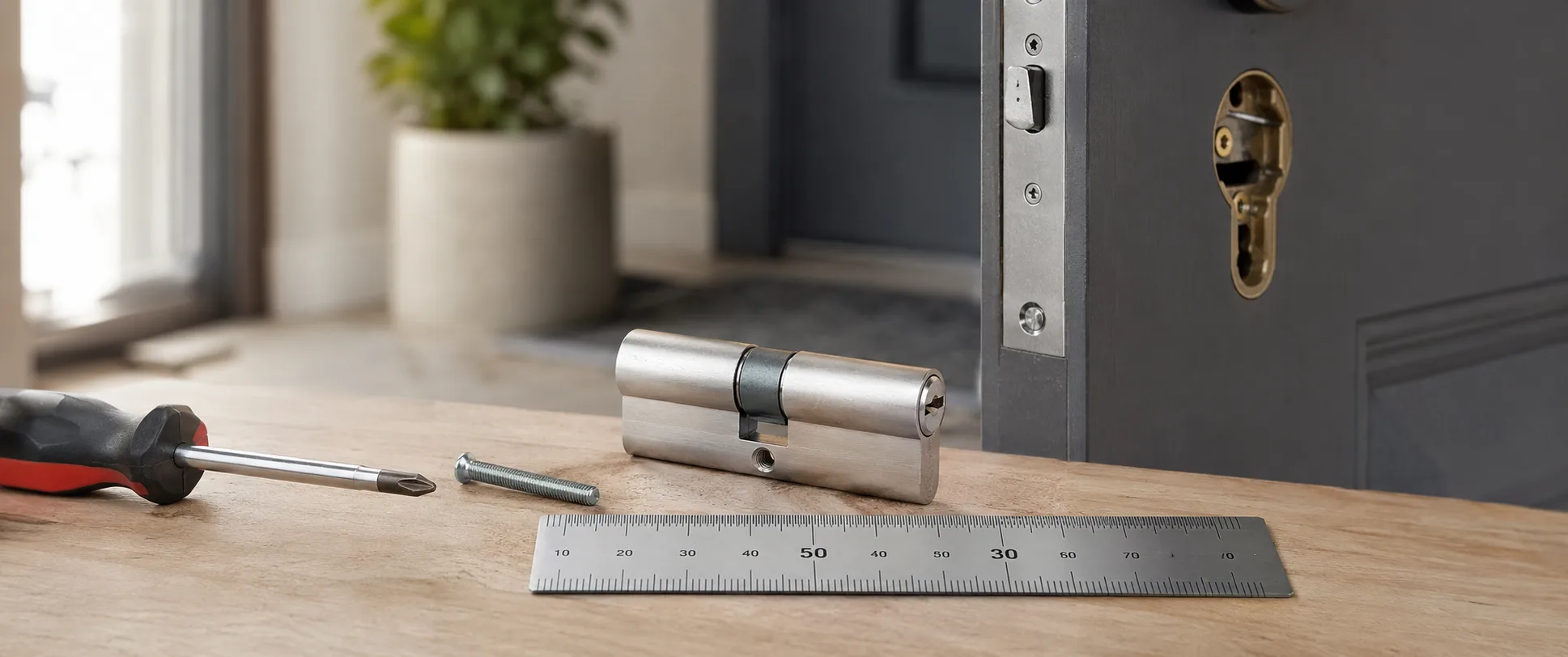
Can I swap the cylinder myself? For a normal profile cylinder with a forend screw, yes. For a locking system I advise against it; there is more riding on it than one part. The KfW, by the way, subsidises burglary protection; a look at kfw.de pays off before you upgrade.
When to call a professional
If the key is stiff even though you have cared for it, the cylinder is often already worn inside. Then a planned replacement is worth it before it locks up completely, rather than an emergency at three in the morning. What that costs is in our pricing; the swap itself we handle through lock replacement.
Bottom line: care costs five minutes a year and saves you an emergency call in the night. Wipe, the right spray, no oil, and keep an eye on the hinges. It really is that simple, and that is how long it lasts.