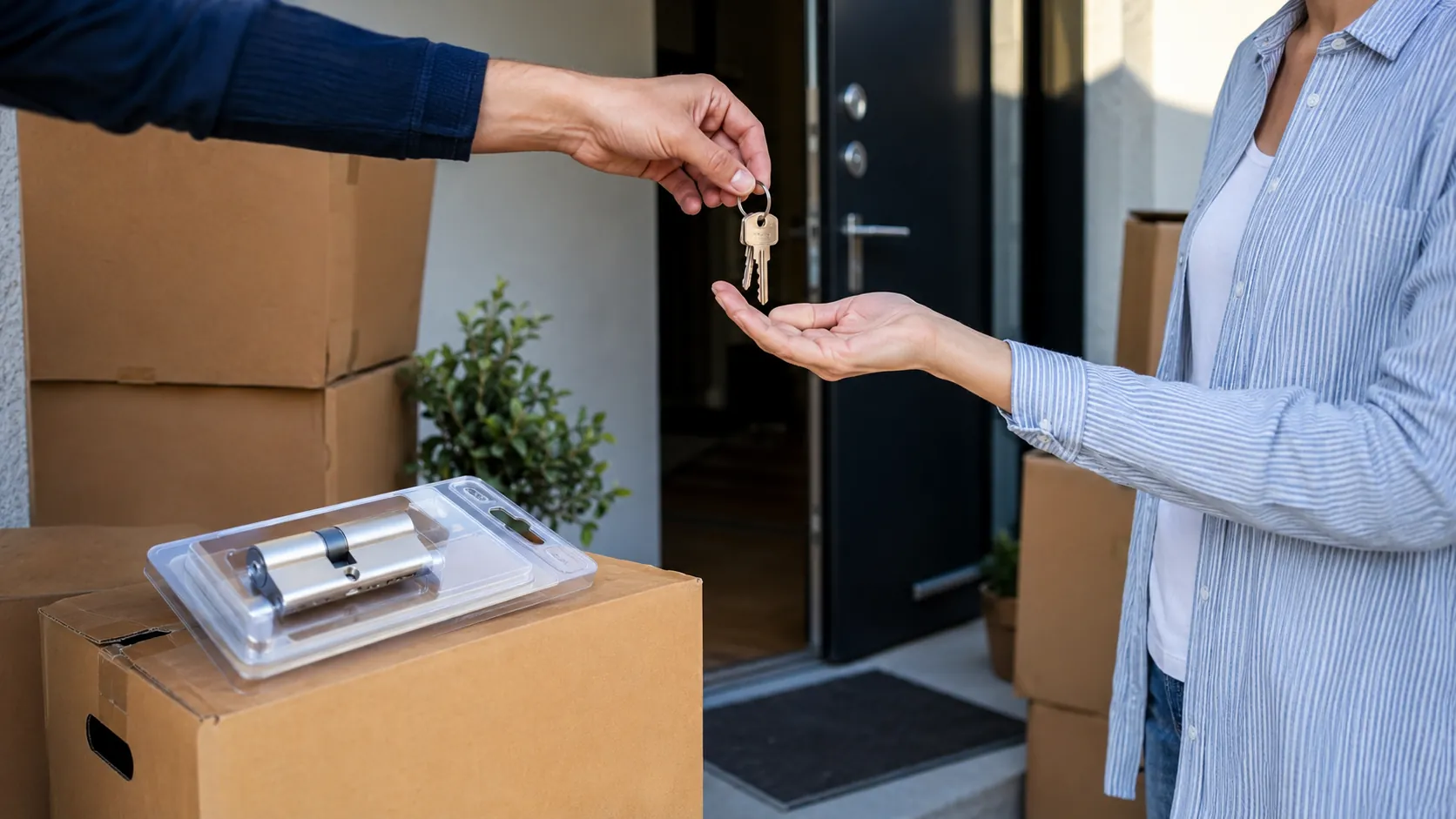
Short and honest: nobody forces you to change the lock when you move in, not a law and not the landlord. It is almost always smart anyway. You never know how many keys the previous tenant, their ex-partner, the old cleaning service or the neighbour who watered the plants still has in a drawer. A new cylinder costs 60 to 150 euros in parts plus fitting, and with that the biggest unknown as you start in your new home is settled.
I have been doing this in Frankfurt for 22 years. And I do not sell anyone fear. But this one swap on moving day is not a rip-off, it is simply sensible.
Required or not? The honest answer
There is no rule in Germany that demands a lock change when you move. No statute, no DIN standard, no insurer that requires it across the board. Anyone who tells you on the phone that you are "legally obliged" wants to sell you something. Stay away.
What does exist is common sense. A lock is only as secure as the number of keys in circulation. And when you move in, you have zero control over that.
So the question is not "must I", but "do I really want to bet that nobody still has a matching key". For me the answer has been the same for two decades: no.
When I clearly advise a swap
- Rental flat with an unknown key history. So almost always.
- A house purchase where you get a whole bunch of old keys.
- After a separation, when the ex might still have a key.
- When the previous tenant clearly moved out on bad terms.
- When the old lock sticks, the key catches or turns hard. That is wear, and the swap solves two problems at once.
When you can save the money
- A brand-new first occupancy where you provably get the only keys and the builder's key was disabled.
- A holiday flat or parking space with a simple padlock, where there is no value behind it anyway.
Rental flat: no drilling on the landlord's property
This is the point where most tenants get nervous. The door and lock usually belong to the landlord. You may still swap the cylinder, that is your right to ward off danger. But I treat two conditions as mandatory.
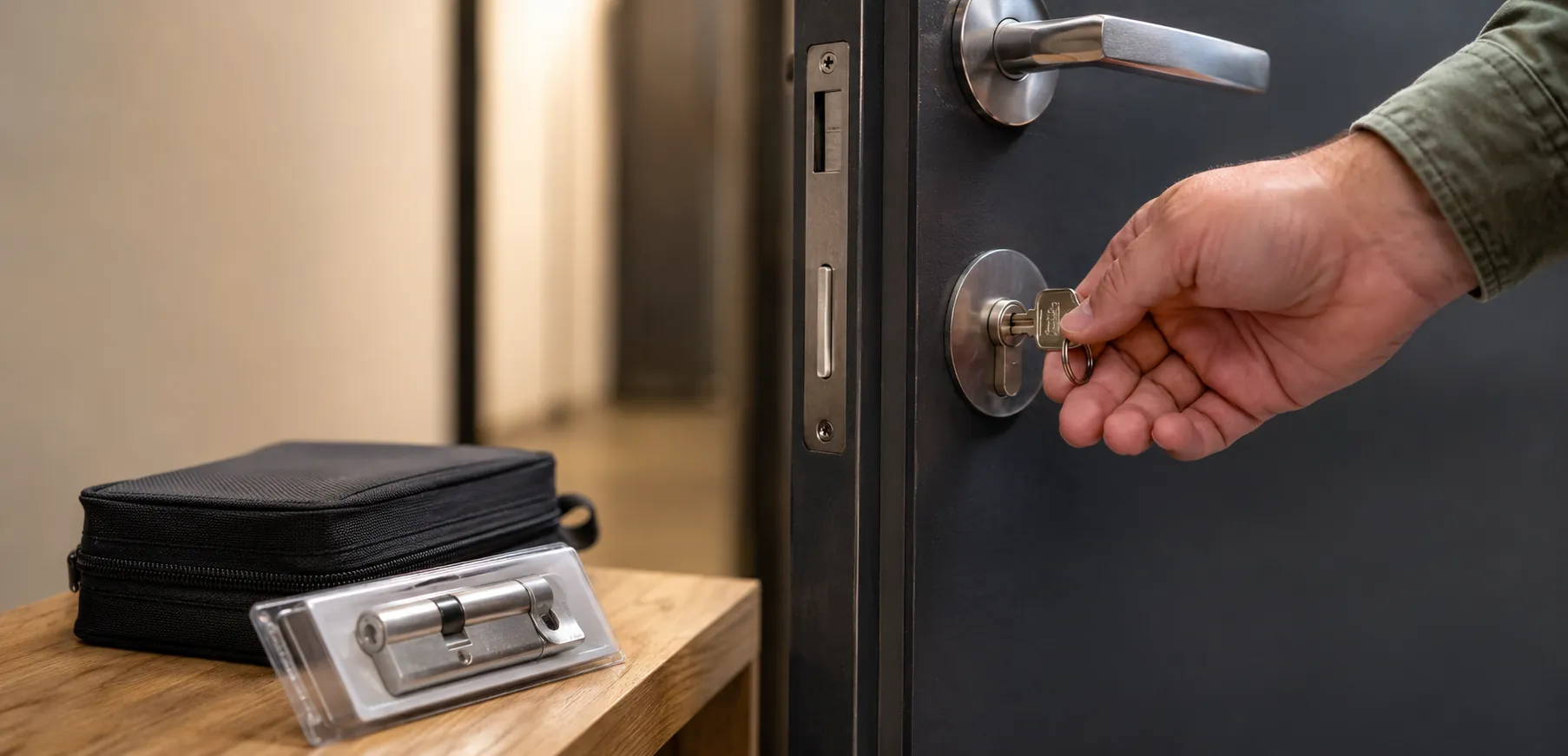
First: no damage. You drill nothing, you cut nothing. A profile cylinder is held by a single forend screw, nothing else. Screw out, turn the key slightly, pull the cylinder out, slide the new one in. That is it.
Second: keep the old cylinder. When you move out, you refit it and take yours with you. That preserves the original state and there is no dispute over the deposit.
How the change works exactly, I show step by step in the guide on swapping a cylinder yourself. If you would rather have it done, a lock replacement is routine for us and finished in ten minutes.
The most common beginner mistake: measured wrong
Last week in Bornheim. A student had ordered a cylinder online, "standard size" the listing said. On delivery it stuck out two centimetres past the fitting. A cylinder that protrudes like that is an invitation to snap it off, and snapping is the favourite method in a flat burglary.
So measure first. From the centre of the forend screw inwards and outwards, noted separately, for example 30/35 millimetres. The cylinder should sit flush or stick out three millimetres at most. If it protrudes further, it needs an anti-pull escutcheon in front of it. That is not fussiness, that is the difference between a lock and a door decoration.
Bought a flat or house: change them for sure
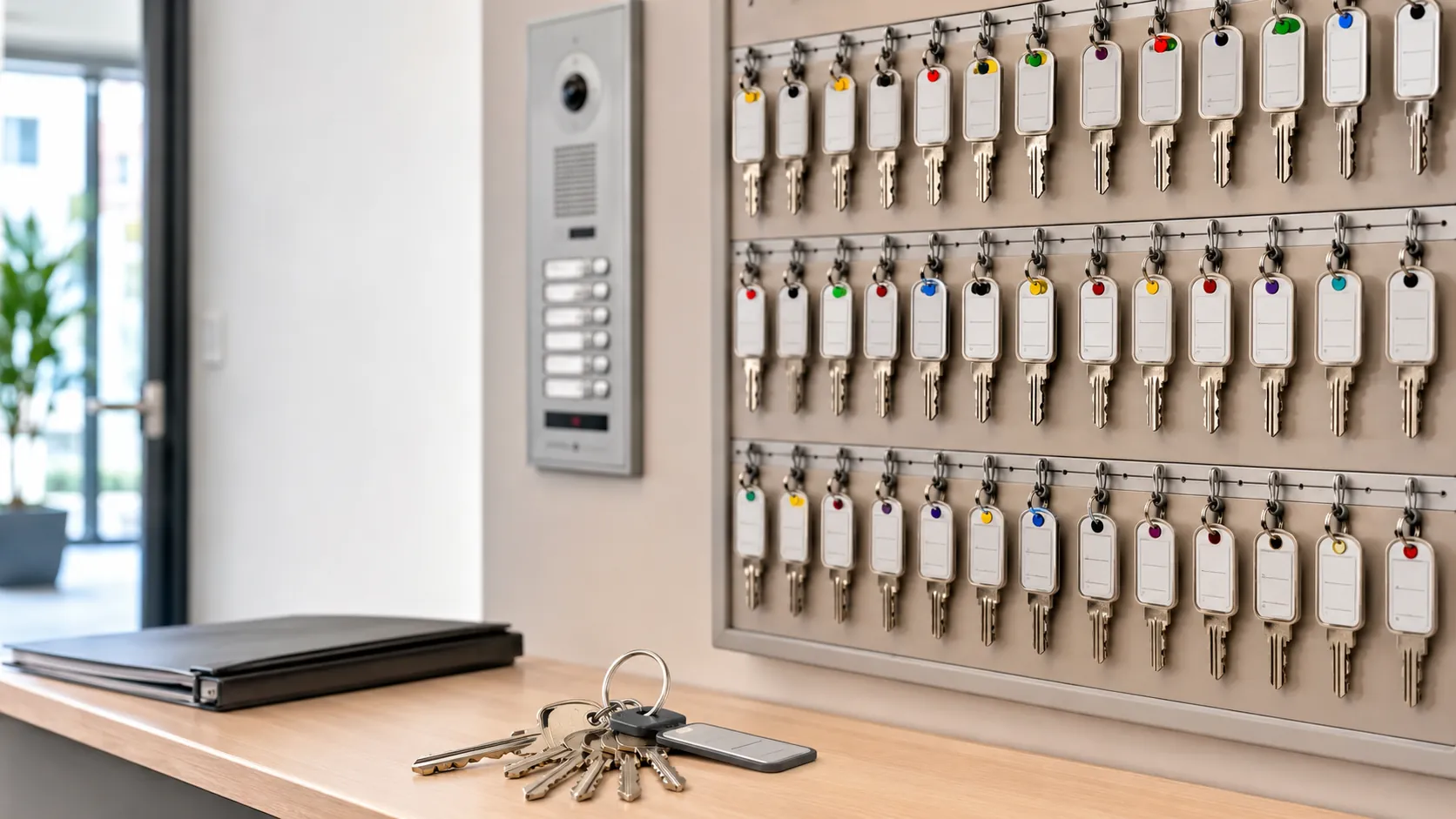
With a house purchase you often get a whole key bunch and no guarantee that is all of them. Agents, tradespeople, the gardener, the previous owner's mother-in-law. Over ten or twenty years a lot wanders around.
Here I advise not just a swap but an upgrade. While you are at it, do not take a 15 euro DIY-store cylinder that is worthless under DIN EN 1303. Take a proper security cylinder with anti-drill and anti-pull protection. Brands that hold up: ABUS, BKS, Winkhaus, EVVA. A good one costs 80 to 150 euros.
Watch for two functions. An emergency and hazard function means you can unlock from outside even if a key is left in on the inside. That saves you when a child locks itself in. And a protected key with a security card stops anyone from simply having copies cut at the DIY store.
If you are putting in the effort anyway, this is also the right moment to think about burglary protection. An RC2 door under DIN EN 1627, or at least a protective escutcheon of class DIN 18257 ES1, turns the lock swap into a real upgrade. What is worth it and when is in the guide on DIN standards and resistance classes.
Locked out and in a hurry?
Price quoted up front, vetted partner business, ~22 minutes on site.
Who pays what?
This is the part where I have the most arguments on the phone. Cleanly separated:
| Situation | Who pays |
|---|---|
| Voluntary swap for peace of mind (rental) | Tenant |
| Previous tenant lost keys, system unsafe | usually landlord |
| Normal wear on the lock | Landlord |
| You lose a key yourself | You |
| Master-key system affected, several cylinders new | depends on cause, often costly |
With a master-key system it gets really expensive, because one lost key compromises the whole system. Then all cylinders in the building often have to be changed, which can run into four figures. Whoever lost the key is usually liable for it.
The exact limits are set by tenancy law in the German Civil Code, and case law is inconsistent in the detail. In a dispute it pays to visit the tenants' association before you sign anything or let it be withheld from your deposit. What applies to a lost key in a rental flat I have written up in more detail in the guide tenant, who pays for the lock change.
What does it cost in Frankfurt, concretely?
So you have a ballpark, here are real ranges from daily work:
- Simple standard cylinder, parts: 15 to 40 euros.
- Good security cylinder with anti-pull: 60 to 150 euros.
- Fitting by a professional during the day: roughly 40 to 90 euros, depending on the call-out.
- Complete, one outer cylinder swapped, daytime: usually 80 to 150 euros.
If someone quotes you 400 euros for a simple afternoon cylinder change, hang up. This is not an emergency, it is not urgent, it is normal trade work at normal prices. You will find an honest overview on our pricing page. And if the key really does break at night, the emergency service applies, but that is a different story from a planned moving-day swap.
My proven routine when moving in
This is how I do it myself and how I recommend it to everyone:
- On moving day, list all outer doors. Flat door, cellar door, back door.
- Measure cylinder lengths, inside and outside from the screw centre.
- Get one matching security cylinder per door, same brand, ideally keyed alike, then you only need one key.
- Swap them, put the old cylinders labelled in a box, keep them for moving out.
- Count the keys and note who gets which.
That sounds like effort, but it is done in an afternoon.
A story I do not forget
Last year a young couple in Bockenheim. They waved it off, "it is only a flat, the previous tenant was nice". Three weeks later the previous tenant's ex-boyfriend stood in the hallway, with an old key, without knocking. No break-in, no damage, but a fright, above all for her.
We swapped the cylinder that same evening. 95 euros including the call-out. Had they done it on moving day, the whole thing would never have happened. That is exactly what this one simple step is for, for the cases you cannot picture in advance.
In short
- The swap is required nowhere, smart almost everywhere.
- In a rental you may swap without damage, and you keep the old cylinder.
- When you buy, upgrade right away, DIN EN 1303, a brand instead of DIY-store goods.
- Measure correctly, or the cylinder sticks out and becomes the weak point.
- 80 to 150 euros during the day is fair, anything well above that is suspicious.
Whoever swaps cleanly once on moving day buys peace of mind for the whole tenancy. It is the cheapest insurance I know. With questions about the right cylinder length or the choice of security class, you can reach us via contact, better to ask once before than to buy twice.